
Top Synopsys EDA Tools That Can Help You Land a Semiconductor Job

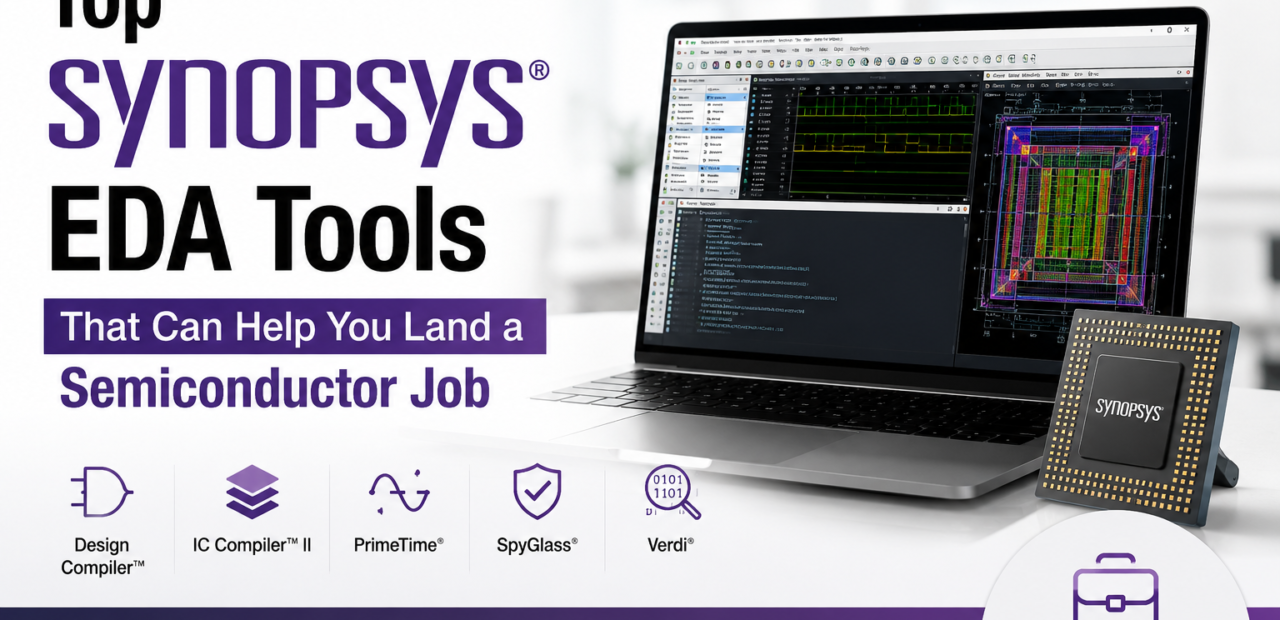
As the global semiconductor industry continues to expand, proficiency in Synopsys EDA (Electronic Design Automation) tools has become one of the most sought-after skills for VLSI and chip design engineers. Whether you’re aiming for roles in RTL design, ASIC verification, physical design, or DFT, mastering the right Synopsys tools can significantly improve your employability. In this article, we explore the top Synopsys EDA tools widely used by leading semiconductor companies such as Intel, Qualcomm, AMD, NVIDIA, MediaTek, and Samsung, and explain how learning these industry-standard platforms can help you secure a high-paying semiconductor job in 2026 and beyond.
1. VCS for Functional Verification
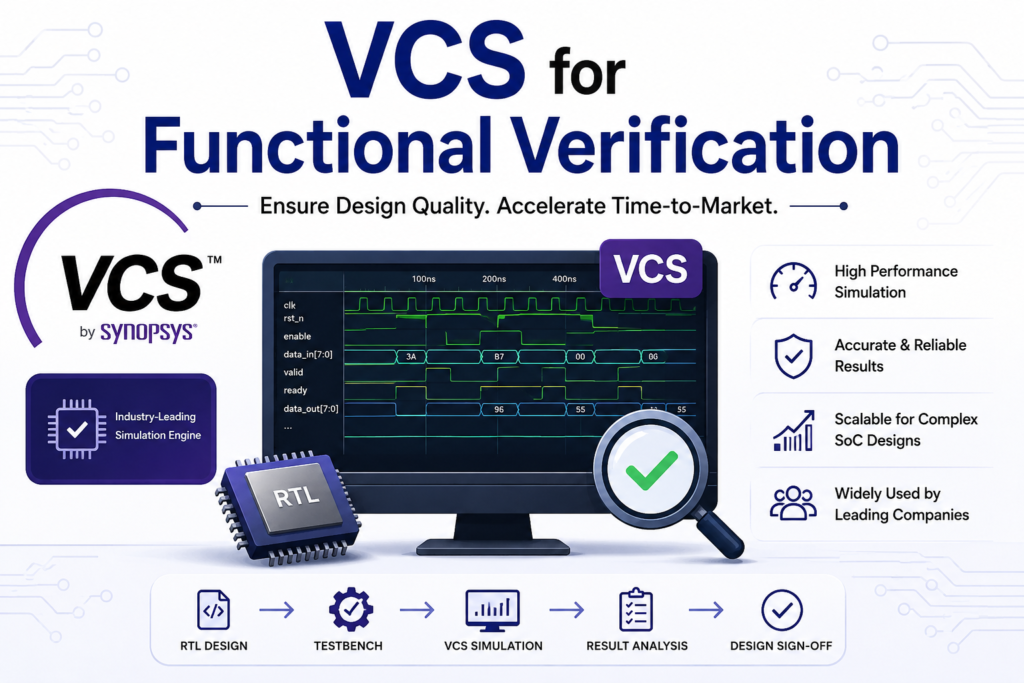
Before a chip ever goes to fabrication, someone has to prove the design actually behaves the way it’s supposed to. That’s the job of functional verification, and VCS is one of the most established simulation platforms used for it. It lets engineers write testbenches, run simulations against RTL code, and catch logic errors long before silicon is committed.
What makes VCS worth learning isn’t just the simulation itself — it’s the surrounding ecosystem: coverage analysis, assertion-based checking, and debugging workflows that verification teams rely on daily. Job postings for verification roles frequently mention simulation tools by name, and being able to describe a project where you built testbenches or ran regression suites gives an interview answer real substance instead of generic talk about “testing skills.”
2. Design Compiler and Fusion Compiler for Synthesis and Implementation
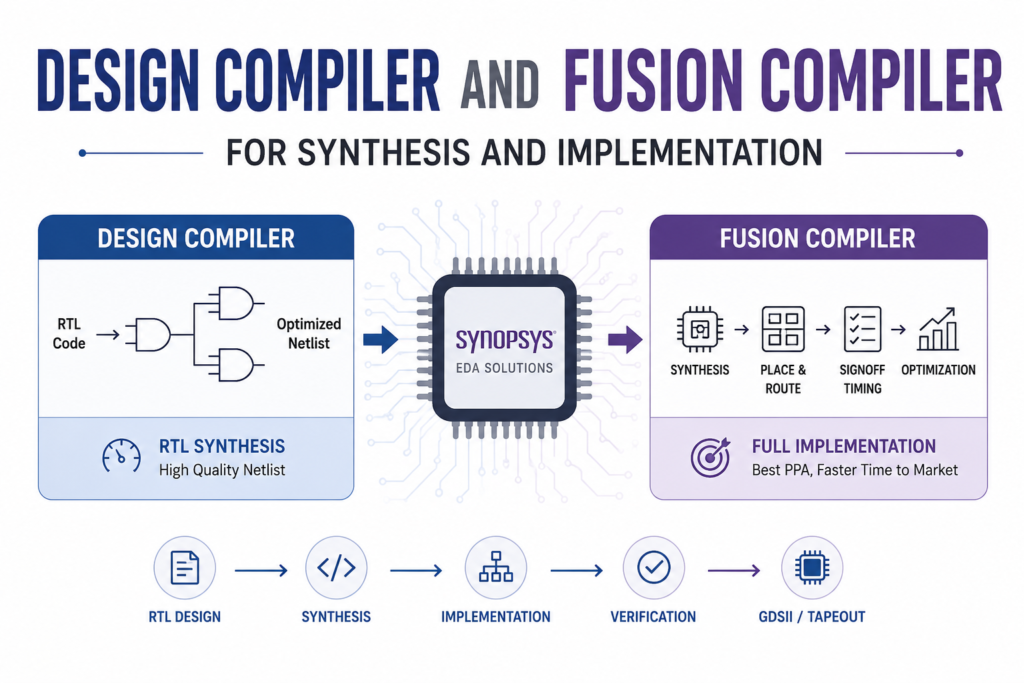
Once a design is verified, it needs to move from a behavioral description into an actual gate-level netlist that can be manufactured. Design Compiler has long been a standard for RTL synthesis, translating hardware description code into optimized logic while balancing speed, area, and power. Fusion Compiler extends that work further into digital implementation, handling placement and routing in a more unified flow.
Understanding synthesis matters because it sits at the center of the design flow — between the “does it work” stage and the “can we build it” stage. Engineers who can speak to trade-offs like timing closure, power optimization, or area reduction show they understand not just how to describe hardware, but how it actually gets built. That kind of practical grounding is exactly what implementation-focused teams look for.
3. PrimeTime for Timing Signoff
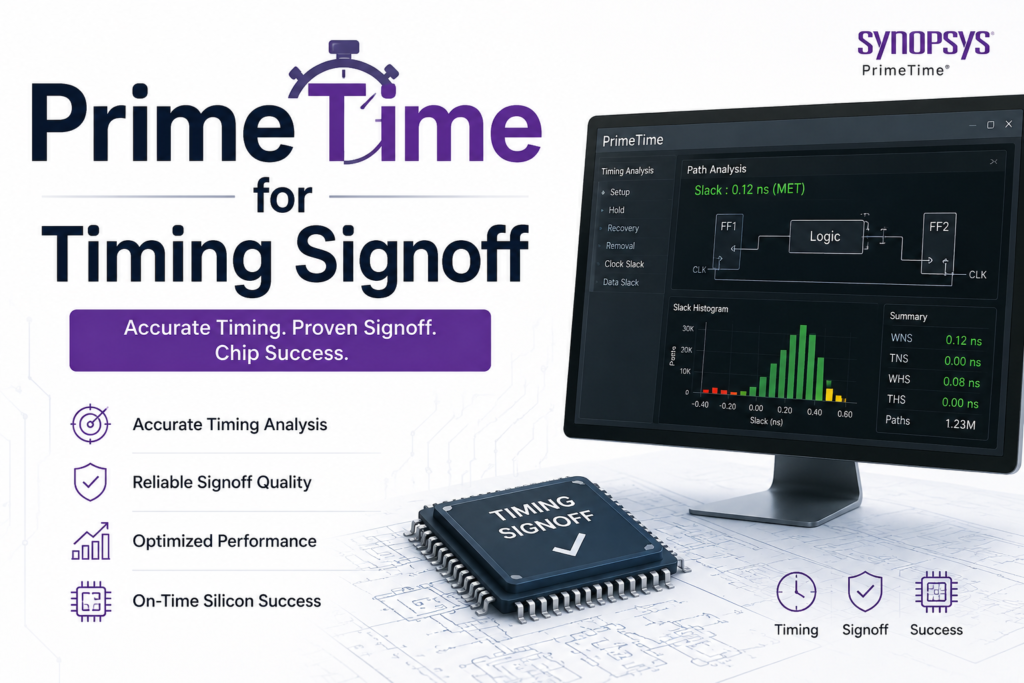
A chip can be logically correct and still fail if it doesn’t meet its timing requirements. PrimeTime is the tool most associated with static timing analysis, checking whether every signal path in a design meets speed targets across different operating conditions before a chip is signed off for manufacturing.
Timing signoff is one of the last and most unforgiving checkpoints in the design flow, which is exactly why familiarity with it stands out. Being able to explain concepts like setup and hold violations, clock domain crossings, or corner analysis signals that you understand the physical reality behind a design, not just its logic. Roles in physical design and timing closure often list this kind of experience as a specific requirement, so hands-on exposure — even through personal projects or coursework labs — is worth highlighting.
4. Custom Compiler and IC Validator for Custom Design and Physical Verification
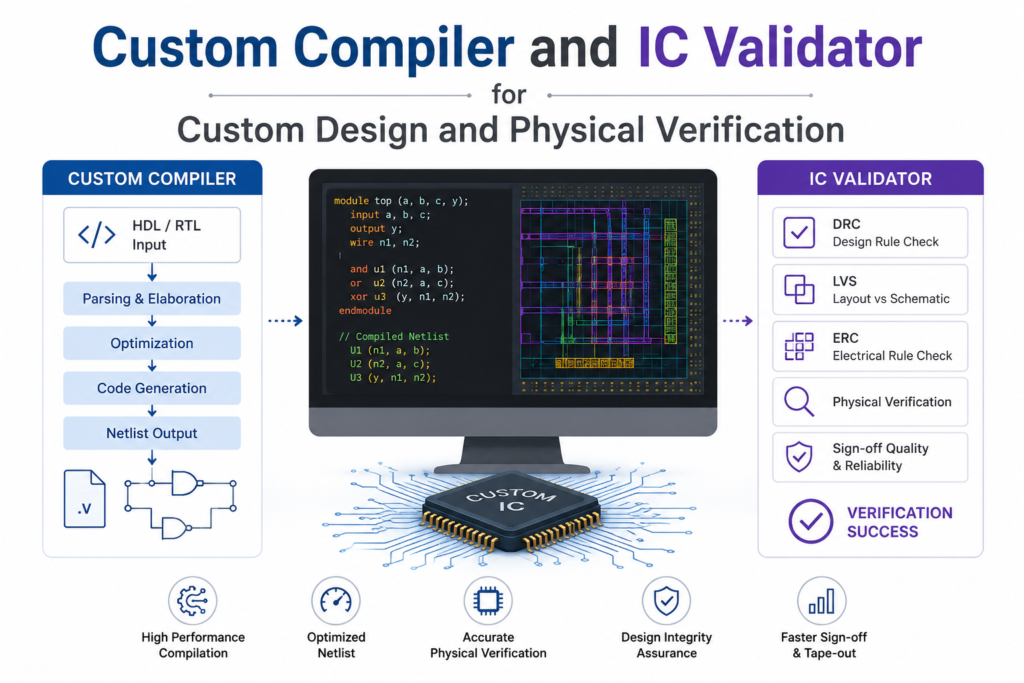
Not every chip is built the same way. Analog and custom digital blocks are often laid out manually rather than synthesized, and that’s where tools like Custom Compiler come in, supporting schematic capture and custom layout work. Once a layout exists, it still has to be checked against manufacturing rules and compared back to the original schematic, which is where physical verification tools like IC Validator play their part, running design rule checks and layout-versus-schematic comparisons before tape-out.
This combination matters because custom and analog design roles are a distinct career path from pure digital design, often with less competition and steady demand. Showing familiarity with layout tools and physical verification concepts — even at a basic level — can open doors into teams that other candidates overlook simply because they only prepared for digital synthesis and verification interviews.
Turning Tool Knowledge Into an Actual Advantage
None of these tools guarantee a job on their own, and no hiring manager expects mastery on day one. What actually helps is being able to talk about a project, a lab exercise, or a personal exploration where you used one of these tools and hit a real problem — a timing violation you had to fix, a verification gap you had to close, a layout rule you had to work around. That kind of story is memorable in a way that a bullet-pointed skills list never is.
The semiconductor industry is also leaning harder into AI-assisted design automation, cloud-based EDA workflows, and multi-die system design as chips grow more complex. Building comfort with the fundamentals of synthesis, verification, timing, and physical design now creates a foundation that carries forward as these tools keep evolving. Whichever corner of chip design interests you most, picking one or two of these tools and going deep — rather than skimming all of them — tends to leave a stronger impression than trying to sound familiar with everything at once.