




Why Chennai Is the Best Place for VLSI Jobs and Career Growth in 2026

Chennai has quietly turned into one of India’s strongest semiconductor and VLSI hubs, and 2026 is shaping up to be the city’s biggest year yet for chip design careers. While Bangalore and Hyderabad often dominate the conversation around India’s semiconductor boom, Chennai has built a strong ecosystem of its own — driven by established electronics manufacturing, a growing number of design centers, and steady government-backed support for the semiconductor industry. For engineering graduates and working professionals alike, the city now offers a genuine mix of learning opportunities, real project exposure, and long-term career stability. If you’re planning your next move in this field, understanding why Chennai stands out — and how to crack a job in VLSI here — can make all the difference to your career trajectory.
Chennai’s Growing Semiconductor and Electronics Ecosystem
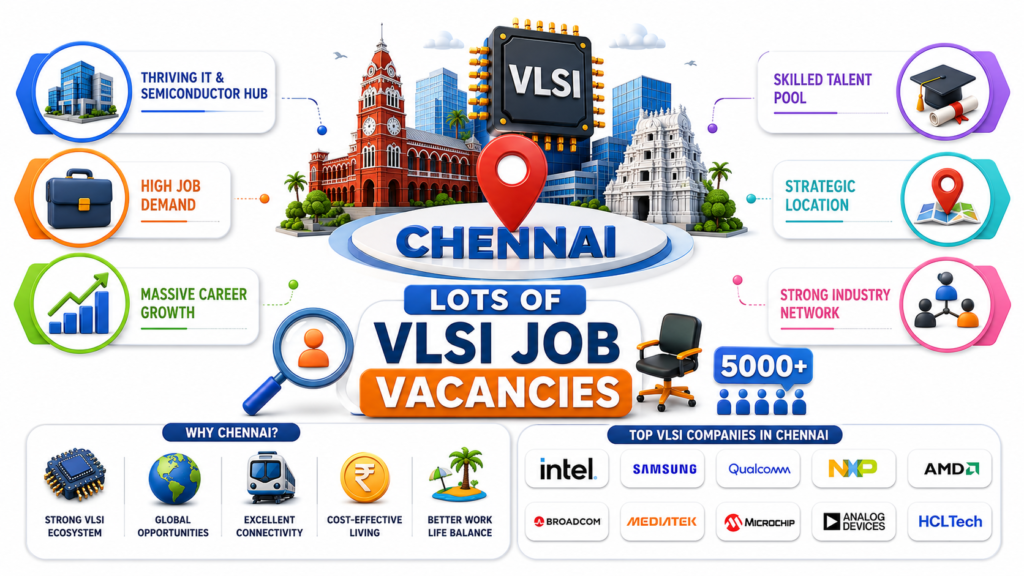
Chennai’s advantage starts with its industrial base. The city has been a manufacturing and electronics hub for decades, home to automotive giants, hardware manufacturers, and an increasingly important role in India’s electronics supply chain. This existing infrastructure made it natural for semiconductor design work to follow. Over the last few years, several multinational companies and fabless semiconductor firms have expanded their India R&D footprint into Chennai, building teams focused on RTL design, functional verification, physical design, and DFT.
Government support has accelerated this trend further, encouraging design houses and product companies to build or scale teams outside the traditional Bangalore-Hyderabad corridor. Chennai’s OMR IT corridor and established SEZ zones have absorbed a good share of this growth, giving the city a genuine claim to being a serious VLSI destination rather than just a secondary option.
For someone starting out, this matters because it means real companies, real projects, and real mentorship — not just theoretical exposure.
Top Companies Hiring VLSI Engineers in Chennai
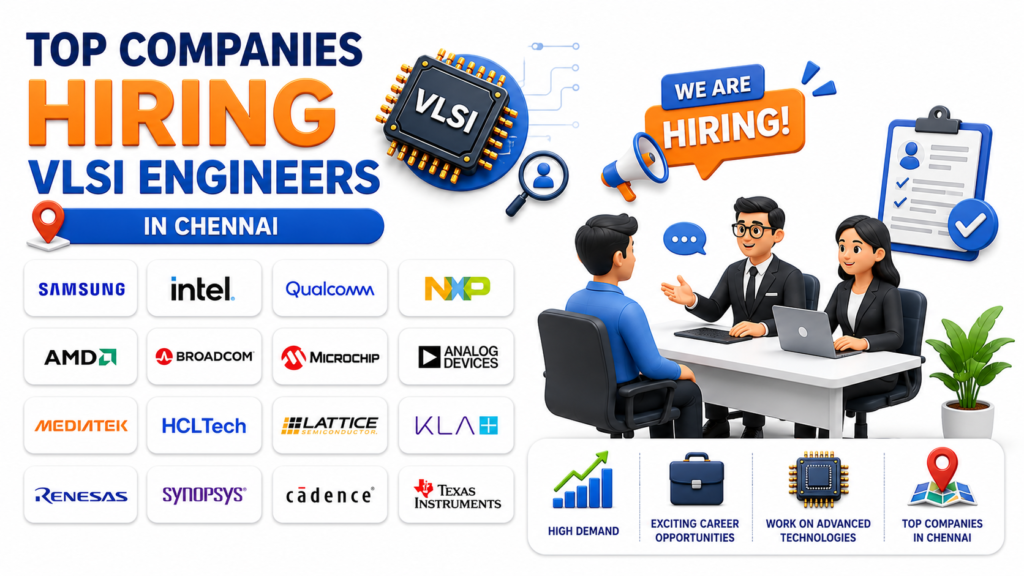
Chennai’s VLSI job market today spans a wide mix of employers. You’ll find global semiconductor names running design and verification teams, alongside product companies working on ASICs, SoCs, and embedded systems for automotive and consumer electronics applications. Alongside these, a growing number of specialized design service companies and startups are hiring for RTL design, UVM-based verification, static timing analysis, and layout roles.
What makes this mix valuable is variety. A fresher entering the field isn’t limited to one type of company or one narrow skill set — openings exist across digital design, analog and mixed-signal design, DFT, and post-silicon validation. Experienced engineers, meanwhile, are seeing steady demand for specialists in low-power design techniques and SoC architecture, roles that come with strong compensation and long-term growth potential.
This diversity of employers also means healthier competition for talent, which usually translates into better salaries, faster hiring cycles, and more openness to training freshers on the job — something engineers moving from other cities have noticed and appreciated.
Why Choosing the Right VLSI Institute in Chennai Matters

Landing your first VLSI role rarely happens through a general engineering degree alone. Most companies expect candidates to have hands-on exposure to industry tools and real design flows, which is exactly the gap a good vlsi institute in chennai is meant to fill. A well-structured training program covers Verilog and SystemVerilog, digital design fundamentals, verification methodologies like UVM, and practical lab sessions using industry-standard EDA tools from vendors like Cadence and Synopsys.
Being physically close to the companies actually hiring is an underrated advantage. Training centers based in Chennai tend to shape their curriculum around what local employers are actually looking for, and many maintain placement tie-ups or referral networks with design houses in the city. This local relevance often matters more than generic online certifications, especially for someone trying to break in with limited work experience.
Before enrolling anywhere, it’s worth checking the trainer’s industry background, the batch size, whether the syllabus includes a real project or tape-out style assignment, and what kind of placement support is actually offered — not just promised. The right training foundation shortens the distance between learning VLSI and getting hired in VLSI.
Read more about :- Top 10 VLSI Training Institute in India
How to Crack a Job in VLSI: Skills That Actually Matter
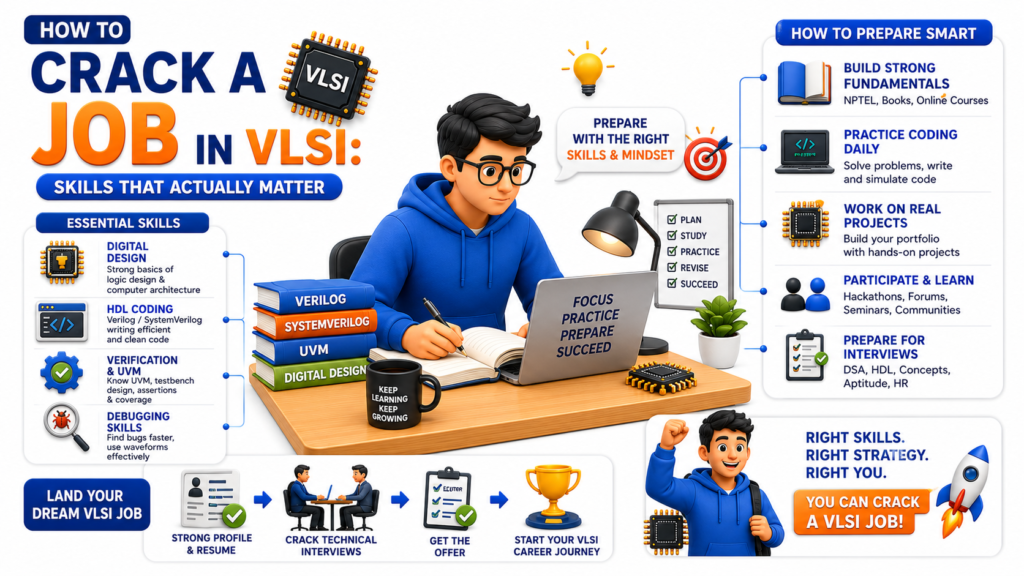
Understanding how to get a job in VLSI starts with accepting that this is a specialized field — recruiters aren’t looking for generalists, they’re looking for candidates who can go deep in one track. Verification engineers are expected to be comfortable scripting testbenches and reasoning through coverage gaps. Physical design candidates need a working understanding of synthesis, floorplanning, and timing closure. Trying to sound competent in five areas at once usually backfires in interviews, where questions quickly expose surface-level knowledge.
A few things consistently separate candidates who get offers from those who don’t. First, strong fundamentals in digital logic and computer architecture — interviewers test this early. Second, genuine project experience, even from academic work or training labs, that you can explain in detail rather than just list on a resume. Third, familiarity with the specific tools your target companies use, since tool fluency shortens onboarding time and signals readiness.
It also helps to practice explaining your projects out loud before interviews, since VLSI interviews are conversational and probing by nature. Mock interviews, peer discussions, and revisiting core concepts like timing analysis, clock domain crossing, and low-power design a week before interviews tend to make a noticeable difference in performance.
Career Growth and Long-Term Prospects for VLSI Engineers in Chennai
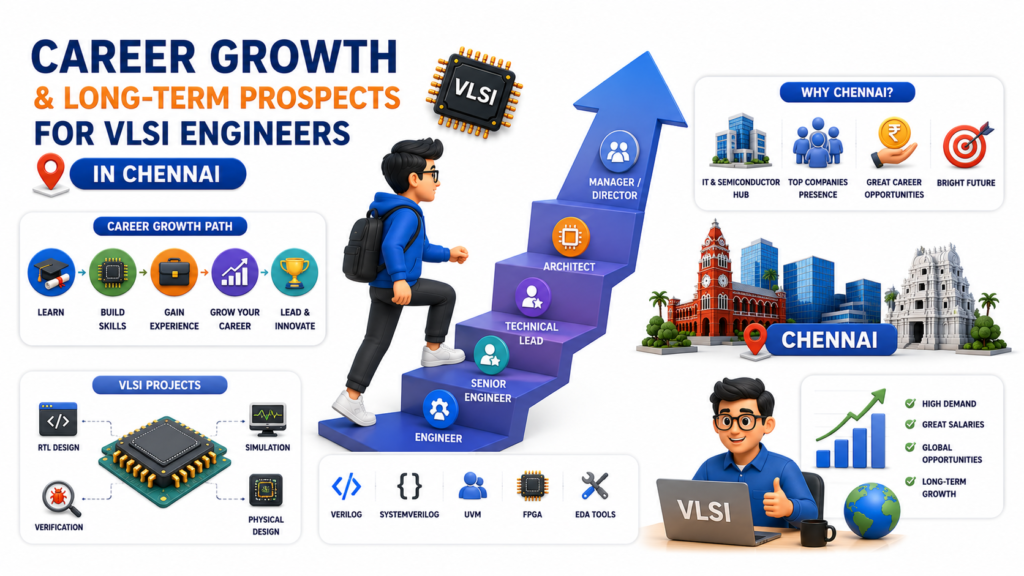
Beyond the first job, Chennai offers a reasonably clear career path for VLSI engineers. Entry-level roles in verification or digital design typically lead toward senior design or verification lead positions within four to six years, with specialization options opening up in SoC architecture, low-power design, or DFT strategy for those who want to move into more technical leadership tracks. Others transition into program management or cross-functional roles bridging design and product teams.
Salary growth in this field tends to reward depth over breadth — engineers who build a strong reputation in one specialization, such as UVM-based verification or static timing analysis, often see faster jumps in compensation and role seniority. The city’s expanding base of R&D centers also means more opportunities to move between companies without relocating, which is a meaningful advantage compared to cities where the ecosystem is more concentrated among a handful of large employers.
For engineers thinking long-term, Chennai’s combination of industry depth, training infrastructure, and steady hiring demand makes it a genuinely strong base to build a VLSI career from.
Conclusion
Chennai’s rise as a VLSI hub isn’t accidental — it’s the result of existing industrial strength, sustained government support, and a steady stream of companies choosing the city for design and verification work. Whether you’re a fresher weighing your first training decision or a working engineer considering a move, the fundamentals here are solid: real companies, real projects, and a career path that rewards specialization. Building the right foundation, staying focused on one track, and preparing seriously for interviews are still what separate candidates who break in from those who keep waiting. In 2026, Chennai gives VLSI engineers a genuine head start — the rest comes down to preparation.
FAQ
Is Chennai a good city to start a VLSI career in 2026?
Yes, Chennai has become one of India’s strongest VLSI hubs thanks to its established electronics manufacturing base, growing number of design centers, and steady demand across RTL design, verification, physical design, and DFT roles.
Which companies in Chennai hire VLSI engineers?
Chennai’s VLSI job market includes global semiconductor companies, product firms working on ASICs and SoCs, and specialized design service companies hiring for digital design, verification, and layout roles.
How do I choose the right VLSI institute in Chennai?
Look for a trainer with real industry background, small batch sizes, a syllabus covering practical EDA tool exposure, and genuine placement support rather than just promised assistance.
How can a fresher crack a job in VLSI without work experience?
Focus on one specialization instead of five, build strong digital logic fundamentals, complete a real project you can explain in depth, and practice mock interviews before applying.
What skills do VLSI interviewers look for the most?
Interviewers typically test digital logic fundamentals early, then go deep into your specific track — verification, physical design, or DFT — along with tool familiarity and hands-on project experience.
What is the career growth path for a VLSI engineer in Chennai?
Most engineers move from entry-level design or verification roles to senior or lead positions within four to six years, with further specialization options in SoC architecture, low-power design, or DFT strategy.