
Bosch Begins Sample Production at Its First US Semiconductor Plant

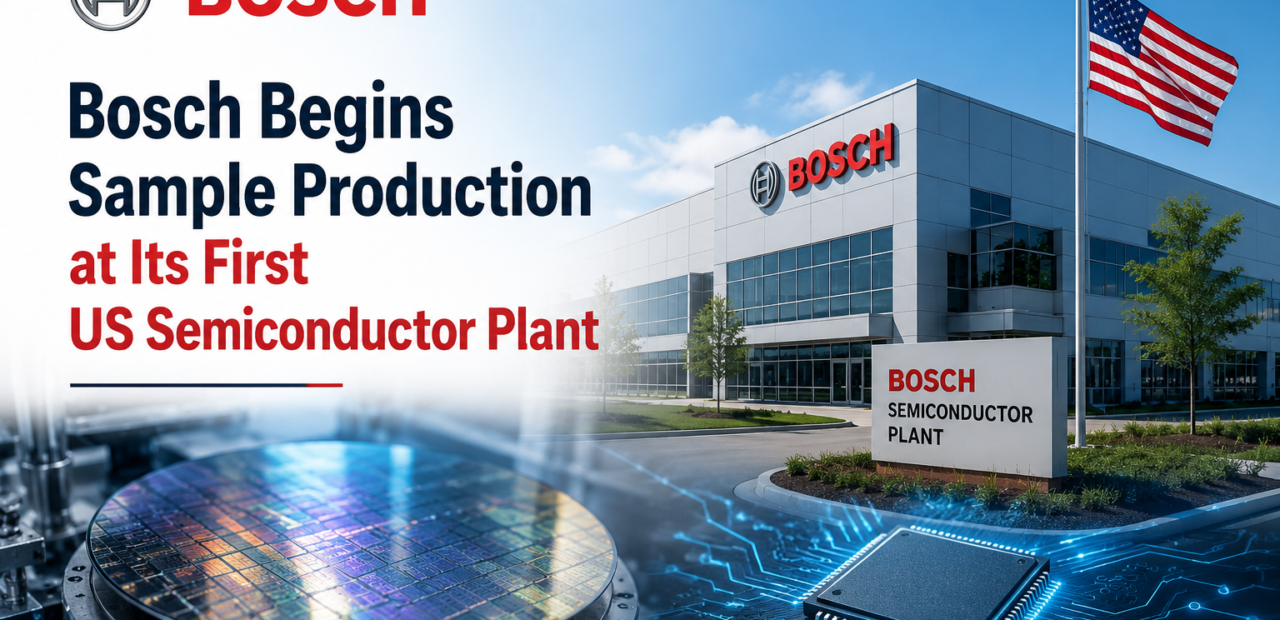
For decades, the chips powering American cars, factories, and power grids were built almost entirely overseas. That is starting to change. Bosch has just switched on sample production at its very first semiconductor plant on US soil, a milestone the company has been quietly building toward for years, and one that could reshape how a critical slice of the auto industry sources its most important components.
The facility sits in Roseville, California, and it is not just another factory ribbon-cutting. It represents a roughly $2 billion transformation of an aging fab, supported by up to $225 million in federal CHIPS Act funding, and it signals something bigger than one company’s expansion plans: a real shift in where the technology behind electric vehicles and modern power systems actually gets made.
From an Aging Fab to a Silicon Carbide Powerhouse
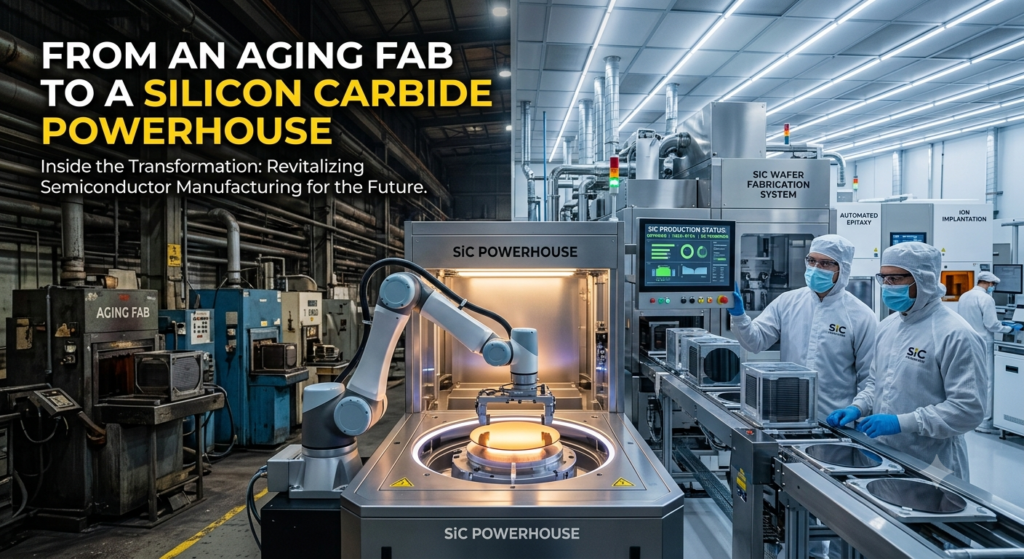
The Roseville site has a longer history than most people realize. It was originally built in the 1980s and passed through several owners in the semiconductor world before Bosch acquired it from TSI Semiconductors in 2023. Rather than starting from scratch, Bosch chose to rebuild and modernize the existing cleanroom infrastructure, turning it into a facility purpose-built for silicon carbide (SiC) chip production on large 200-millimeter wafers.
That decision mattered for two reasons. It let Bosch move faster than building a brand-new plant from the ground up, and it preserved decades of semiconductor manufacturing know-how already embedded in the region. Sample production has now begun, with full commercial output expected later in 2026, just three years after the acquisition closed. For an industry where new fabs routinely take longer to plan than that, the timeline itself is notable.
Why Silicon Carbide Chips Are Such a Big Deal

Silicon carbide isn’t a new material, but its role in modern electronics has grown sharply in recent years. Unlike traditional silicon chips, SiC semiconductors handle higher voltages and higher temperatures far more efficiently, which makes them especially valuable in electric vehicles. They help extend driving range, support faster charging, and cut down on energy losses that would otherwise be wasted as heat.
The applications go well beyond cars, though. SiC chips are increasingly used in data centers, industrial power systems, and renewable energy infrastructure, anywhere that efficient power conversion is becoming a competitive necessity rather than a nice-to-have. As demand for EVs and energy-hungry data centers keeps climbing, the pressure on the SiC supply chain has grown right along with it, which is exactly the gap Bosch is now positioning itself to fill from inside the United States.
The CHIPS Act Connection and What It Means for US Manufacturing

Bosch’s push into US-based chip production didn’t happen in a vacuum. The federal government’s CHIPS Program Office has been actively backing projects that reduce American dependence on overseas semiconductor suppliers, a priority that only intensified after the pandemic exposed just how fragile global chip supply chains really were. Bosch’s agreement for up to $225 million in direct funding is part of that broader effort.
There’s also a trade and tariff angle. Automakers and parts suppliers have been expanding US manufacturing footprints partly to sidestep costly tariffs and reduce exposure to geopolitical disruptions. Ford’s chief supply chain officer publicly welcomed the move, framing it as exactly the kind of supplier action needed to localize production closer to where vehicles are actually built. For a company like Bosch, which sells components to nearly every major automaker, having a domestic SiC source isn’t just good PR, it’s a genuine supply chain hedge.
What Comes Next: Commercial Production and the Ripple Effects

Sample production is really a proving ground. It lets Bosch validate its process technology, test chip performance, and work through the inevitable kinks before scaling up. Full commercial manufacturing is targeted for later in 2026, and once the plant reaches full capacity, it’s expected to produce the majority of Bosch’s global SiC output and account for a meaningful share of all US-manufactured SiC chips.
The Roseville facility already employs several hundred people, with room to grow as production ramps up. Bosch has also committed to ongoing investment in the surrounding community, including annual funding for local science and technology initiatives starting in 2026. Combined with the company’s broader plan to invest billions across its US operations through the early 2030s, Roseville looks less like a one-off project and more like the anchor of a long-term American manufacturing strategy.
For an industry still recovering from the chip shortages of the early 2020s, that kind of long-term commitment matters. It suggests the shift toward domestic semiconductor capacity isn’t a temporary reaction to a crisis, but a structural change in how companies like Bosch plan to build the technology the next generation of vehicles and power systems will depend on.