


Madhya Pradesh Lands $2 Billion Investment from Submer Group, Boosting India’s Semiconductor and GCC Ambitions

What if a state once known mainly for farmland and forests suddenly became one of India’s next big tech hubs? That’s exactly what’s unfolding in Madhya Pradesh right now, and the numbers behind it are hard to ignore.
Spain’s Submer Group has committed a massive $2 billion to set up semiconductor and data centre operations in the state. Announced at the MP Tech Growth Conclave 3.0, this single deal could reshape how India’s central heartland is viewed on the global tech map, and it’s already creating ripples across the investment community.
A Landmark Deal for Madhya Pradesh

The announcement came directly from Submer Group at a conclave themed around Global Capability Centres (GCCs), data centres, and semiconductors. A senior state government official confirmed that the investment amounts to roughly Rs 19,000 crore, and it is expected to generate close to 5,000 direct jobs in the region.
What makes this deal stand out is the speed at which it moved from proposal to execution. The company sent in a request for land allotment for its data centre project, and within just six days, the state government allotted 15 acres in the Acharpura industrial area. That kind of turnaround signals a level of administrative efficiency that many investors look for before committing large sums of capital, and it’s likely to be cited as a benchmark for future deals in the state.
Why Submer Group Chose Madhya Pradesh

Submer Group, based in Barcelona, is known internationally for its work in liquid cooling technology for data centres, a niche that has become increasingly important as computing demands grow and energy efficiency becomes a bigger concern for large-scale digital infrastructure. Its plan for Madhya Pradesh includes setting up a data centre with a capacity of around 1 gigawatt, which is a substantial figure by Indian standards.
Madhya Pradesh’s Chief Minister has been vocal about the state’s shift away from its traditional identity built around agriculture, mining, and forestry. Instead, the state is now positioning itself around sectors like defence, drones, renewable energy, industrial corridors, and now, semiconductors and data infrastructure. For a company like Submer, that shift, combined with available land and a government willing to move fast on approvals, appears to have made the state an attractive destination.
What This Means for India’s Semiconductor and GCC Push

India has been working for several years to build a credible presence in global semiconductor manufacturing and design, and separately, to attract more Global Capability Centres from multinational companies. Deals like this one help on both fronts at once, since data centres and semiconductor investments tend to reinforce each other; better infrastructure supports more advanced computing work, and more computing work attracts further investment in hardware and facilities.
This isn’t an isolated event either. Along with the Submer Group announcement, Madhya Pradesh also signed an agreement between India Lead for Google Play and the state’s IT development agency, and revealed plans for a new IT park spanning 300,000 square feet in the Indore IT Corridor. A dedicated Semiconductor Centre of Excellence is also in the works, aimed at building long-term industry capacity in the region. Together, these moves suggest the state isn’t chasing a single headline deal but is trying to build an ecosystem that can sustain itself over time.
The Bigger Picture: Madhya Pradesh’s Growing Investment Momentum
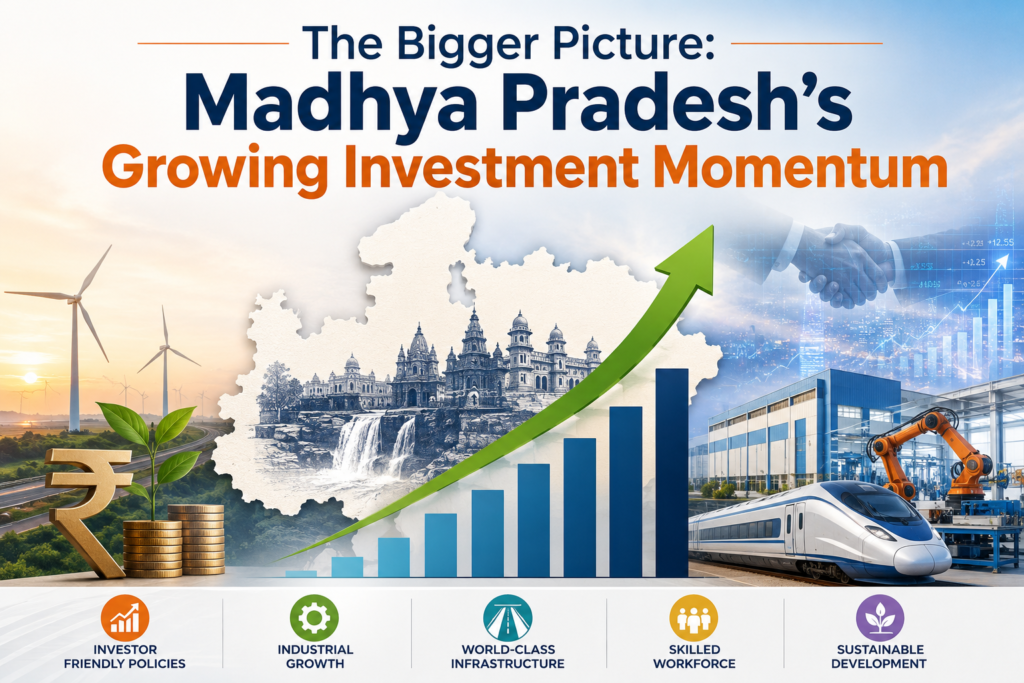
This isn’t the state’s only big win recently. Since the Global Investors Summit held in 2025, Madhya Pradesh has already seen tech-sector investment proposals worth around Rs 12,000 crore turn into actual on-ground projects. On top of that, companies from countries including Spain, Canada, the UK, Japan, and South Korea have together poured in more than Rs 28,200 crore through foreign direct investment.
During the recent conclave alone, the state received fresh investment proposals worth Rs 46,000 crore, inaugurated 22 new industrial units, and held groundbreaking ceremonies for four additional projects. That’s a lot of activity packed into a short window, and it points to a state government that is actively courting global capital rather than waiting for it to arrive on its own.
For India as a whole, this steady stream of investment into a state outside the usual tech corridors of Bangalore, Hyderabad, or Pune is worth watching. If Madhya Pradesh can convert this momentum into a functioning semiconductor and GCC hub, it could become a template for other states looking to diversify their economies beyond traditional industries.
The Submer Group deal, then, isn’t just about one company setting up shop in central India. It’s a signal of where the country’s tech ambitions are headed next, and how far inland those ambitions are now willing to travel.