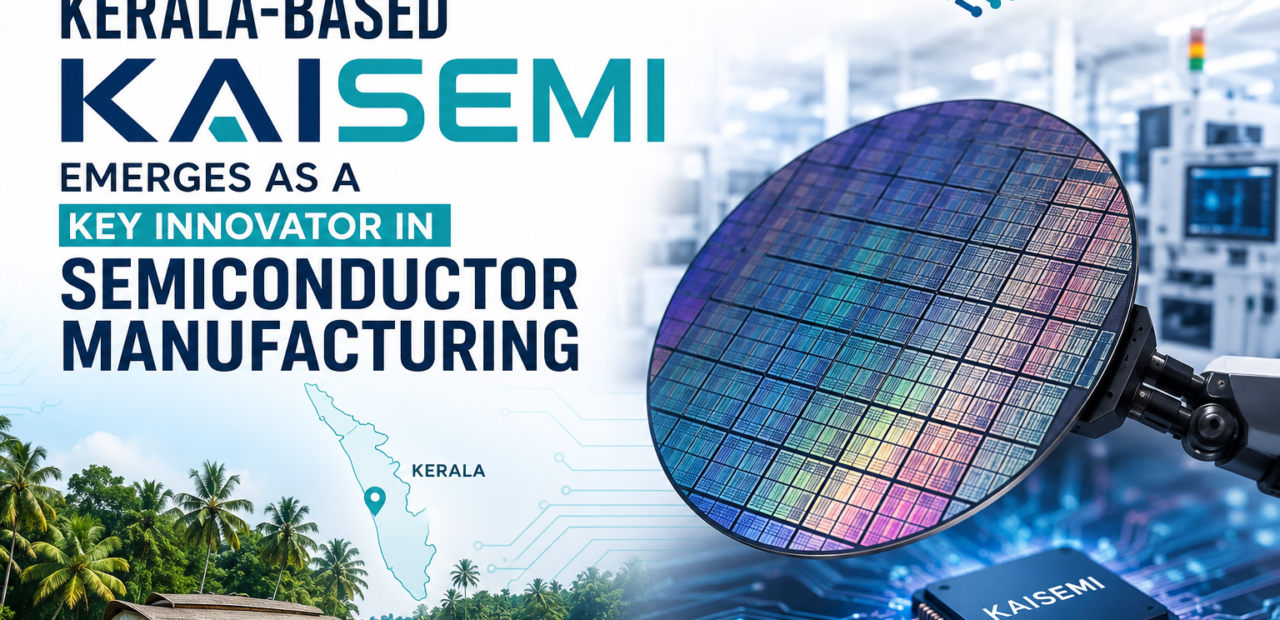
Kerala-Based KaiSemi Emerges as a Key Innovator in Semiconductor Manufacturing

What if the next big leap in chip manufacturing wasn’t happening in Taiwan, Korea, or California, but quietly, in a tech park in southern India? That’s exactly the story unfolding in Thiruvananthapuram, where a company called KaiSemi is proving that world-class semiconductor innovation doesn’t need to come from the usual places.
While most people associate semiconductor breakthroughs with billion-dollar fabrication plants abroad, KaiSemi Control Systems Private Limited has built something different: specialized control software that powers the very machines used to manufacture chips. Based out of Technopark in Kerala, this company is steadily becoming a name to watch in the global chip ecosystem.
A Kerala Startup With a Global Vision

KaiSemi began its journey in Kerala in December 2023, and in a relatively short span, it has grown from a small founding team to a workforce of more than thirty professionals. The company operates as the software arm of Kingstone Semiconductor, a firm with a presence in Shanghai, Singapore, and Hong Kong, giving KaiSemi a strong international backbone right from the start.
What makes this story compelling is the location itself. Kerala isn’t traditionally seen as a semiconductor hub, yet KaiSemi chose Technopark as its base of operations. The company recently inaugurated a new, larger facility spanning 5,000 square feet at the Kallayi Building in Technopark Phase I, a move that signals confidence in both its growth trajectory and in Kerala’s expanding technology ecosystem. The event was attended by senior government officials, including Kerala’s Minister for IT, Industries and Startups, underscoring the state’s interest in nurturing this niche but strategically important industry.
What KaiSemi Actually Builds
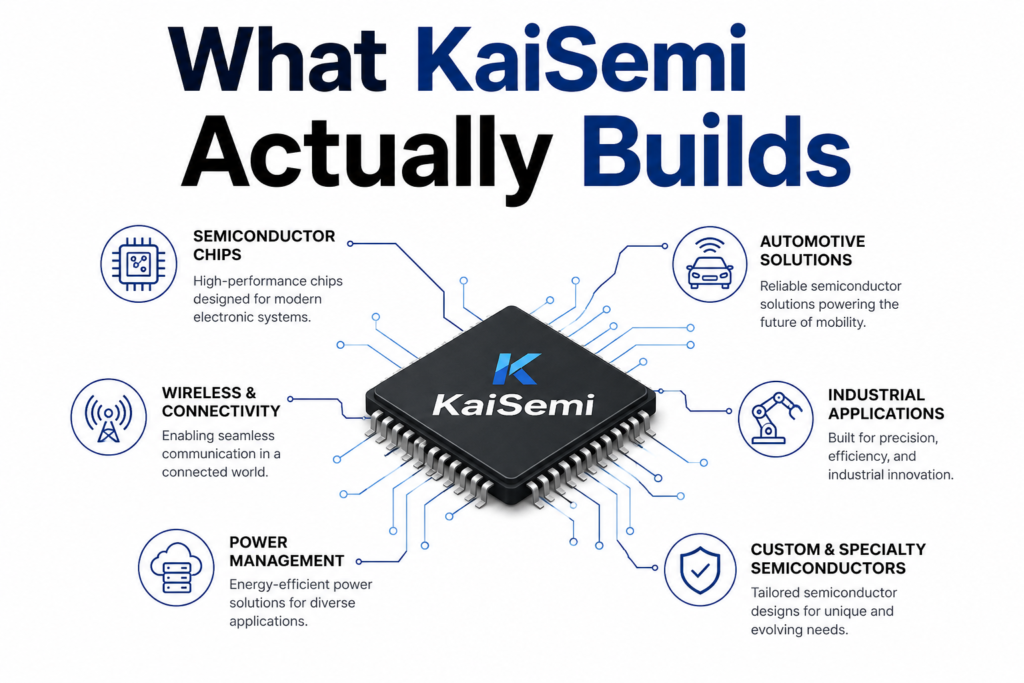
It’s important to clarify what KaiSemi does, because its role in the semiconductor supply chain is often misunderstood. KaiSemi does not manufacture semiconductor chips itself. Instead, it builds the industrial control software and automation systems that operate highly specialized chip-making machinery, particularly ion implantation equipment, a critical tool used during the fabrication process.
Its proprietary platform, known as KCS (KaiSemi Control Systems), handles complex operational functions inside these machines, including robotics coordination and valve operations. In simple terms, if semiconductor fabrication plants are the kitchens of the chip world, KaiSemi builds the smart control panels that keep the cooking precise, consistent, and efficient. This kind of software is invisible to the end consumer, but without it, the machines that produce the chips inside our phones, cars, and laptops simply wouldn’t function reliably.
Going Global From a Local Base
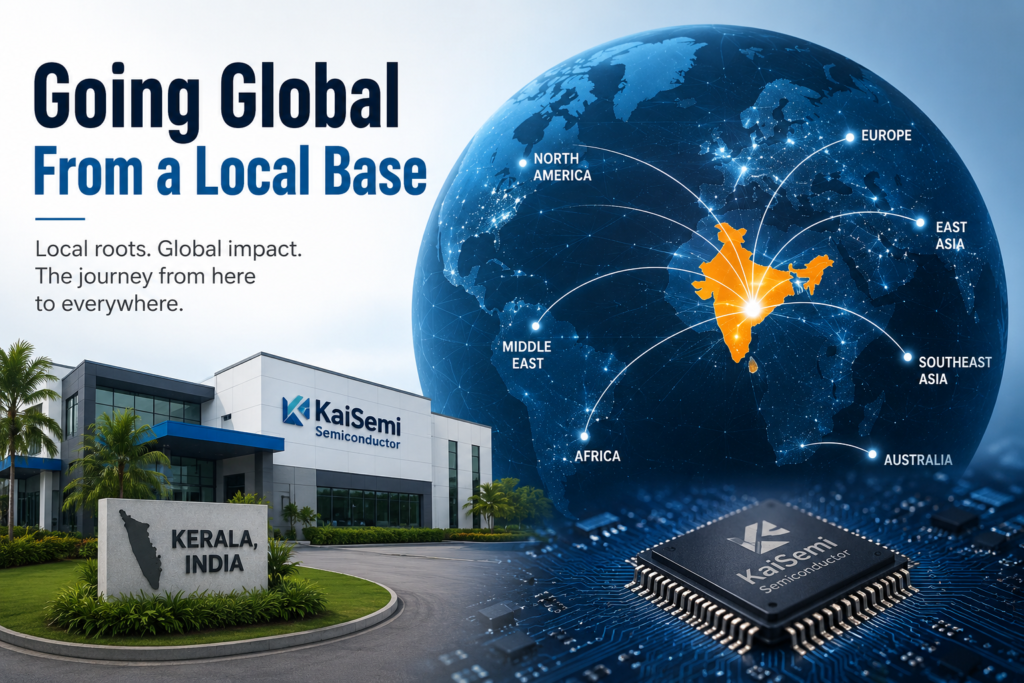
One of the most impressive aspects of KaiSemi’s growth is its export reach. The company already supplies its control software solutions to semiconductor fabrication facilities in Singapore, South Korea, China, and Vietnam. That’s a significant achievement for a company operating out of Kerala, a state better known for IT services and software exports than hardware-adjacent manufacturing technology.
This global client base suggests that KaiSemi isn’t riding on novelty value or government incentives alone. Its software is being trusted by fabrication facilities in countries that are themselves major players in the semiconductor world. That kind of validation is hard to manufacture through marketing; it comes from solving real engineering problems reliably enough that international clients keep coming back.
Looking ahead, KaiSemi has indicated plans to establish its own machine development facility as part of its next phase of expansion. If that materializes, it would mark a shift from purely software-based contributions to a more hands-on role in building physical equipment, further deepening Kerala’s footprint in the semiconductor hardware space.
Why This Matters for India’s Semiconductor Ambitions
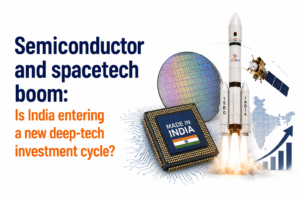
India has been vocal about wanting a bigger seat at the semiconductor table, and most of that conversation tends to center around large fabrication plants and government-backed incentive schemes. KaiSemi’s story offers a different, quieter angle on that same ambition. It shows that meaningful contributions to the global chip supply chain don’t always require billion-dollar fabs; sometimes, they come from specialized software and control systems developed by focused, agile teams.
Kerala’s technology ecosystem, largely built around IT and software services, is now finding a foothold in a domain that requires deep engineering expertise around hardware, automation, and precision manufacturing logic. KaiSemi’s presence in Technopark, backed by international semiconductor industry veterans and supported by the state government, reflects a broader trend: India’s semiconductor story is not just about attracting foreign fabs, but also about home-grown companies quietly building critical pieces of the puzzle.
For anyone tracking India’s place in the global chip industry, KaiSemi is a useful case study. It illustrates how niche, high-value contributions in software and automation can carry outsized influence in an industry usually associated with massive capital investment. As Kerala continues to position itself within this space, companies like KaiSemi may well become reference points for how emerging tech hubs can carve out a genuine, defensible role in one of the world’s most strategically important industries.
The bigger question now is whether this momentum will attract more specialized semiconductor companies to set up shop in India’s smaller tech hubs, not just its established metros. If KaiSemi’s trajectory is any indication, the answer may already be taking shape.