
Micron Signs Agreements With Qualcomm and Other Companies to Supply AI-Powered Automotive Chip Components

The car sitting in your driveway is quietly turning into a supercomputer on wheels, and the memory chip industry just made a move that proves it. Micron Technology has locked in long-term supply deals with Qualcomm and a group of major automotive suppliers, and this single announcement says a lot about where the entire auto industry is headed.
This isn’t just another routine supplier contract buried in a press release. It’s a signal that memory and storage chips, the same technology once treated as a background component, have become one of the most fought-over resources in the race to build smarter, safer, and more connected vehicles.
What Exactly Did Micron and Qualcomm Agree To?
Micron announced that it has signed Strategic Customer Agreements with several key players in the automotive supply chain. Qualcomm is one of the headline names, alongside Samsung-owned Harman, Visteon, Denso, Astemo, JOYNEXT, and Hyundai Mobis. These agreements are built to run over a multi-year horizon, generally in the three to five year range, and they exist for one simple reason: to guarantee a steady supply of memory and storage chips at predictable pricing.
For automakers and their suppliers, this kind of certainty is gold. Building a modern vehicle today means integrating dozens of AI-powered systems, and none of them work without memory chips backing them up. By locking in supply years in advance, Qualcomm and the other partners protect themselves from sudden price spikes or shortages that could stall production lines. Micron benefits too, since these agreements secure guaranteed demand for its chips well into the future, giving the company more confidence to invest in expanding manufacturing capacity.
Qualcomm’s leadership described the deal as a way to bring together high-performance computing, connectivity, memory, and storage into a single technology platform for vehicles. That framing matters because it shows this is not just about buying chips in bulk. It’s about building an integrated foundation that automakers can rely on for years.
Why Is Automotive Chip Demand Suddenly Exploding?
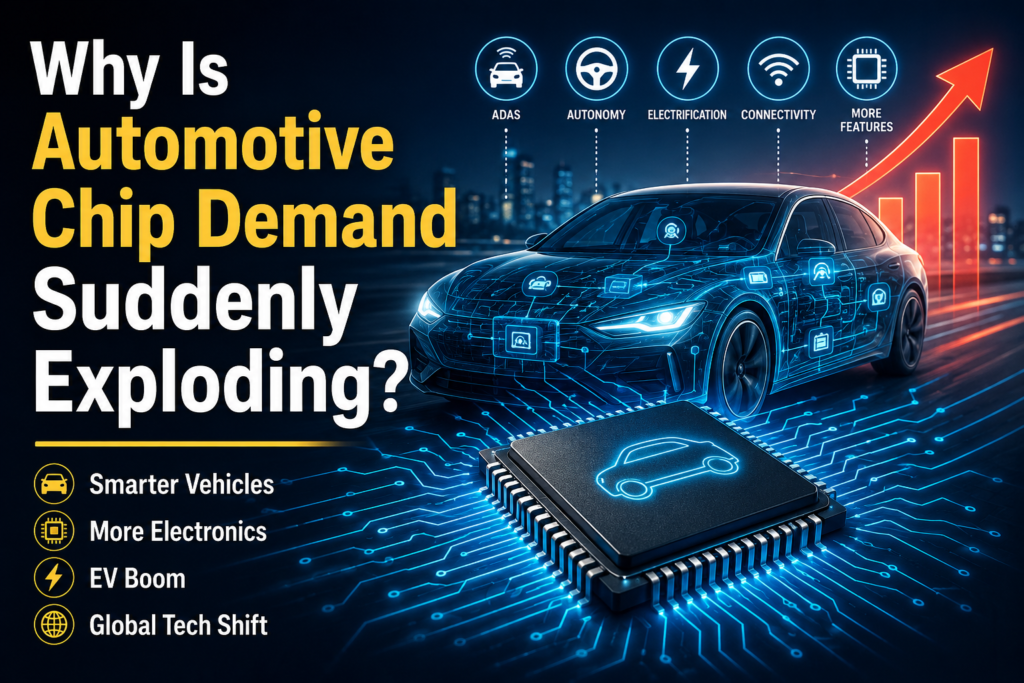
To understand why this deal is such a big deal, you need to look at what’s happening inside modern vehicles. Cars today are no longer simple machines with an engine and a dashboard. They are rolling platforms packed with advanced driver assistance systems, digital cockpits, infotainment displays, and increasingly autonomous driving features.
Every one of these systems needs memory to function. Advanced driver assistance systems process huge volumes of sensor data in real time. Digital cockpits run multiple high-resolution displays simultaneously. Voice assistants, predictive maintenance systems, and over-the-air software updates all lean on memory and storage chips working in the background. As vehicles move toward higher levels of autonomy, the amount of memory required multiplies dramatically compared to a standard car from just a few years ago.
Industry estimates suggest that vehicles with more advanced autonomous capability can require several times the memory and storage of a conventional car. With intelligent vehicles expected to make up a growing share of total car sales over the next few years, that demand curve is only going to get steeper. Automakers know this, and they are moving early to make sure they are not left scrambling when supply gets tight.
The Bigger Picture: A Global Memory Chip Supply Crunch
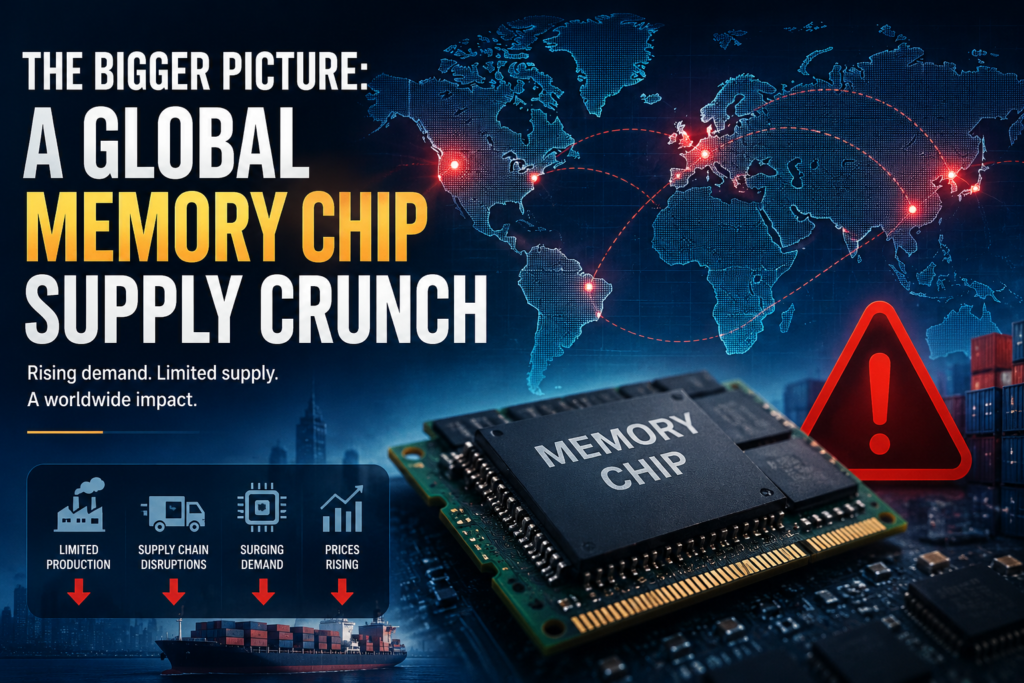
This deal doesn’t exist in isolation. It’s happening against the backdrop of a broader memory chip shortage that’s rippling across data centers, consumer electronics, and now automobiles. The explosion of AI adoption everywhere, from cloud computing to smartphones, has pushed chipmakers to redirect production capacity toward high bandwidth memory and other premium products, leaving less room for standard automotive-grade chips.
This shift has real consequences. Some market analysts have pointed out that prices for certain automotive-grade flash memory components could rise sharply through the rest of this year, driven by tightening supply and rising demand. For automakers, this makes long-term agreements like the one Micron just signed even more valuable, since they lock in pricing and availability before the market gets even more competitive.
It’s also worth noting that Micron isn’t the only major player fighting for a slice of this growing market. Competitors like Samsung and SK Hynix are pushing hard in the automotive memory space too, with Samsung reportedly holding a larger share of the automotive memory market than Micron at the moment. That competitive pressure is likely part of why Micron is moving quickly to secure long-term commitments from major names like Qualcomm rather than relying on short-term, spot-market sales.
What This Means for the Future of AI-Powered Vehicles

Zooming out, this agreement is a preview of where the automotive industry is heading over the next several years. Vehicles are becoming software-defined, meaning their capabilities depend less on mechanical parts and more on computing power, connectivity, and data processing. That shift makes memory and storage chips just as critical to a car’s performance as its engine or brakes used to be.
For consumers, this behind-the-scenes chip strategy will eventually show up as smoother infotainment systems, faster over-the-air updates, more reliable driver assistance features, and eventually, more capable self-driving systems. For the auto industry, deals like this represent a shift in mindset. Automakers and their suppliers are now planning years ahead for their chip needs, treating memory supply as a strategic priority rather than an afterthought.
For chipmakers like Micron, automotive is quickly becoming a major growth pillar alongside data centers and smartphones. As vehicles get smarter, the companies that can guarantee stable supply and strong partnerships with players like Qualcomm are positioning themselves to capture a growing share of a market that is only going to expand..