

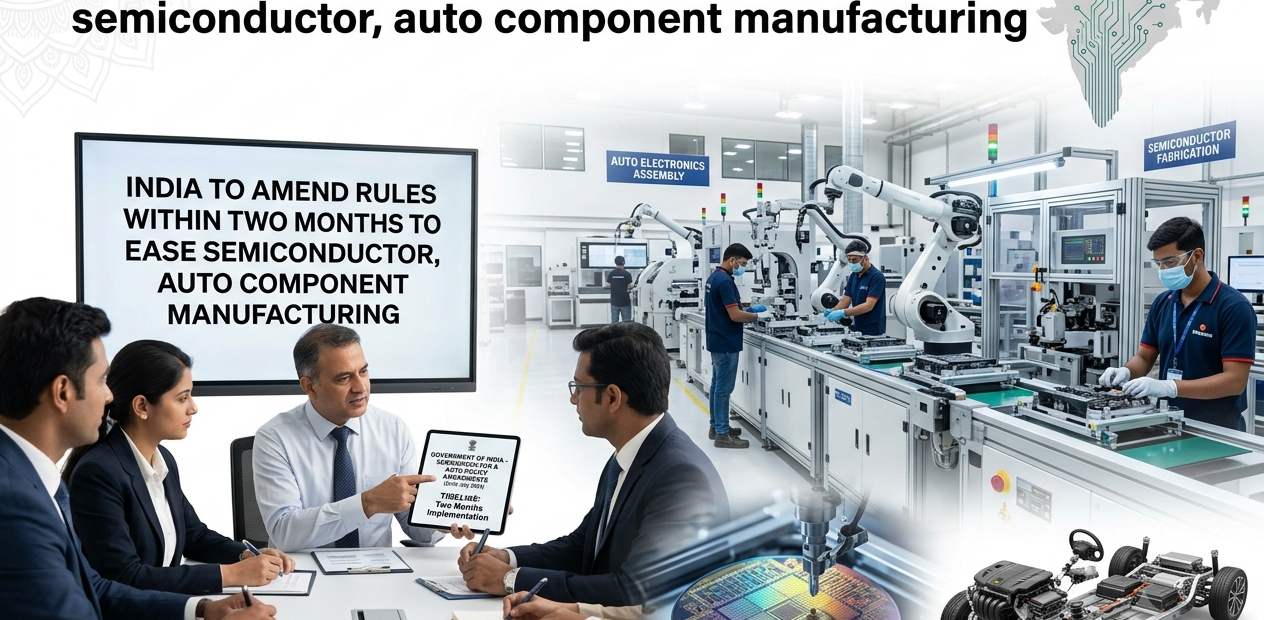
India to Amend Rules Within Two Months to Ease Semiconductor, Auto Component Manufacturing

Two phone calls. That is all it took to unlock a regulatory logjam that had been holding back two major manufacturing investments in India. It sounds almost too simple for a country known for its layered approvals and long compliance timelines, but that is exactly what happened this week in Tokyo, and it signals a much bigger shift in how India wants to be seen by global chip and auto component makers.
Commerce and Industry Minister Piyush Goyal announced that India will amend existing regulations and roll out new rules within the next two months to resolve concerns raised by a semiconductor equipment manufacturer and an automotive components company looking to set up operations in the country. The announcement was not a vague policy promise; it came with a timeline, a clear intent, and a broader context of India’s ongoing push to become a serious player in global high-tech manufacturing.
What Was Announced, and Why It Matters

Speaking at a fireside chat with Nikkei Asia during a business delegation visit to Japan, Goyal explained that he had met representatives from two large corporations earlier that day. One was exploring semiconductor equipment manufacturing in India, and the other operates in the automotive components space. According to the minister, both companies had specific regulatory concerns, and rather than letting those concerns sit in a review queue for months, his team resolved them through direct conversations during the meeting itself.
He then committed publicly to a two-month timeline for amending the relevant regulations and introducing new rules that would remove these obstacles for good. This kind of responsiveness is unusual in large economies, where regulatory change typically moves at a much slower pace. For companies evaluating where to place billion-dollar manufacturing bets, a government that can commit to a fixed timeline for fixing friction points is a meaningful signal, arguably more persuasive than any incentive scheme on paper.
Goyal also pointed out that the government has already simplified the Bureau of Indian Standards framework considerably and is working to make the approval process easier, including for suppliers who may not yet fall under the revised rules. That detail matters because supply chains in semiconductor and auto manufacturing are rarely limited to a single large plant; they depend on a web of smaller vendors who often struggle the most with compliance overheads.
The Bigger Picture: Semicon 2.0 and India’s Manufacturing Ambitions
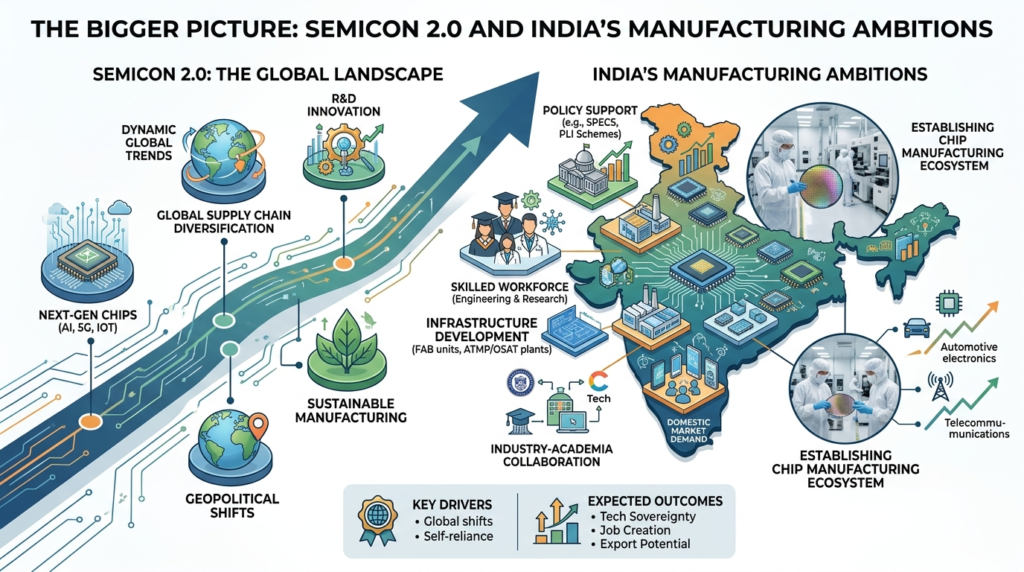
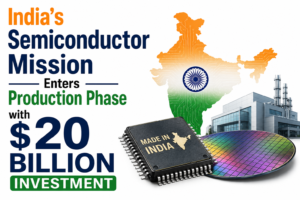
This announcement did not happen in isolation. It follows the Union Cabinet’s approval of Semicon 2.0, a program with a financial outlay of roughly Rs 1,27,500 crore aimed at deepening India’s semiconductor ecosystem rather than just building it from scratch. Where the original Semicon India Programme focused on getting fabs, packaging units, and design incentives off the ground, Semicon 2.0 is structured around six pillars covering chip design, manufacturing equipment and materials, new fabs, research, and long-term ecosystem depth.
The numbers behind this shift are hard to ignore. India has already approved a dozen semiconductor manufacturing projects with a combined investment exceeding Rs 1.64 lakh crore, spanning a silicon fab, a silicon carbide fab, a gallium nitride micro LED display fab, and several packaging facilities. A handful of these projects have already moved into commercial production, which gives the government tangible proof points to point to when courting new investors. Against that backdrop, promising to fix regulatory friction within two months feels less like a one-off gesture and more like a continuation of a deliberate strategy.
Regulatory Reform Is Not New: The SEZ Rule Changes Set the Tone
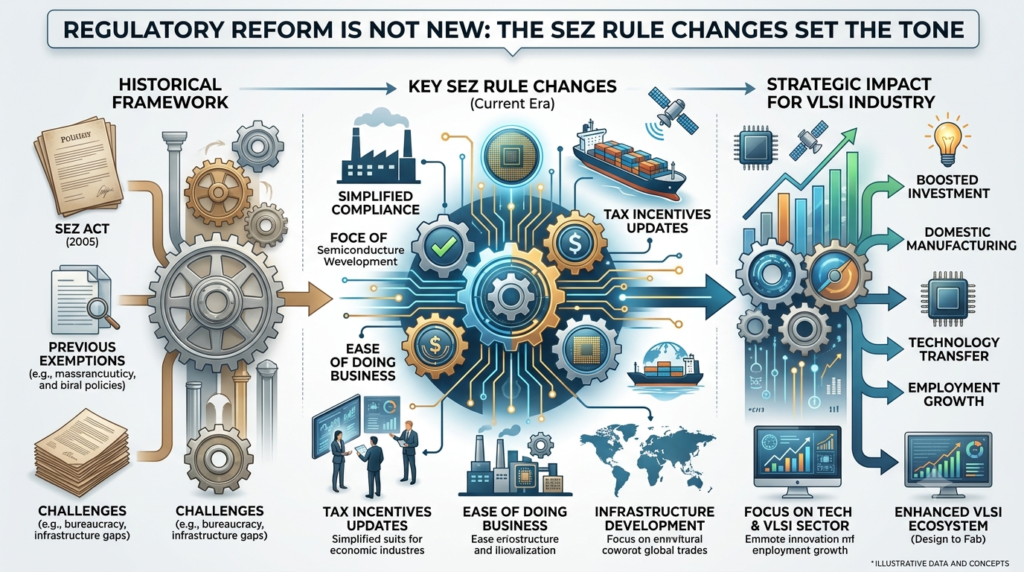
If this latest promise feels familiar, it is because India has already shown it can move quickly on regulatory reform when it wants to. Earlier this year, the government amended Special Economic Zone rules specifically to make it easier to set up semiconductor and electronics component manufacturing units. The minimum contiguous land requirement for such SEZs was cut from 50 hectares to just 10 hectares, a change that immediately widened the pool of viable sites for new fabs and component plants.
Alongside that, the rules were adjusted to let companies count free-of-cost inputs toward export performance calculations, to relax encumbrance-free land conditions in certain cases, and to permit limited domestic sales from SEZ units after paying applicable duties. Following those changes, projects from companies including Micron and an electronics component manufacturer received swift approval for new SEZ facilities. That track record gives some weight to the latest two-month commitment; it is not the first time the government has turned a stated intention into an actual rule change within a short window.
Semicon 2.0 and India’s Bigger Semiconductor Ambitions
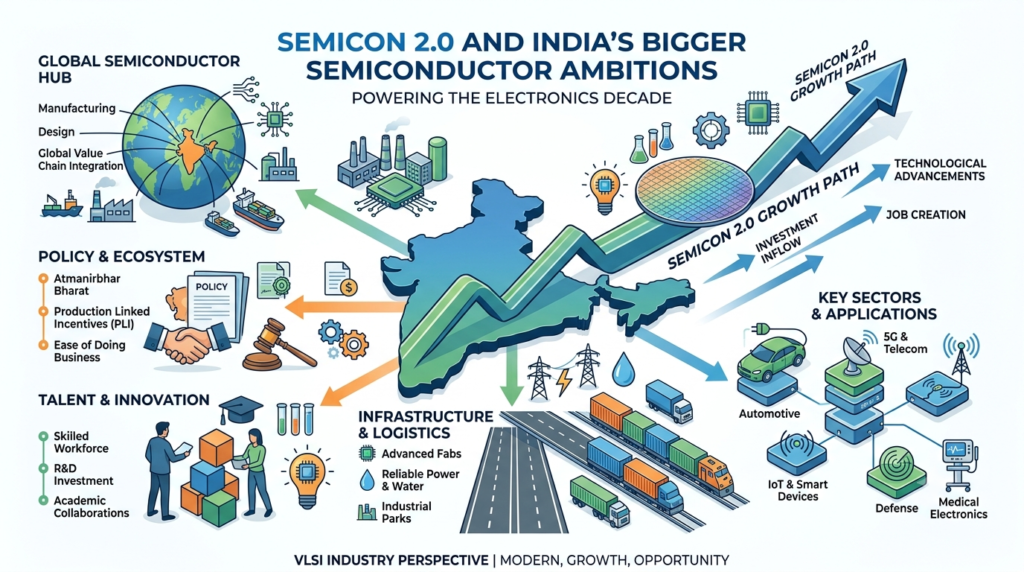
This announcement doesn’t exist in isolation. It comes shortly after the Union Cabinet approved Semicon 2.0, a program aimed at strengthening India’s semiconductor design and manufacturing ecosystem, with a total outlay of roughly ₹1,27,500 crore. Goyal shared that alongside private sector participation, the plan is to attract around 50 billion dollars of investment into semiconductors and related industries over the next year and a half.
He even hinted that once this phase is complete, the government is already thinking about a Semicon 3.0, describing the whole effort as an ongoing journey rather than a one-time push. This adds important context to the two-month regulatory promise. It isn’t a standalone gesture to two companies; it’s part of a much larger, multi-year strategy to position India as a serious semiconductor manufacturing hub.
It’s also worth remembering that this isn’t India’s first move on the regulatory front this year. Earlier reforms to the Special Economic Zones rules already reduced the minimum land requirement for semiconductor and electronics component SEZs from fifty hectares to just ten, along with easing several land-related conditions. Those changes have already led to new SEZ approvals for semiconductor and electronics component projects in Gujarat and Karnataka. The upcoming two-month rule amendment appears to be the next chapter in that same ongoing effort.