

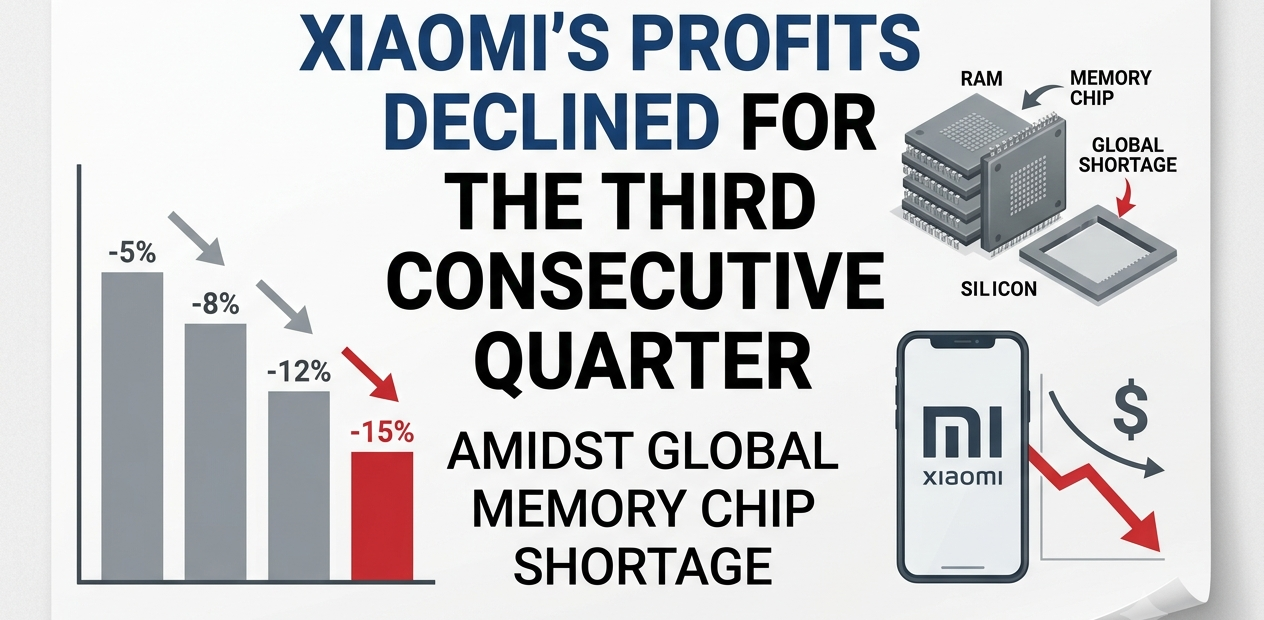
Xiaomi’s Profits Declined for the Third Consecutive Quarter Amidst Global Memory Chip Shortage

Picture a company selling more electric vehicles than ever, expanding its global footprint, and still watching its profits shrink quarter after quarter. That is exactly the situation Xiaomi finds itself in right now, and the culprit isn’t weak demand or bad management. It’s a tiny component sitting inside every phone: the memory chip.
Xiaomi has now posted its third straight quarterly profit decline, and the pattern is becoming impossible to ignore. Revenue for the June quarter slipped around 6% year-on-year to roughly 108.9 billion yuan, while adjusted net income tumbled by more than 40%. Behind these numbers lies a global memory shortage that is reshaping the entire consumer electronics industry, and Xiaomi is standing right at the center of the storm.
What Actually Happened in Xiaomi’s Latest Earnings
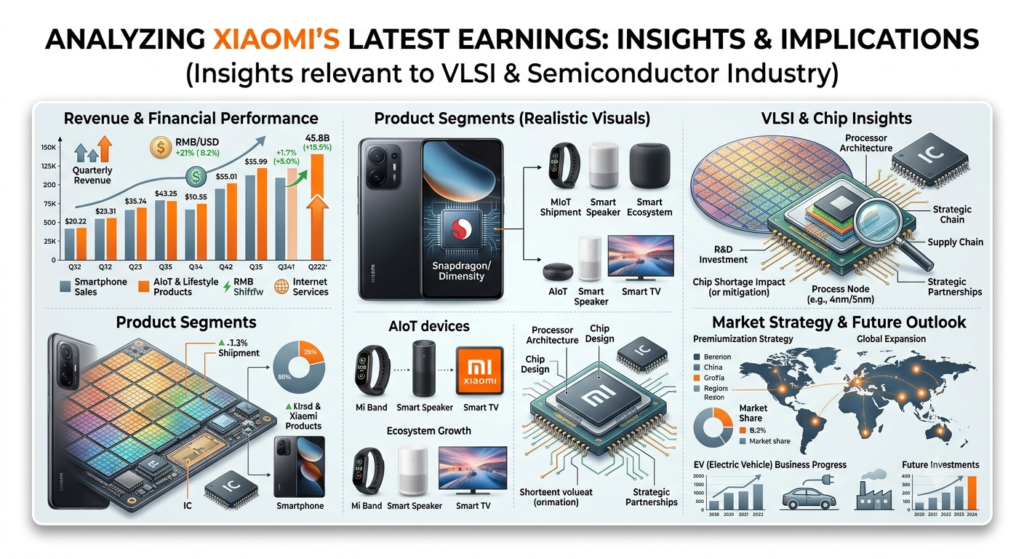
Xiaomi’s second-quarter 2026 results tell a story of a company caught between rising costs and price-sensitive customers. Adjusted net profit fell close to 43% compared to the same period last year, landing around 6.2 billion yuan. Reported net income, which includes one-time items, dropped roughly 21% to about 9.46 billion yuan, a figure that actually beat some analyst expectations even though it still marked a clear decline.
Smartphone revenue took the hardest hit, sliding around 7.5% as Xiaomi deliberately pulled back on shipments of its cheaper, lower-margin devices. This wasn’t a case of Xiaomi losing customers to competitors. It was a strategic retreat from products that were no longer profitable to make. Overall gross margin also slipped, landing under 20%, a clear sign that cost pressure is squeezing the business from every direction rather than just one product line.
What makes this quarter different from a typical rough patch is that it’s the third one in a row. A single bad quarter can be explained by market noise. Three consecutive declines point to a structural problem that isn’t going away on its own, and that problem has a name: memory chips.
Why Memory Chips Suddenly Became So Expensive
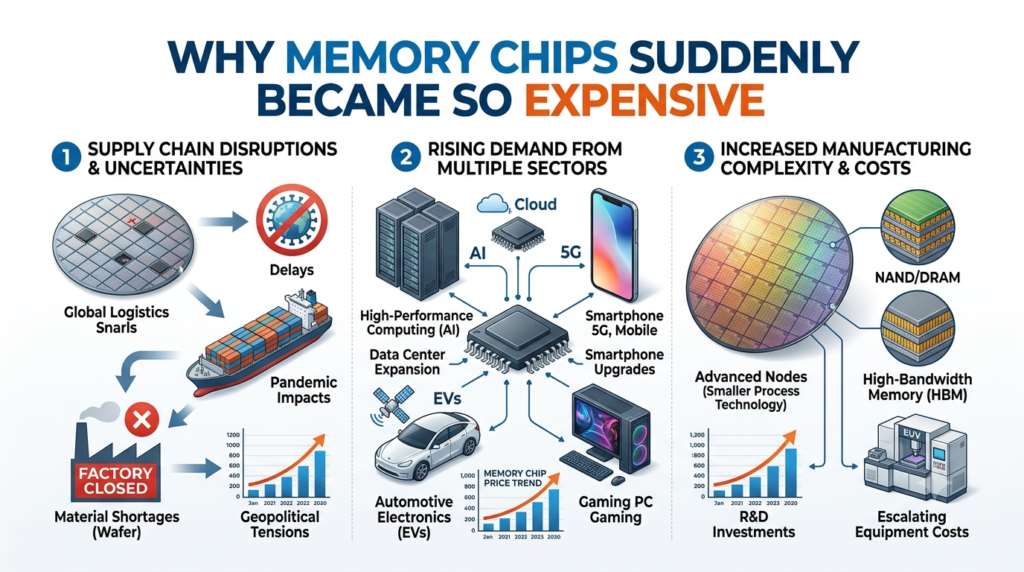
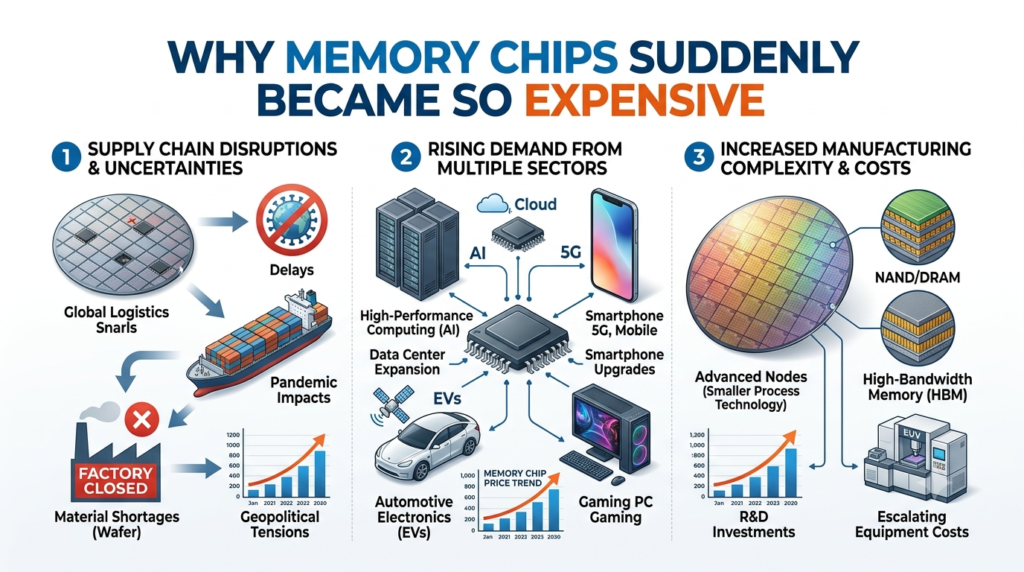
To understand Xiaomi’s situation, you have to look past smartphones entirely and toward data centers. The explosion in artificial intelligence infrastructure has created enormous demand for the same DRAM and NAND memory chips that go into phones, laptops, and televisions. Companies building AI servers need massive amounts of high-bandwidth memory, and chipmakers have responded by shifting their production priorities.
Samsung, SK Hynix, and Micron, the three companies that dominate global memory production, have increasingly redirected their manufacturing capacity toward the chips used in AI data centers, since those products command far higher prices and stronger long-term contracts. That leaves less capacity available for the conventional memory used in consumer electronics, and basic economics has taken over from there.
Industry trackers have reported that conventional DRAM and NAND prices rose more than 50% in a single quarter earlier this year, with some component categories seeing even steeper increases. Xiaomi’s own leadership has pointed out that certain memory costs have climbed several times over since late 2025, and storage components used in televisions have seen even sharper jumps. Analysts following the sector expect this imbalance to persist for a while yet, since building new memory fabrication capacity takes years, not months.
How the Squeeze Is Hitting Xiaomi’s Smartphone Business
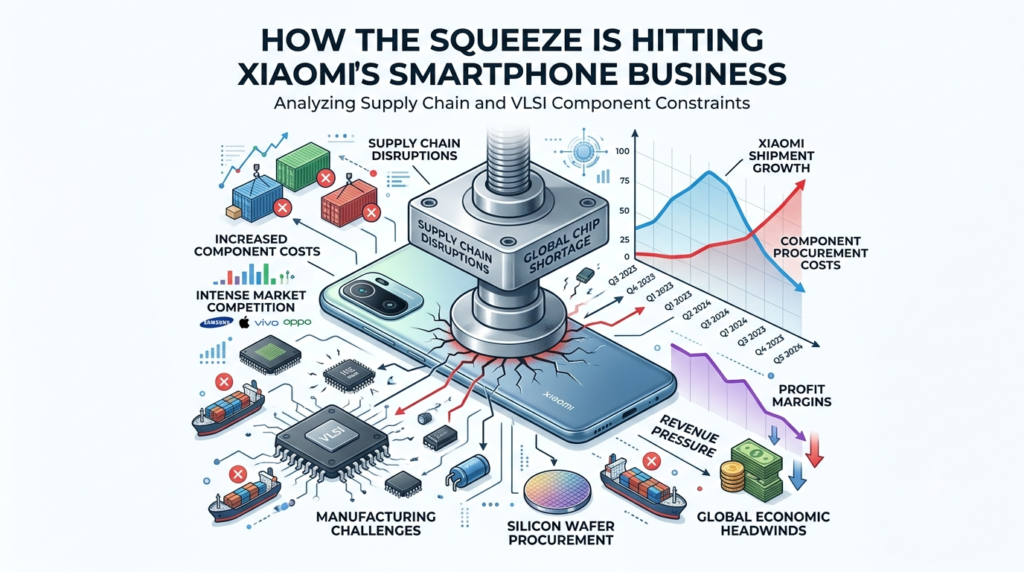
Xiaomi’s business model is part of why it has been hit harder than some rivals. The company built its global reach on affordable, mid-range and budget smartphones, with roughly half of its shipments priced under $200. That pricing strategy worked brilliantly when component costs were stable, but it leaves very little room to absorb a sudden spike in memory prices.
Premium smartphone makers can pass rising costs on to customers more easily, since buyers in that segment are less price-sensitive. Xiaomi’s core audience doesn’t have the same flexibility, which is why the company has instead chosen to cut shipment volumes of its cheapest models rather than sell them at a loss. This shows up directly in the shipment numbers, which have declined for two consecutive quarters even as the company tries to shift its lineup toward slightly higher price points to protect margins.
There is a broader industry angle here too. Xiaomi isn’t alone in facing this pressure, and several other smartphone brands have flagged rising component costs in recent public statements. The difference is that Xiaomi’s budget-heavy portfolio makes it more exposed than most, turning a shared industry challenge into a company-specific earnings problem.
What Comes Next for Xiaomi and the Wider Industry
Despite three rough quarters, Xiaomi isn’t standing still. Its electric vehicle division has become a genuine bright spot, with deliveries climbing sharply and the segment increasingly seen as the company’s next major growth engine. Executives have also signaled that memory price increases may be starting to slow down, with some expecting conditions to gradually stabilize in the second half of the year, even if a full return to earlier pricing looks unlikely anytime soon.
Company leadership has been fairly direct about the situation, describing the current environment as a short-term pressure that won’t change the company’s longer-term strategy. That framing matters, because it signals Xiaomi views this as a cyclical supply issue rather than a sign of deeper trouble in its core business.
For the broader electronics industry, this episode is a preview of what happens when AI infrastructure and consumer devices compete for the same limited pool of components. Analysts covering the memory market expect tight supply to continue into 2027, which means smartphone makers, television brands, and other device manufacturers will likely keep navigating higher costs for the foreseeable future. How companies like Xiaomi adapt their pricing, product mix, and supplier relationships during this stretch will say a lot about their resilience heading into the next growth cycle.
The memory chip shortage didn’t start with Xiaomi, and it won’t end with Xiaomi either. But as one of the world’s largest smartphone makers with a business built on affordability, the company has become one of the clearest examples of how a shift in one corner of the tech supply chain can ripple through balance sheets on the other side of the industry entirely.