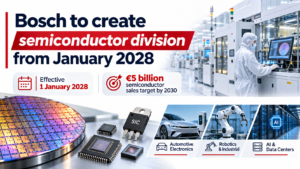


Bosch to create semiconductor division from January 2028

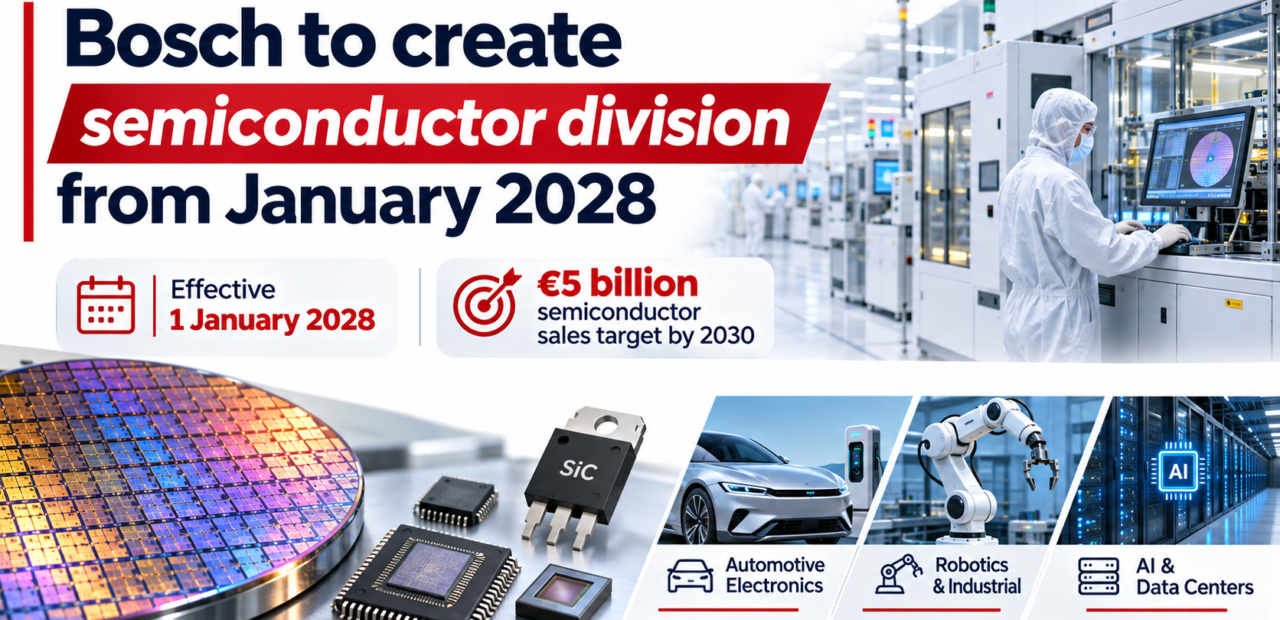
The global semiconductor industry is entering another important phase as demand for advanced chips continues to expand across automotive electronics, artificial intelligence, robotics, and industrial automation. Semiconductor manufacturers and technology companies are increasingly restructuring their businesses to respond to changing market requirements and emerging applications. Adding to this industry development, German technology and engineering company Bosch has announced plans to establish a dedicated semiconductor business division starting January 1, 2028. The move represents a significant step in the company’s long-standing semiconductor strategy and reflects its ambition to strengthen its position in an increasingly competitive global chip market.
Bosch currently manages its semiconductor activities within its Mobility Electronics division. Under the proposed organizational change, these operations will be transferred into a new business division called Semiconductors, while remaining part of the company’s Mobility business sector. The restructuring is intended to provide greater focus on semiconductor customers, technologies, and market opportunities. Bosch is also targeting approximately €5 billion in semiconductor sales by 2030. Alongside its established automotive business, the company sees opportunities in robotics, consumer electronics, and other technology markets where sensors and specialized chips are becoming increasingly important.
Why Is Bosch Creating a Dedicated Semiconductor Division?
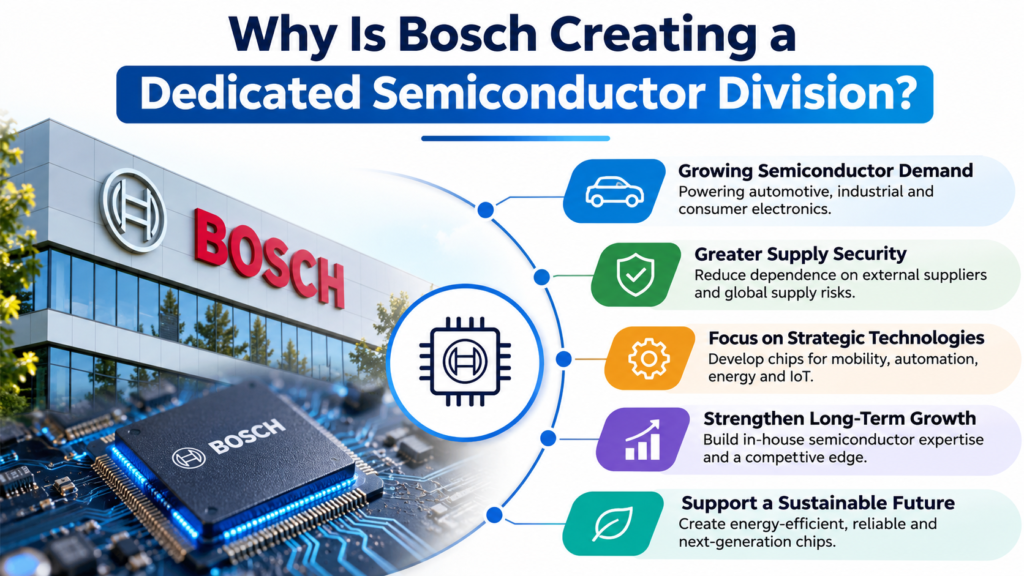
Bosch has been involved in semiconductor development and manufacturing for more than 60 years. Its technologies support several applications, including vehicle electronics, safety systems, industrial equipment, and consumer devices. However, the semiconductor market has evolved considerably, with growing demand for specialized chips, advanced sensors, and power electronics.
By establishing a dedicated division, Bosch aims to align its organizational structure more closely with the requirements of the semiconductor industry. A specialized business unit can provide a clearer focus on customer requirements, product development, manufacturing capabilities, and emerging market opportunities. The change also reflects the increasing strategic importance of semiconductors across Bosch’s wider technology portfolio.
Bosch Targets €5 Billion in Semiconductor Sales by 2030
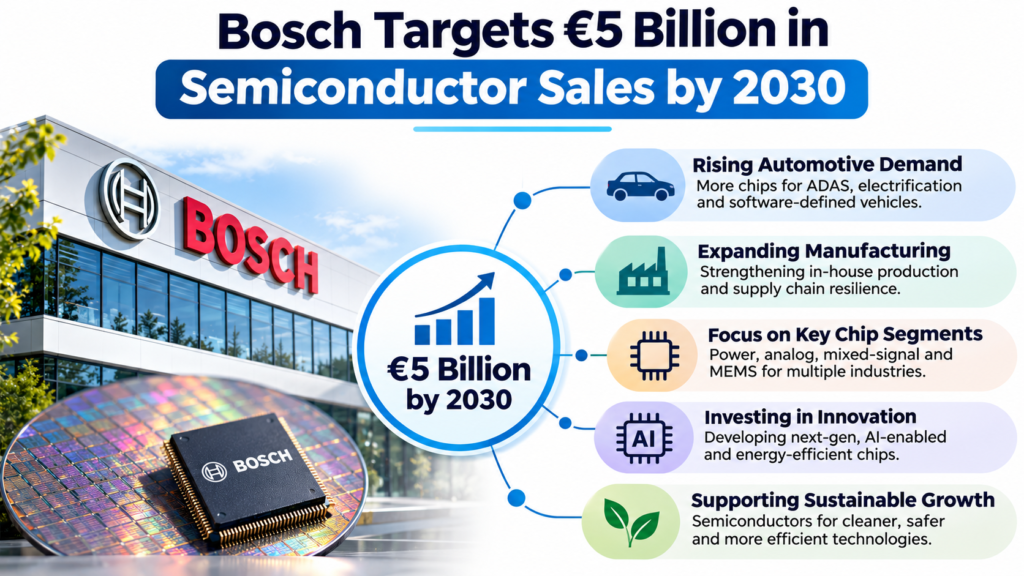
One of the most important objectives behind this restructuring is Bosch’s ambition to generate approximately €5 billion in semiconductor sales by 2030. This target demonstrates the company’s intention to expand its semiconductor business beyond its established automotive customer base.
The company plans to build on its existing strengths in MEMS sensors, silicon carbide power semiconductors, and application-specific integrated circuits (ASICs). These technologies are relevant to electric mobility, vehicle safety, industrial automation, and other advanced electronic systems. Expanding into selected new markets will be an important part of achieving its long-term revenue objective.
Expanding Beyond Automotive: Robotics, AI, and Consumer Electronics
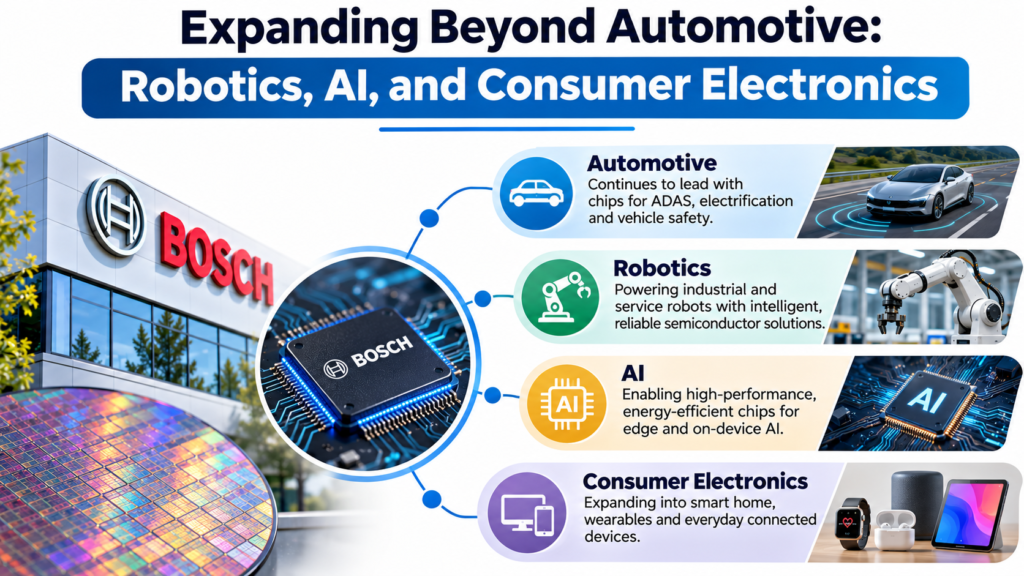
Automotive electronics remains an important foundation of Bosch’s semiconductor business. Modern vehicles depend on semiconductor components for advanced driver assistance systems, power management, sensing, connectivity, and safety functions. However, Bosch is also exploring opportunities in markets where semiconductor requirements are growing rapidly.
Robotics is one of the areas receiving increasing attention. Robots require sensors, control electronics, and specialized semiconductor components to interact with their surroundings and perform precise operations. Bosch has highlighted its existing involvement in robotics, including technologies used in humanoid robots. Artificial intelligence infrastructure and consumer electronics also represent opportunities for specialized chips and sensor technologies.
Global Manufacturing Investments and Semiconductor Capabilities
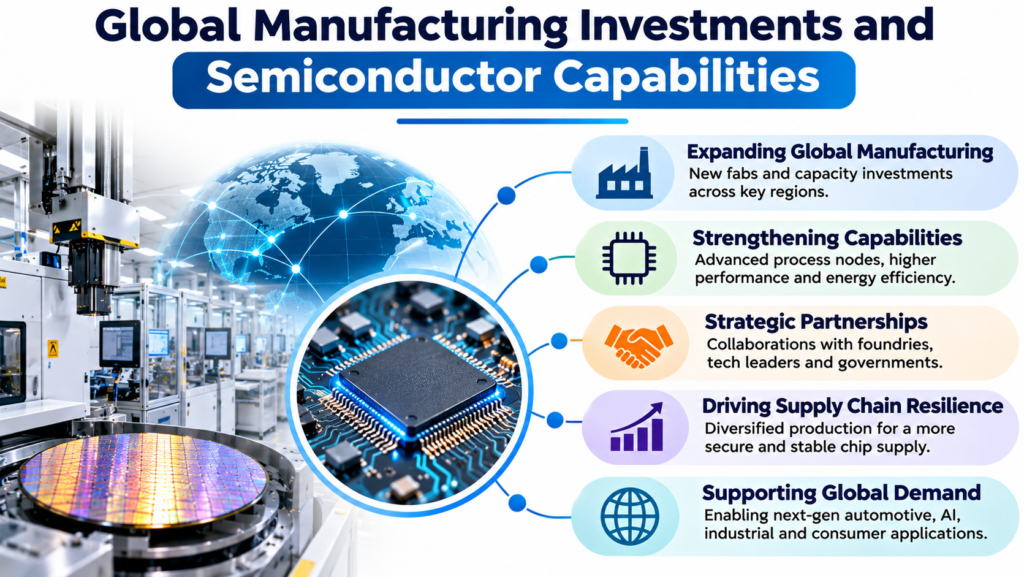
Bosch’s new semiconductor strategy is supported by investments across its international manufacturing and development network. The company has invested approximately €3 billion in its wafer fabrication facilities in Dresden and Reutlingen, Germany. These facilities support the development and production of semiconductor technologies for different applications.
In Roseville, California, Bosch is investing approximately US$2 billion to equip its manufacturing facility for specialized silicon carbide chips. The company has also started sample production at the site, with commercial manufacturing on 200-millimeter wafers planned for 2026. In addition, Bosch intends to expand its semiconductor test center in Penang, Malaysia, by the middle of the next decade. Its global semiconductor network includes approximately 40 development and manufacturing locations.
What the New Division Means for the Semiconductor Industry
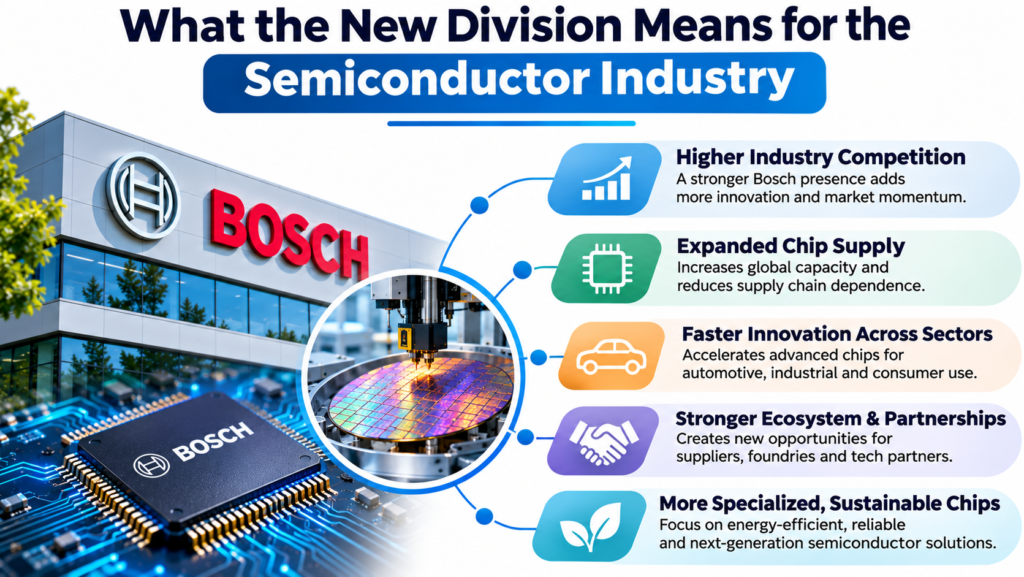
Bosch’s organizational restructuring highlights how established automotive technology companies are adapting to the changing semiconductor landscape. Rather than concentrating exclusively on vehicle-related chips, the company is positioning its semiconductor portfolio for applications across several technology markets.
The planned expansion of foundry services is another important development. Bosch intends to make more of its manufacturing capacity available to external partners, creating additional opportunities for contract semiconductor manufacturing. This could strengthen its relationships with customers that require specialized production capabilities. For the broader semiconductor ecosystem, the move reflects the growing importance of diversified manufacturing networks, application-specific technologies, and long-term investment strategies.