Singapore Expands Chip Manufacturing with VSMC Fab

Singapore just became the newest battleground in the global chip race, and the numbers behind one new fab prove it. While countries across Asia compete to lock down semiconductor supply chains, a joint venture called VisionPower Semiconductor Manufacturing Company is quietly building one of the region’s most advanced 300mm wafer facilities in Tampines, and it is set to reshape how the world sources power management, automotive, and interposer chips for years to come.
VSMC is a joint venture between Vanguard International Semiconductor Corporation (VIS) and NXP Semiconductors, with process technology licensed from TSMC. First announced in mid-2024, the project has already gone through funding adjustments and product changes, showing just how fast the global chip market moves. Here’s a full breakdown of what this fab means for Singapore, the semiconductor industry, and the future of global chip supply.
Why Singapore Is Becoming a Semiconductor Hotspot

Singapore has spent decades quietly building a strong base in chip packaging, testing, and specialty manufacturing, and the VSMC project is the clearest sign yet that the country is stepping up its game. The city-state already hosts a dense cluster of wafer fabs, equipment suppliers, and chemical and gas providers, which makes it an attractive location for a greenfield facility rather than starting from scratch elsewhere.
Government support has played a big role too. Singapore’s Economic Development Board actively courted this investment, and officials have publicly framed the fab as reinforcing the country’s position as a key node in the global semiconductor ecosystem. Interestingly, TSMC itself considered but ultimately did not commit to building its own fab in Singapore, which makes VIS and NXP’s decision to invest there even more notable. It signals that Singapore’s appeal isn’t limited to the biggest foundry names; mid-sized and specialty players see real value in the location as well.
Inside the VSMC Fab: Investment, Scale, and Timeline
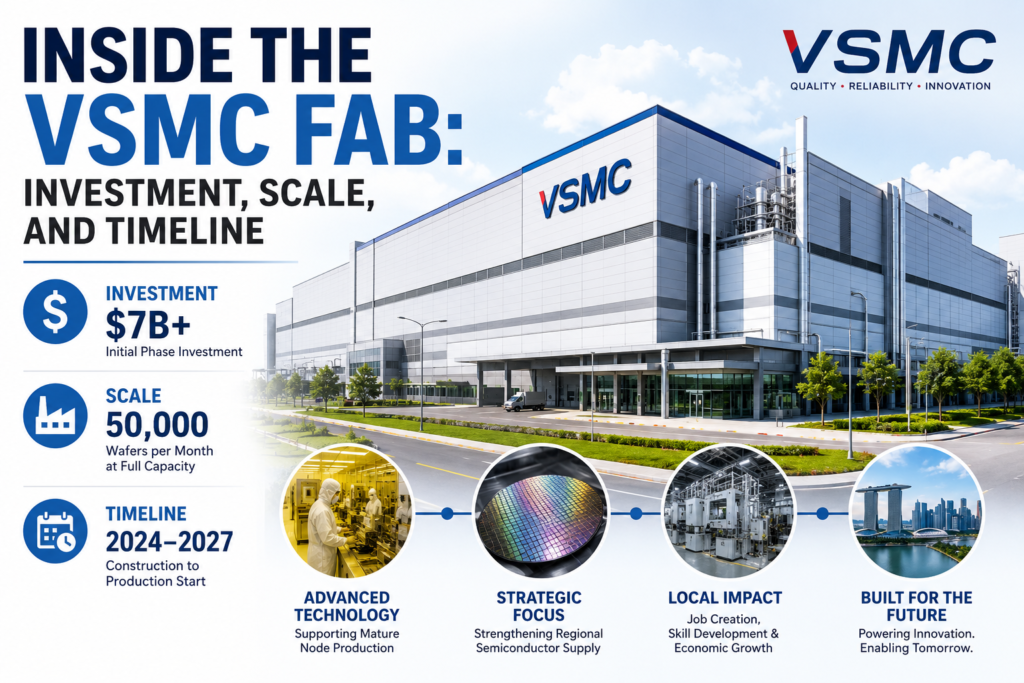
The VSMC fab began construction in the second half of 2024 and held its official groundbreaking ceremony in December of that year, in the Tampines Wafer Fab Park, one of Singapore’s four major semiconductor manufacturing zones. Initial production is targeted for 2027, which is a relatively tight timeline for a facility of this scale.
The total investment has actually been revised down from an original estimate of roughly $7.8 billion to about $6.7 billion, partly because TSMC is supplying equipment support that reduces upfront capital needs. Ownership is split unevenly, with VIS holding the larger 60 percent stake and NXP holding the remaining 40 percent. That structure gives VIS operational control while letting NXP secure a reliable, geographically diversified supply source for its own chip lines.
Production Capacity and the Shift Toward Interposers
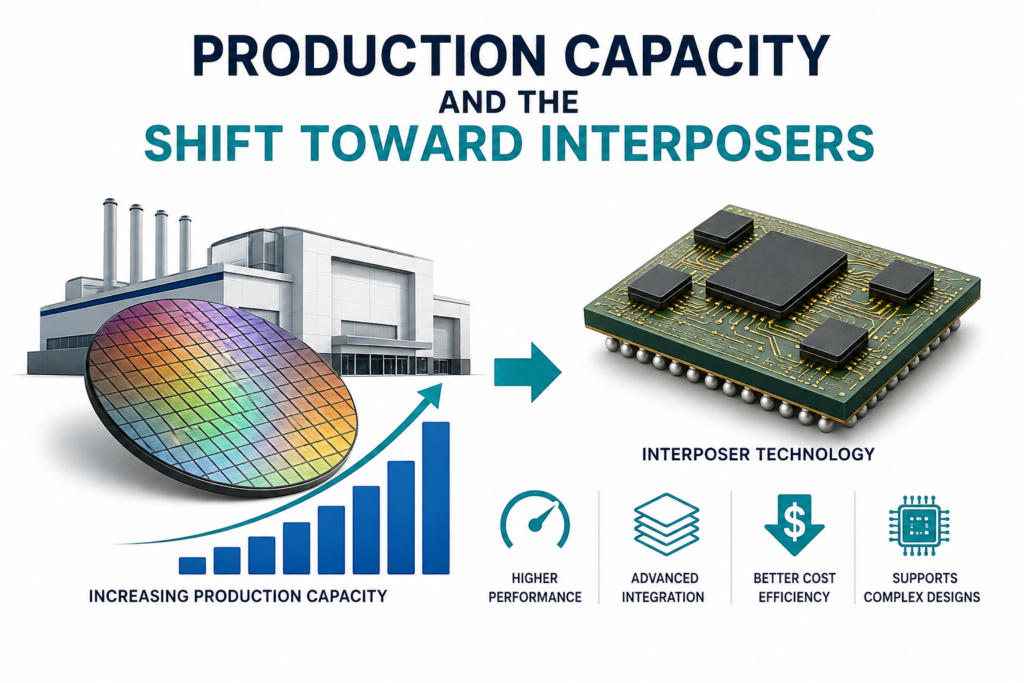
When the project was first announced, the plan called for the fab to eventually produce around 55,000 300mm wafers per month by 2029. That figure has since been adjusted down to about 44,000 wafers per month, and the reason behind the change is one of the more interesting parts of this story.
Demand for advanced packaging, especially silicon interposers used in AI and high-performance computing hardware, has surged. VSMC responded by shifting part of its planned product mix toward interposers built on 30 to 40 nanometer technology, alongside its original lineup of 130 to 40 nanometer mixed-signal, power management, and analog chips aimed at automotive, industrial, consumer, and mobile markets. Because interposers are more complex to manufacture, the facility’s effective wafer output naturally moved lower even as the value of what it produces increased. Executives have already indicated that the first phase of capacity is fully sold out under long-term customer agreements, and the fab may reach full utilization earlier than originally expected.
Automation, Sustainability, and Local Economic Impact
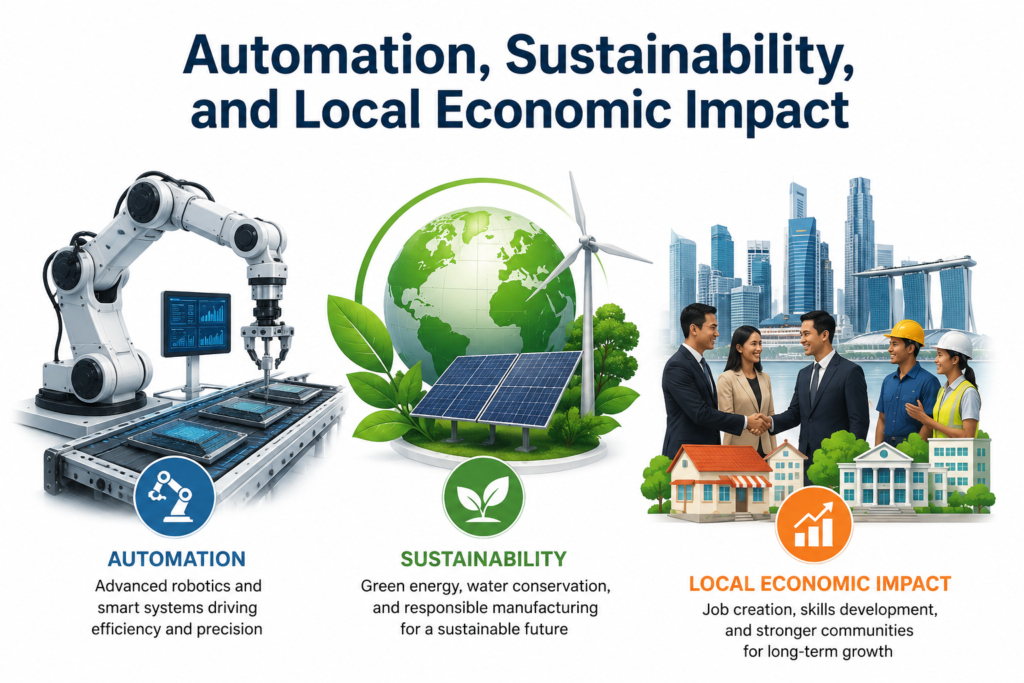
VSMC isn’t just adding capacity; it’s building a facility designed around modern manufacturing standards. The plant will use a fully automated production model, including an Automated Material Handling System and AI-driven quality management tools meant to improve yield, precision, and consistency compared to older-generation fabs. On the sustainability side, the facility is being built to meet Singapore’s Green Mark standards, incorporating energy-efficient systems into its design from the ground up.
The economic footprint extends well beyond the fab’s walls. The project is expected to create around 1,500 direct jobs, and it’s already pulling in supporting infrastructure investment, including a new industrial gas facility being built nearby specifically to serve VSMC and other semiconductor operations in the area. Singapore’s semiconductor sector already accounts for more than a fifth of the country’s total manufacturing output, and projects like this one are designed to push that share even higher while strengthening the broader supply chain of equipment vendors, materials suppliers, and logistics partners that cluster around a major fab.