
Mobile Phone Semiconductor Market Trends, Key Players, and Growth Opportunities

The mobile phone semiconductor market stands at the heart of modern consumer electronics, driving innovations in processing power, energy efficiency, and intelligent connectivity. As smartphones evolve from basic communication tools into sophisticated personal computing hubs, the underlying very-large-scale integration (VLSI) technology must advance continuously. Semiconductor manufacturers face the dual challenge of packing more transistors into smaller form factors while managing thermal envelopes and battery life limitations.
This technological transformation influences everything from entry-level handsets to flagship devices, altering how chips are designed, verified, and manufactured. Industry stakeholders are shifting away from generic designs toward highly specialized system-on-chips equipped with dedicated neural processing units. Understanding these shifts requires a close look at current market trajectories, architectural developments, and the competitive landscape shaping the future of mobile hardware.
Evolution of Advanced Process Nodes in Smartphone SoCs
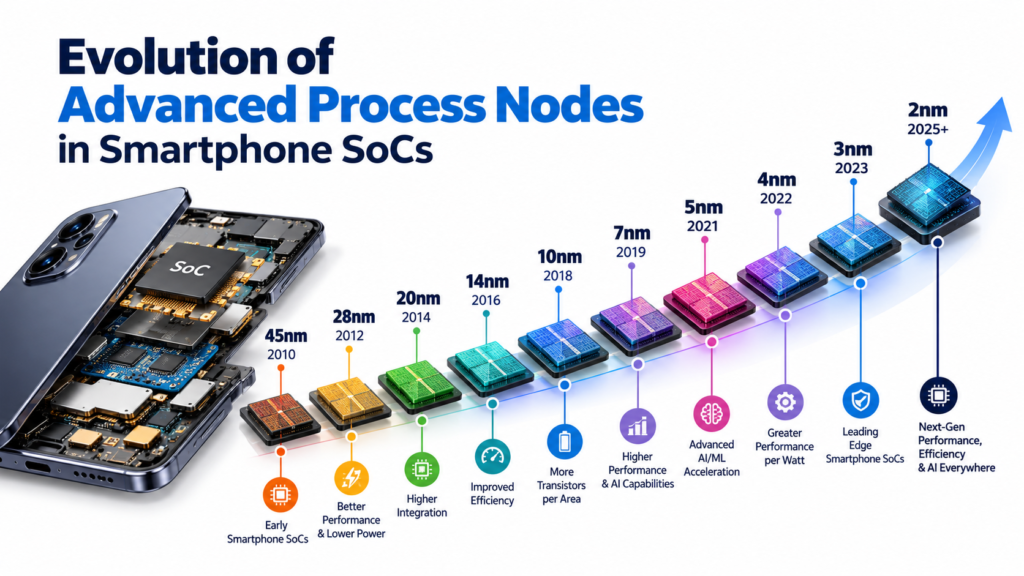
The transition toward ultra-dense fabrication nodes underpins modern mobile phone semiconductor engineering. Chip designers increasingly leverage advanced lithography nodes to pack billions of microscopic transistors onto a single silicon die. This miniaturization reduces electrical resistance and capacitive delays, allowing application processors to execute complex computational tasks with minimal energy consumption.
As manufacturing moves deeper into sub-nanometer regimes, thermal dissipation becomes a critical bottleneck for engineers. Advanced packaging techniques, such as chiplet architectures and three-dimensional stacking, help alleviate these pressures by separating logic, memory, and input-output functions. These innovations ensure that next-generation mobile processors maintain structural integrity and sustained performance during intensive multitasking or gaming sessions.
Integration of On-Device Artificial Intelligence and Neural Engines
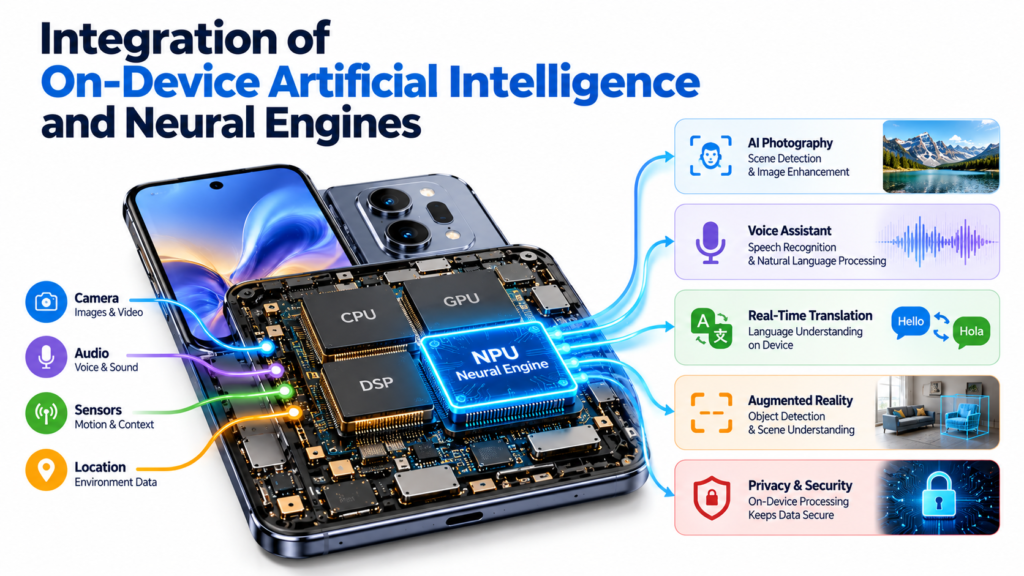
Artificial intelligence has transitioned from cloud-based data centers directly onto mobile handsets. Modern smartphone semiconductors now integrate specialized neural processing units designed to execute local machine learning models efficiently. This local processing reduces operational latency, enhances user data privacy, and eliminates the continuous need for cloud connectivity.
Executing complex algorithms locally demands high memory bandwidth and specialized matrix multiplication accelerators within the core architecture. Semiconductor developers must balance high computational throughput with strict smartphone power budgets. Consequently, heterogeneous computing models—where CPUs, GPUs, and NPUs share workloads dynamically—have become standard practice across contemporary mobile processor designs.
Impact of 5G Connectivity and RF Front-End Complexity
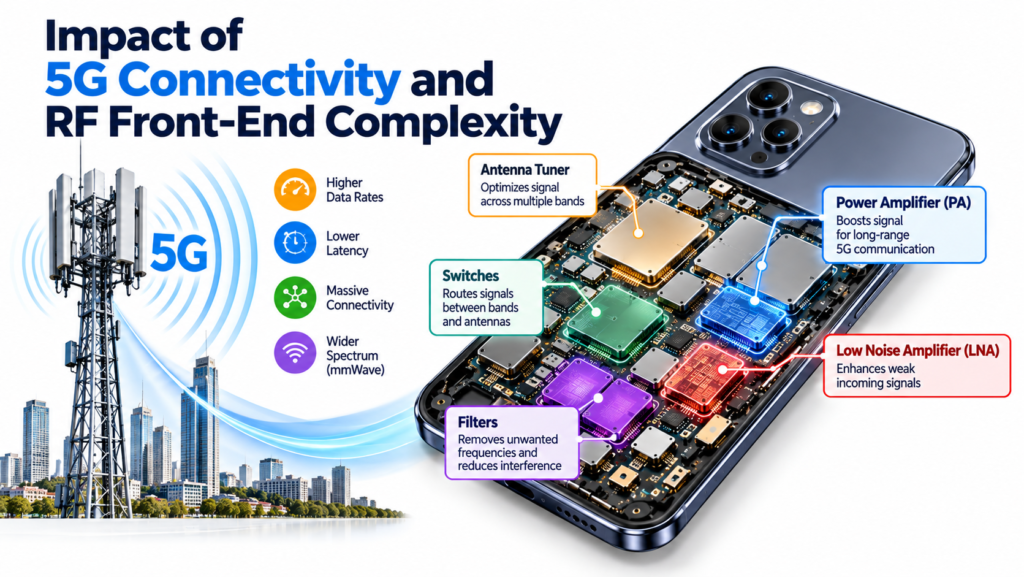
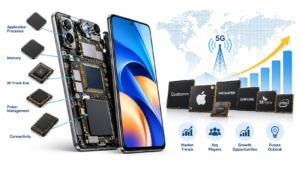
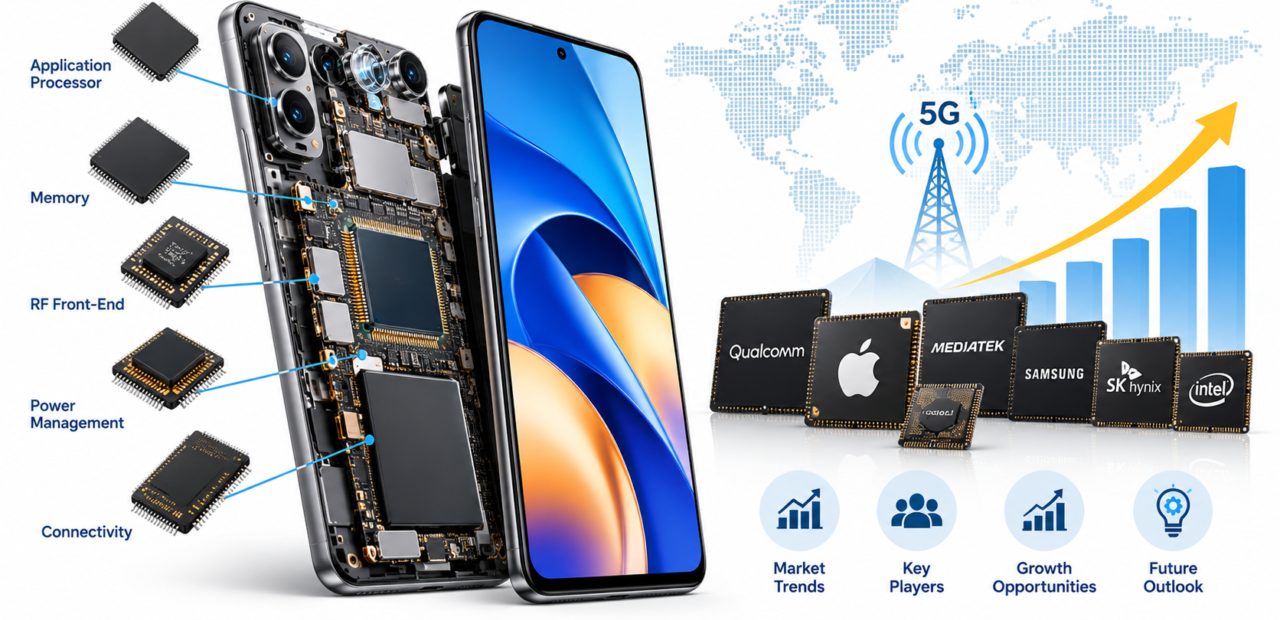
The widespread deployment of fifth-generation wireless networks has significantly altered mobile semiconductor design requirements. Multi-band 5G connectivity demands sophisticated baseband modems and extensive radio frequency front-end modules capable of handling diverse frequency bands simultaneously. Each additional frequency band increases component count, die area, and system integration complexity.
Furthermore, modern baseband processors incorporate advanced signal processing capabilities to manage signal interference and optimize network handoffs. The inclusion of satellite fallback functionality in recent modem iterations further expands silicon content per handset. These developments require tighter collaboration between RF component designers and baseband architects to minimize insertion loss and maximize energy efficiency.
Key Players and Competitive Strategies in the VLSI Ecosystem
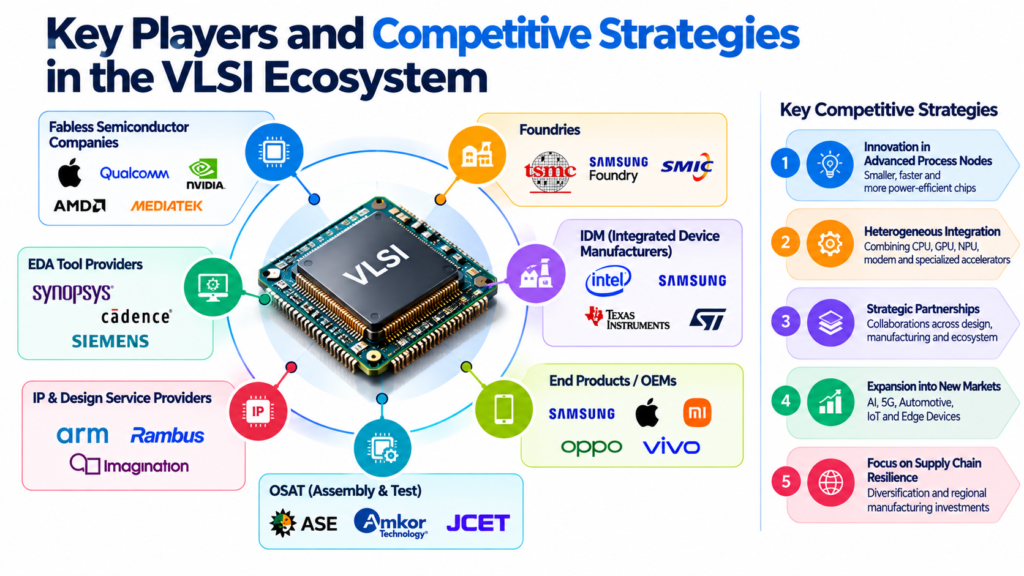
The global semiconductor market is anchored by a select group of major fabless designers, integrated device manufacturers, and dedicated foundries. Leading companies invest heavily in research and development to maintain architectural superiority in application processors, graphics units, and connectivity chipsets. Strategic partnerships between semiconductor vendors and original equipment manufacturers help align hardware roadmaps with emerging consumer software demands.
At the same time, foundry services face immense capital expenditure requirements to secure extreme ultraviolet lithography tools and cleanroom capacity. This dynamic creates a highly concentrated supply chain where technological leadership at advanced nodes dictates market share. Smaller market participants often differentiate through specialized analog integrated circuits, power management chips, or cost-effective mid-tier platform offerings.
Emerging Growth Opportunities and Supply Chain Resilience
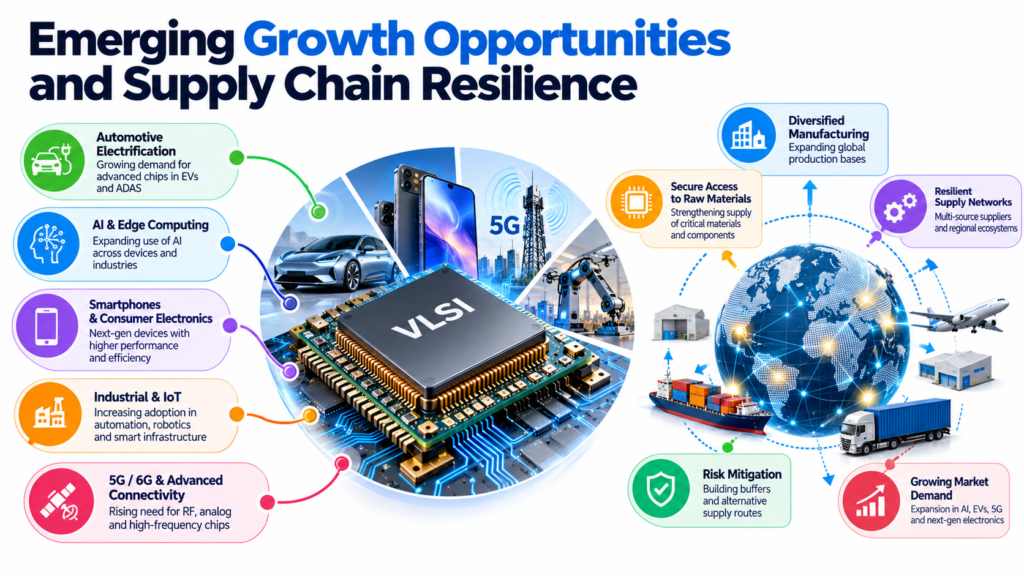
Future expansion in the mobile semiconductor sector relies on addressing emerging use cases and regional supply chain vulnerabilities. Emerging markets with rising smartphone penetration offer substantial volume growth potential for budget-conscious, AI-capable chip platforms. Additionally, early research into initial 6G standards and augmented reality integration promises to drive long-term semiconductor innovation.
Concurrently, industry stakeholders are prioritizing supply chain diversification and localized fabrication initiatives. Government-backed funding programs aim to establish regional semiconductor manufacturing hubs, reducing reliance on single-region production centers. These structural adjustments enhance long-term market stability, ensuring that the semiconductor industry can sustainably support future generations of mobile devices.