



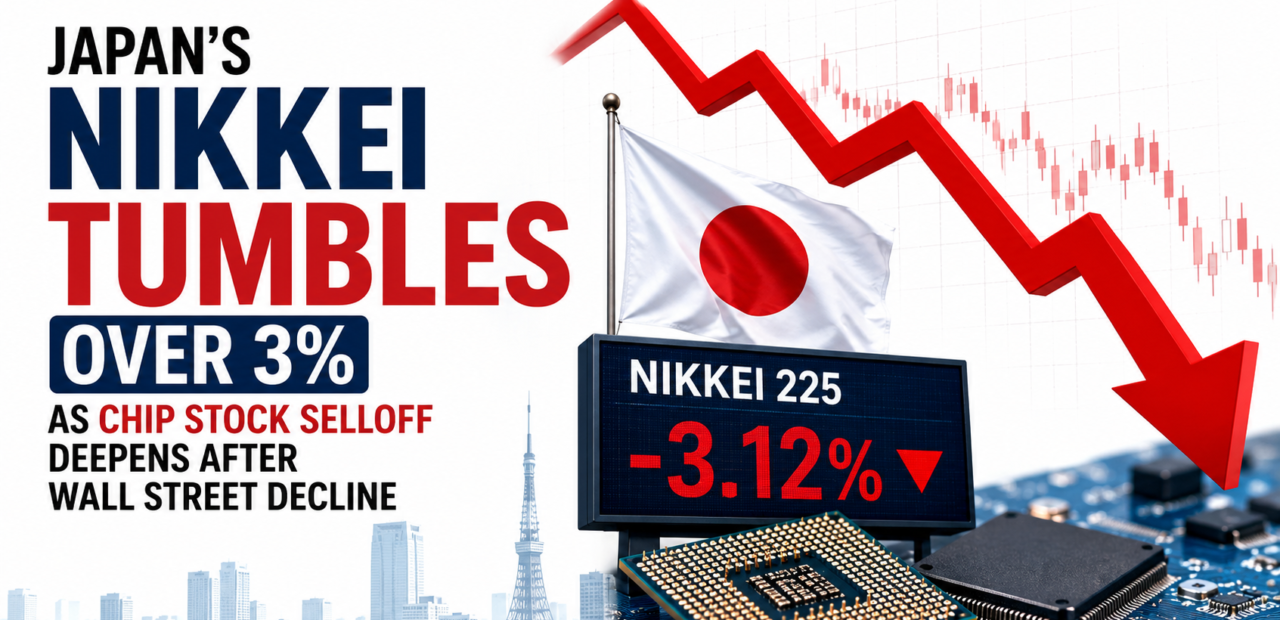
Japan’s Nikkei Tumbles Over 3% as Chip Stock Selloff Deepens After Wall Street Decline

Red numbers flashed across trading screens in Tokyo before most of Japan had even finished its morning coffee. The Nikkei 225 didn’t just dip on Tuesday — it tumbled more than 3%, wiping out weeks of gains in a matter of hours, and the culprit wasn’t some obscure economic data point. It was chips.
The selloff wasn’t a Japan-only story. It was the latest chapter in a global semiconductor pullback that started on Wall Street the night before, when major US chip names slid sharply and dragged tech-heavy indices lower. By the time Asian markets opened, the damage had already spread across the region, hitting Japan’s biggest chip equipment makers the hardest and pulling the broader index down with them.
What Triggered the Selloff: A Wall Street Hangover

The story begins in the United States. Overnight trading saw a sharp pullback in major chipmaking stocks, with one of the sector’s biggest names sliding close to 5% in a single session. That move rattled investors who had spent much of the year riding a powerful AI-driven rally in semiconductor shares. The Philadelphia Semiconductor Index, a widely watched gauge of chip sector health, fell over 2% overnight and is now down roughly 21% from its record close set in late June, even though it remains up sharply for the year overall.
Markets in Asia simply took their cue from that move. When Tokyo opened for trading, chip-related names were among the first to feel the pressure, and the selling only intensified as the session progressed. Investors, already cautious ahead of a fresh round of corporate earnings from both US and Japanese tech companies, chose to book profits rather than wait and see what those reports would bring.
Nikkei vs Topix: Why a Handful of Stocks Moved the Whole Market

One of the more interesting details in this selloff is the gap between how the Nikkei behaved compared to the broader Topix index. The Nikkei closed down 3.59%, while the Topix — a much wider measure of the Tokyo market — fell a comparatively smaller 2.44%. That difference matters, and it comes down to how the Nikkei is built.
Unlike most global indices, the Nikkei is price-weighted rather than weighted by market capitalization. In simple terms, that means stocks with higher share prices swing the index more, regardless of how large the underlying company actually is. Chip equipment makers in Japan tend to trade at high per-share prices, so when a few of them fall hard, the headline index can look far worse than the market as a whole.
This is why market watchers often check the Nikkei-Topix gap on volatile days. A wide gap, like the one seen this week, usually signals a concentrated shock in one sector rather than a broad-based flight from Japanese equities altogether. Analysts at Daiwa Securities described the move as sector-specific rather than a wholesale retreat from risk, noting that investors remain reluctant to add exposure ahead of upcoming earnings updates.
Which Chip Names Took the Biggest Hit
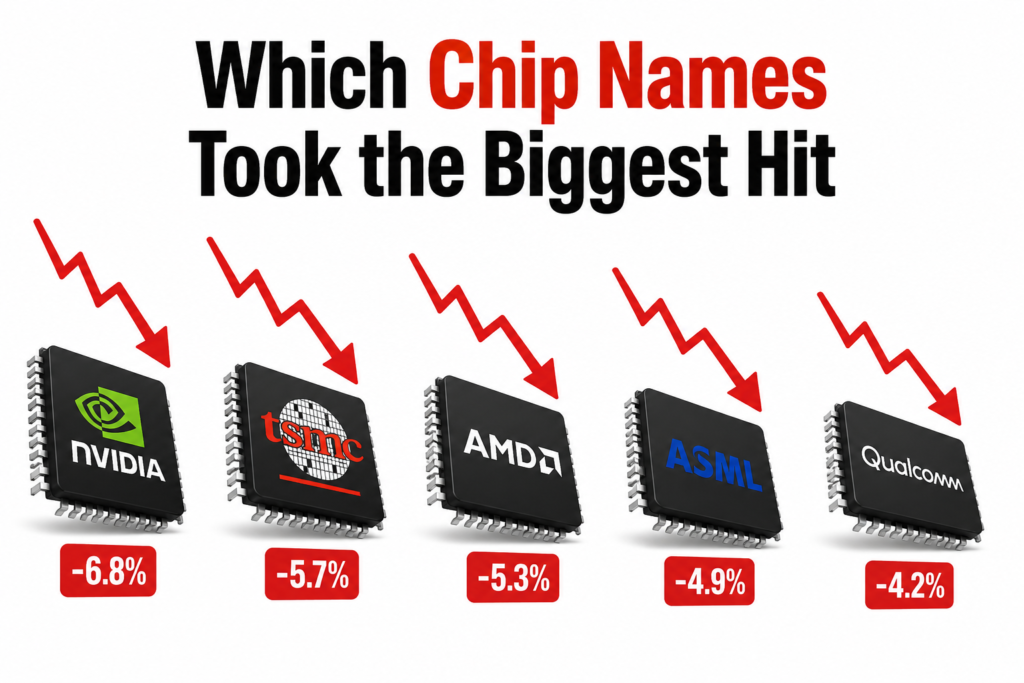
The damage was concentrated almost entirely in semiconductor-linked stocks. Advantest, a major supplier of chip-testing equipment, dropped more than 7.5% during the session. Tokyo Electron, one of the world’s largest makers of semiconductor manufacturing tools, fell even further, losing close to 8.8% of its value in a single day.
These two companies alone carry enormous weight on the Nikkei given their high share prices, so their declines had an outsized effect on the index’s overall move. The pain wasn’t limited to Japan either — South Korea’s Kospi, home to major memory chip producers, saw an even steeper drop, falling as much as 7.6% and touching its lowest level in months. Together, the moves in Tokyo and Seoul painted a clear picture: this was a regional chip correction, not a random one-day dip.
What This Means for the Broader Semiconductor Rally

For anyone tracking the chip sector, the bigger question is whether this marks the start of a deeper correction or simply a pause after an extraordinary run. Semiconductor stocks have been at the center of the AI infrastructure boom for well over a year, with valuations climbing on expectations of surging demand for advanced chips, testing equipment, and manufacturing tools. A run that strong was always going to invite periods of sharp pullback, especially once a single earnings disappointment or guidance miss shakes investor confidence.
What’s notable this time is that the pullback is happening even as underlying fundamentals for many of these companies remain solid. Order books, capital expenditure trends, and long-term demand projections for advanced chip manufacturing haven’t changed overnight — what’s changed is short-term risk appetite. That distinction matters for anyone trying to separate a temporary sentiment shift from a genuine change in the sector’s growth story.
For now, markets appear to be in a wait-and-watch mode. Upcoming earnings from both US and Japanese technology companies will likely set the tone for whether this selloff extends further or proves to be a brief, sharp correction within a much longer semiconductor upcycle. Either way, days like this are a useful reminder that even the strongest rallies rarely move in a straight line, and that headline index numbers don’t always tell the full story of what’s happening underneath.