



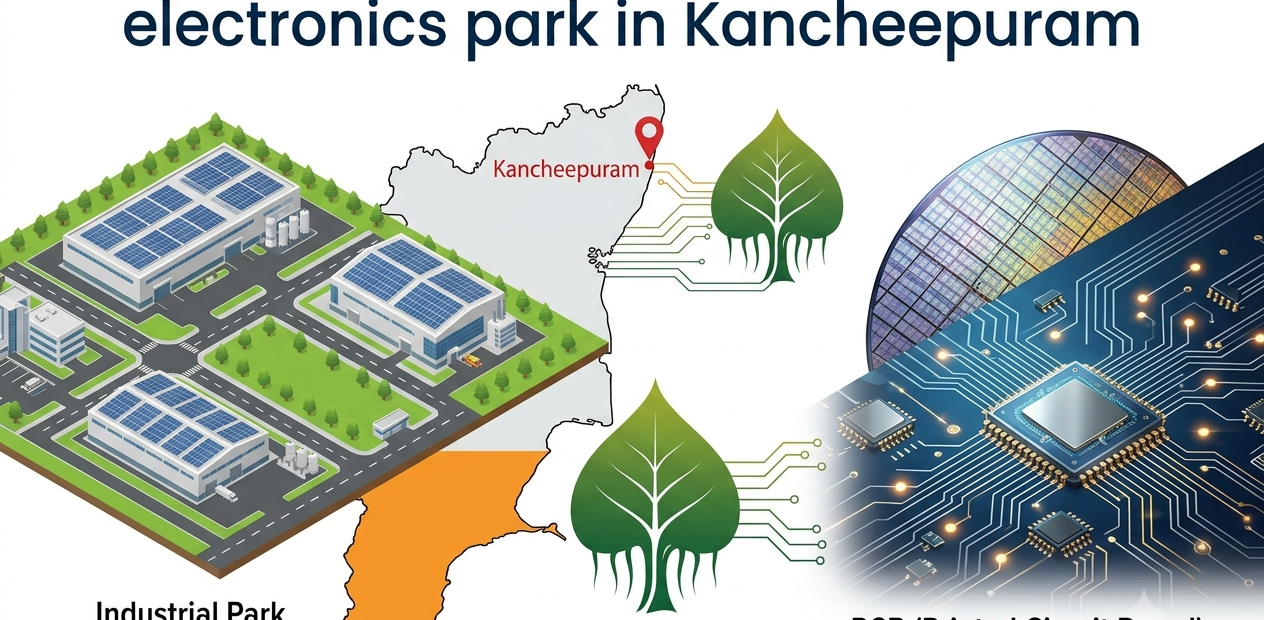
Tamil Nadu to Set Up Semiconductor, Electronics Park in Kancheepuram

There is a new address on India’s semiconductor map, and it belongs to Tamil Nadu. In a move that signals just how serious the state has become about chip manufacturing, the government has announced a dedicated semiconductor and electronics park in Kancheepuram district. For an industry that has largely been dominated by a handful of global hubs, this is the kind of regional push that could quietly reshape where the next wave of hardware gets built.
The announcement came directly from the Assembly floor, where Tamil Nadu’s Chief Minister confirmed that a Semiconductor Electronics Manufacturing Park will come up at Madhuranthagam in Kancheepuram district. Alongside it, the state also revealed plans for a multi-modal logistics hub in Tiruchirappalli and a digital finance centre in Coimbatore, painting a picture of a government trying to build infrastructure across several high-value sectors at once, not just chips alone.
What Exactly Is Being Built in Kancheepuram
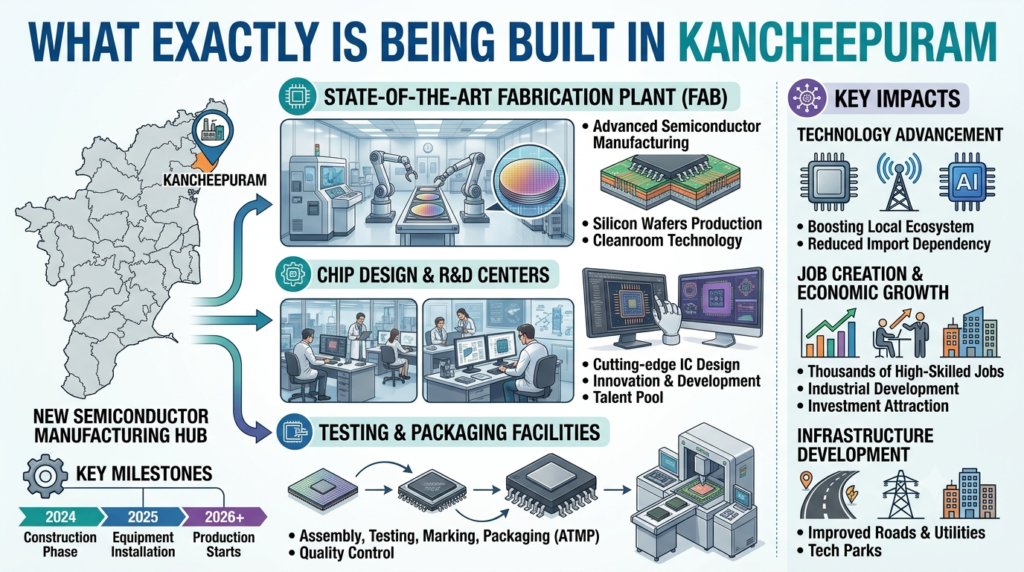
The proposed park will be developed by the State Industries Promotion Corporation of Tamil Nadu, better known as SIPCOT, at an estimated project cost of Rs 175 crore. What makes this announcement stand out is the scale of ambition behind a relatively modest initial outlay. The government expects the park to draw in investments of around Rs 2,000 crore once operational, along with a dedicated research and development facility built to support new companies entering the semiconductor space. This isn’t meant to be just another industrial plot with allotted land; it is being positioned as a full ecosystem where manufacturing, testing, and design work can happen under one roof, with SIPCOT handling the groundwork that usually slows down projects of this scale.
Why Kancheepuram Makes Sense as a Semiconductor Hub

Location has a lot to do with why this district was chosen. Kancheepuram sits right along the Chennai-Bangalore Industrial Corridor and is already home to established SIPCOT industrial parks at places like Pillaipakkam, Thirumudivakkam, and Vallam Vadagal, which host everything from automotive component makers to electronics manufacturers. That existing base means the region already has power infrastructure, water supply, rail connectivity through Kancheepuram and Sriperumbudur stations, and a supplier network that a semiconductor project can plug into rather than build from scratch. Proximity to Chennai also matters for logistics, ports, and access to skilled labour, all of which are practical considerations that investors weigh heavily before committing capital to a hardware-heavy sector like semiconductors.
The Jobs and Economic Impact Angle
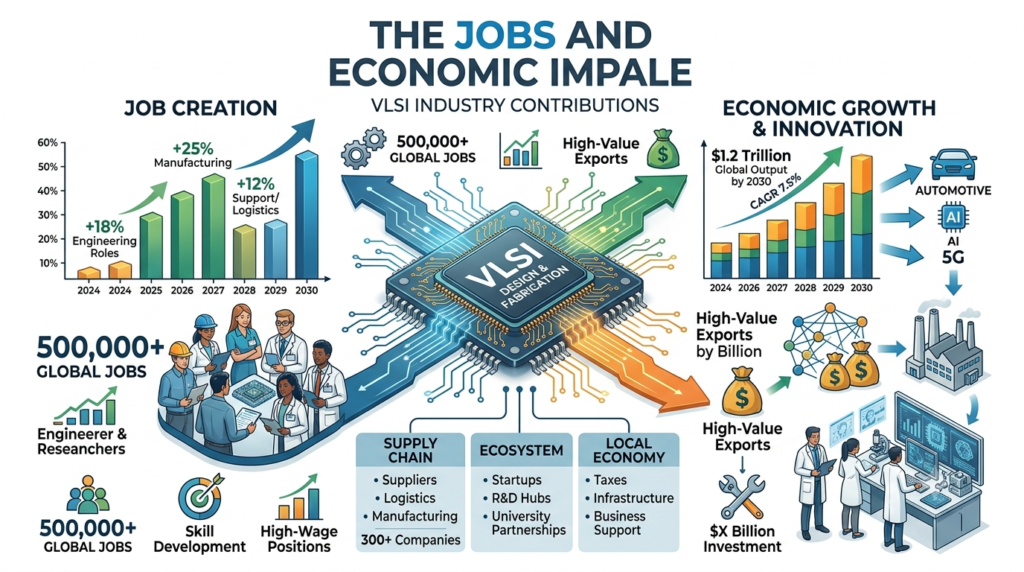
Beyond the factory floor, the numbers being floated are worth paying attention to. The park is projected to create close to 5,000 direct and indirect jobs once it reaches capacity, spanning roles in manufacturing, quality control, logistics, and facility operations. This fits into a much larger pattern playing out across Tamil Nadu right now. The state has pulled in roughly Rs 68,817 crore in investments across manufacturing, artificial intelligence, aerospace, and semiconductors this year alone, with major names like Larsen & Toubro, Sarvam AI, Aequs Group, and MinebeaMitsumi signing on. L&T’s own commitment of Rs 18,600 crore includes a large hyperscale data centre project in Kancheepuram itself, meant to support cloud computing and AI workloads. Seen together, the semiconductor park is not an isolated announcement but one piece of a coordinated effort to turn the district into a genuine technology corridor rather than a single-project zone.
What This Means for India’s Semiconductor Push

India’s broader semiconductor mission has so far been anchored around a few states pushing hard for fabrication and assembly units, and Tamil Nadu’s entry adds real weight to that race. A dedicated electronics and semiconductor park with SIPCOT backing gives the state a concrete project to point to when courting global chipmakers and component suppliers who are actively looking to diversify their manufacturing base beyond traditional hubs in East Asia. It also strengthens Tamil Nadu’s existing reputation as an electronics manufacturing state, building on the momentum from consumer electronics and mobile phone assembly units already operating in and around Chennai. If the park delivers on its R&D component as promised, it could also become a testing ground for smaller, specialised firms working on chip design and packaging rather than only large-scale fabrication, which tends to attract a more diverse set of investors over time.