


Gujarat Emerging as Tech Hub With Semiconductor Ecosystem, AI and Data Centres

Picture a state once known mainly for its factories and ports quietly turning into one of the most watched technology addresses on the planet. That is exactly what is happening in Gujarat right now, and the pace of change is hard to ignore.
From chip plants rising out of the ground in Sanand and Dholera to AI research hubs inside GIFT City, Gujarat is stitching together manufacturing, intelligence, and digital infrastructure into a single growth story that the rest of India is watching closely.
Semiconductor Manufacturing Finds a New Home in Gujarat

Gujarat has quietly become the centre of gravity for India’s chip-making ambitions. Out of the semiconductor projects approved under the national semiconductor programme, a large share are based in the state, with Sanand and Dholera leading the charge. Facilities from Tata Electronics, Micron Technology, Kaynes Semicon, and CG Semi have either gone live or are moving toward commercial production, bringing assembly, testing, and packaging capabilities that India previously had to depend on other countries for.
The government has repeatedly pointed to Dholera as the emerging “Semicon City,” with thousands already employed on ongoing projects and many more roles expected as facilities scale up. Infrastructure built specifically for this purpose, including dedicated highways, uninterrupted power, and assured water supply, has made the region attractive to global chipmakers looking for a stable base outside the traditional semiconductor hubs of East Asia.
What makes this shift significant is not just the investment figures but the depth of the ecosystem forming around it. Speciality chemical plants, memory module facilities, and power chip units are being planned alongside the fabs themselves, which means Gujarat is not just assembling chips but building the full supply chain that supports chip production from raw material to finished product.
GIFT City and the Rise of Gujarat’s AI Ecosystem

While semiconductors dominate the headlines, artificial intelligence has been building momentum in parallel, largely centred around GIFT City in Gandhinagar. The state’s AI Centre of Excellence, developed with global technology partners, has positioned GIFT City as a meeting point for AI developers, researchers, and industry players working on real-world applications rather than just experimental projects.
More recently, plans for an Industrial AI Centre of Excellence have taken shape, focused specifically on applying artificial intelligence to manufacturing, energy, and supply chain operations. This is a deliberate move away from generic AI showcases toward practical, sector-specific use cases that align with Gujarat’s existing industrial strength. The idea is straightforward: use AI to make factories safer, supply chains more predictable, and industrial operations more efficient, rather than treating AI as a separate, isolated initiative.
This industrial focus gives Gujarat’s AI push a distinct identity compared to other regions chasing generic AI investment. By tying artificial intelligence directly to sectors the state already dominates, the ecosystem has a built-in customer base and a clearer path to measurable results.
Data Centres and Gujarat’s Digital Infrastructure Push

The third pillar of this transformation is digital infrastructure. Gujarat recently rolled out its Data Centre Policy for 2026-29, aimed squarely at attracting hyperscale data centres, cloud computing operations, and AI infrastructure investment. The policy offers a mix of capital subsidies, power tariff support, tax reimbursements, and other incentives designed to make Gujarat one of the most cost-effective locations in the country for setting up large-scale digital infrastructure.
The timing matters. India currently generates a significant share of the world’s data but holds only a small fraction of global data centre capacity, leaving a wide gap between data creation and data storage within the country. Gujarat is positioning itself to close part of that gap, banking on its reliable power supply, with a large share coming from renewable sources, along with established industrial zones like Dholera and GIFT City that can support power-hungry data centre operations.
The ripple effects extend beyond server racks. Growth in this sector tends to pull along fibre network expansion, equipment manufacturing, facility management services, and demand for commercial office space, creating jobs and business opportunities well beyond the data centres themselves.
Why This Matters for the VLSI and Chip Design Community
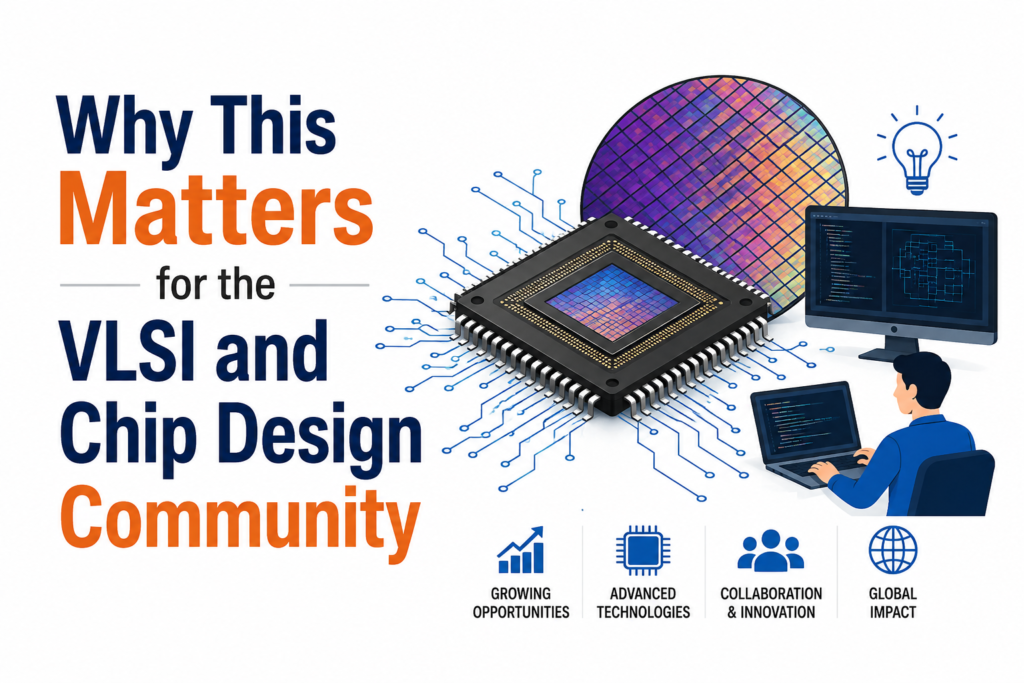
For anyone tracking careers or business opportunities connected to chip design and semiconductor technology, Gujarat’s growth is not just a regional story, it is a signal about where the industry is heading. As fabs and OSAT facilities scale up, the demand for professionals trained in VLSI design, verification, and testing is only going to grow, and this demand will not stay confined to Gujarat alone.
Cities with a strong base in electronics and semiconductor training, including a well-established VLSI course in Noida, are already seeing rising interest from working professionals who want to move into chip design roles or sharpen their existing skills. As more fabs come online and design activity increases across the country, this kind of focused, industry-relevant training is becoming one of the more practical ways to enter or grow within the semiconductor space, rather than relying on broad, generic technical education alone.
Gujarat’s push into semiconductors, AI, and data centres is unlikely to slow down anytime soon, especially with strong policy backing and continued interest from global technology companies. What began as a manufacturing and renewable energy story is now clearly a technology story as well, and the state’s ability to combine hardware, intelligence, and infrastructure under one roof gives it a genuine head start over regions still treating these as separate initiatives.
For India’s broader ambition of becoming a serious player in global semiconductor manufacturing, Gujarat’s progress offers a useful blueprint: build the infrastructure first, attract the right industry partners, and let the ecosystem grow around real, sector-specific needs rather than isolated announcements.