

India Has 12 Semiconductor Units With $20B Investment

What if the next chip inside your phone, your car, or your laptop was stamped “Made in India”? That question is no longer hypothetical. It is happening right now, faster than almost anyone predicted five years ago.
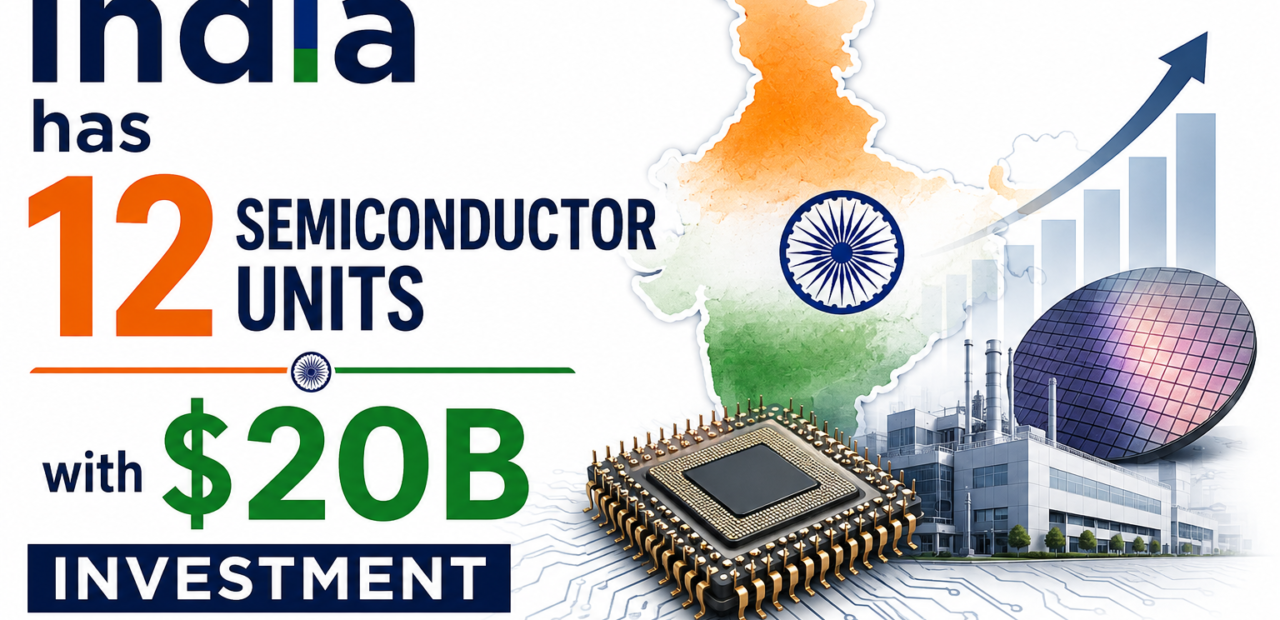
India’s semiconductor journey has quietly reached a milestone that few industry watchers saw coming this soon. Union Minister Ashwini Vaishnaw recently confirmed that the country now has 12 semiconductor units backed by a combined $20 billion in investment, with three of them already producing chips on Indian soil. This is not just another government announcement. It marks the shift from paperwork and groundbreaking ceremonies to actual, physical chip production, something India has attempted and failed at more than once in the past.
From Failed Attempts to Real Production

India’s tryst with semiconductors goes back further than most people realize. Two decades ago, a major global chipmaker had explored setting up a fabrication plant in the country, only for the plan to collapse under regulatory hurdles and policy uncertainty. That failure became a cautionary tale for years, often cited as proof that India simply wasn’t ready to enter an industry dominated by a handful of nations with decades of manufacturing experience.
What changed this time is execution. Since the launch of the Semicon India programme in 2022, the government has moved away from broad promises and focused on a clearer policy framework, faster approvals, and consistent follow-through with private investors. That shift in approach is exactly why the sector now has actual fabrication and packaging units running, not just plans sitting in files. Investors who were once skeptical are now watching production lines that are genuinely operational, and that credibility is pulling in more interest from global players evaluating where to build their next facility.
The 12 Units and What They Mean for India’s Supply Chain
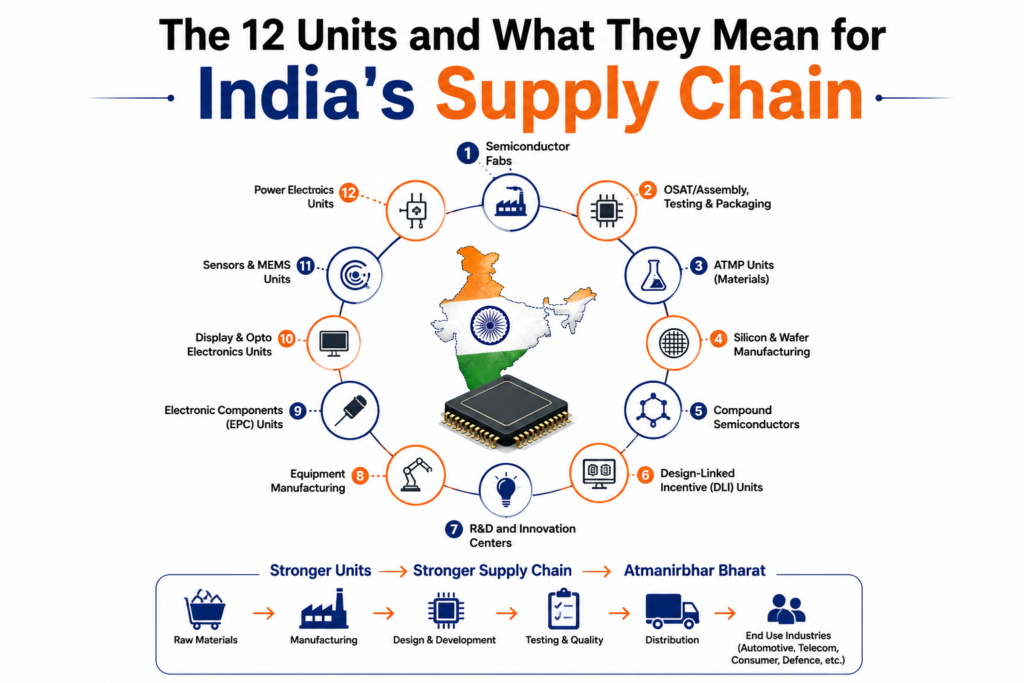
The 12 approved units are spread across several states, including Gujarat, Assam, Uttar Pradesh, Odisha, and Andhra Pradesh, covering everything from silicon fabrication to assembly, testing, marking, and packaging facilities. Three of these are already making chips, which is the detail that matters most. Announcements and approvals are common in industrial policy; actual production output is rare, and it changes the entire narrative around India’s manufacturing capability.
Semiconductors are the invisible backbone of modern life. They power smartphones, cars, medical devices, defense systems, and telecom networks. A country that depends entirely on imports for these components is exposed every time there is a global shortage, a geopolitical dispute, or a shipping delay. By building domestic capacity, India is not just creating an industry; it is reducing a strategic vulnerability that became painfully obvious during the global chip shortage a few years ago, when entire car production lines came to a halt because a single component wasn’t available.
Semicon 2.0: The Next Phase of the Plan

Perhaps the most significant part of this update is the approval of Semicon 2.0, the second phase of the government’s semiconductor mission. The Union Cabinet approved this new phase in mid-2026 with a budgetary outlay of over ₹1.27 lakh crore, expanding far beyond what the first phase covered.
Where Semicon 1.0 was primarily about attracting fabrication and packaging plants, Semicon 2.0 takes a more complete, ecosystem-wide approach. It extends support to companies making semiconductor manufacturing equipment, specialty chemicals, and raw materials, alongside continued backing for chip design startups and research institutions. The scheme is structured around distinct focus areas covering design, equipment and materials, fabrication, and workforce and research development, with capital expenditure support of up to 40 percent for silicon-based fabs and 35 percent for other categories such as compound semiconductor and display fabs.
This broader approach matters because a chip industry cannot survive on fabrication alone. Without local suppliers of gases, chemicals, and equipment, manufacturers remain dependent on imports for critical inputs, which defeats much of the purpose of building fabs in the first place. Semicon 2.0 is designed to close that gap and build a genuinely self-sufficient value chain over the next several years.
What This Means for India’s Position in Global Chip Manufacturing
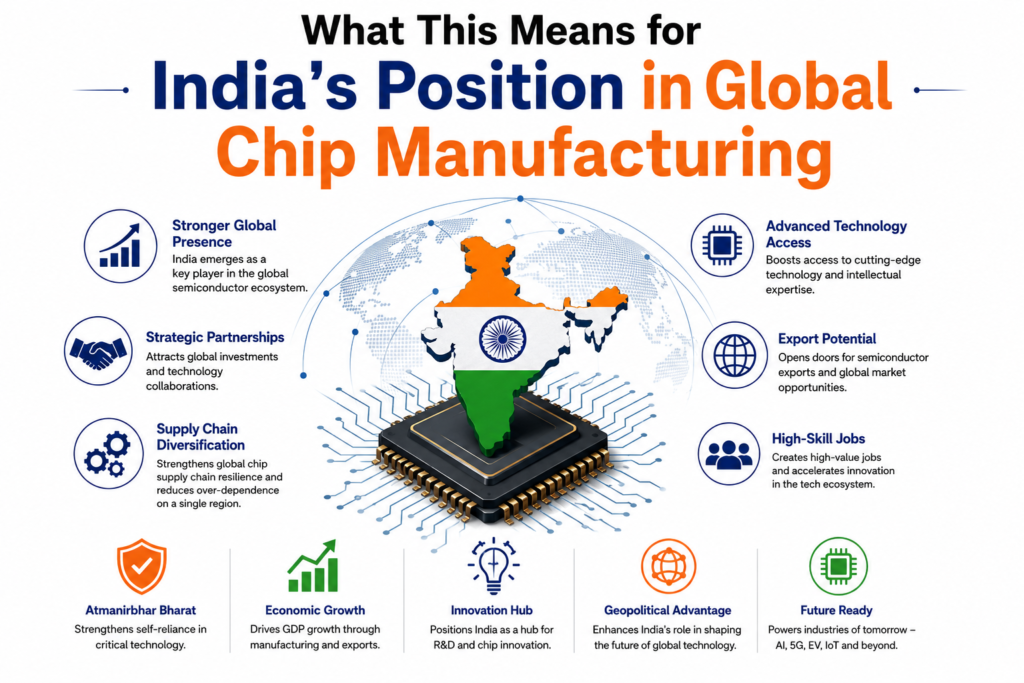
Global semiconductor manufacturing has long been concentrated in a small number of countries and companies, creating a fragile supply chain that the rest of the world has learned to worry about. India’s entry into this space, backed by real production rather than intent, positions it as a credible alternative within what is often described as a “China plus one” strategy, where global companies look to diversify their manufacturing base beyond a single region.
Industry estimates suggest India’s semiconductor sector could grow substantially over the next few years, supported by continued government incentives, a expanding domestic electronics market, and rising interest from international companies exploring where to place their next major investment. The first fabs to begin commercial-scale output are expected to be followed by more coming online through the rest of this decade, gradually building the kind of scale that turns a promising start into an established industry.
None of this means the road ahead is free of challenges. Building a mature semiconductor ecosystem takes sustained investment, skilled talent, reliable infrastructure, and years of consistent execution. But for a country that watched a major chip deal collapse twenty years ago, having 12 units running with $20 billion committed, and three of them already shipping chips, is a genuinely different story. India isn’t just talking about becoming a semiconductor hub anymore. It is building one, one operational fab at a time.