
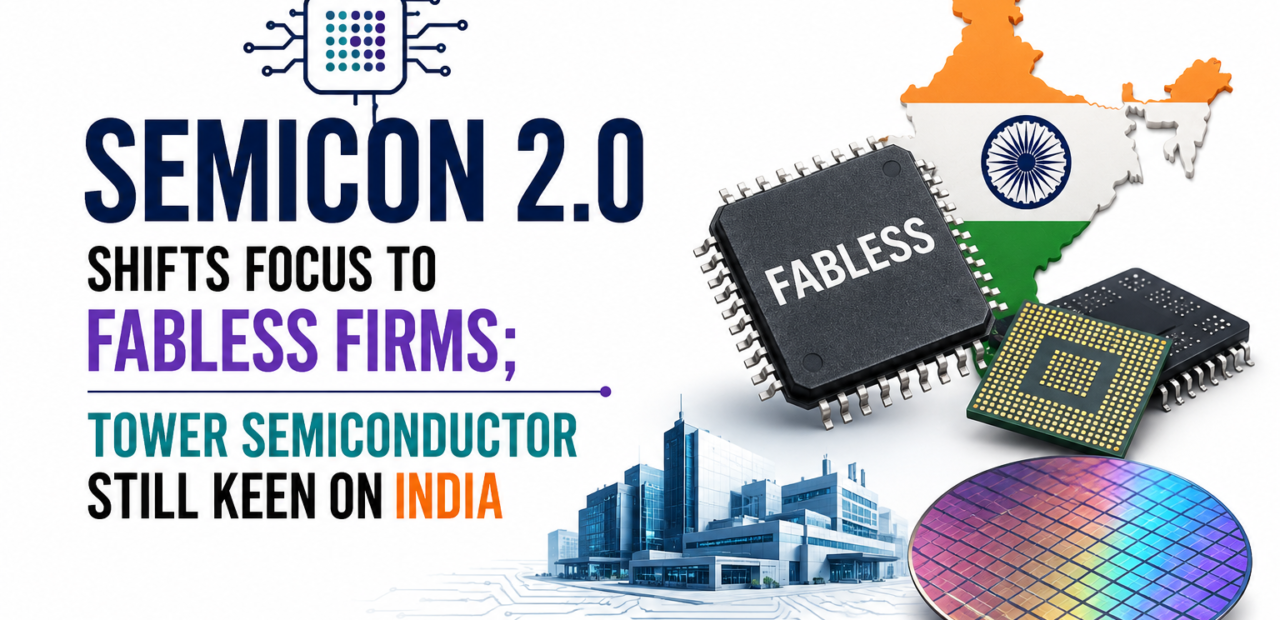
Semicon 2.0 Shifts Focus to Fabless Firms; Tower Semiconductor Still Keen on India

What if India’s chip story stopped being about giant factories and started being about ideas instead? For years, the conversation around India’s semiconductor push was all wafers, fabs, and billion-dollar plants rising out of Gujarat or Maharashtra. That script has just been rewritten. With the Union Cabinet clearing Semicon 2.0 on July 15, 2026, at an outlay of roughly INR 1.275 trillion, the government has quietly told the industry that owning chip designs matters just as much as owning the machines that print them.
At the same time, an old name refuses to fade from the India conversation. Tower Semiconductor, the Israeli analog foundry that has chased an India entry since 2007, is still very much in the picture, even after its high-profile venture with the Adani Group hit a pause. Between a policy pivot toward design-led growth and a persistent foreign foundry player, India’s chip ecosystem is entering a genuinely new phase, one worth understanding in some detail.
What Semicon 2.0 Actually Changes
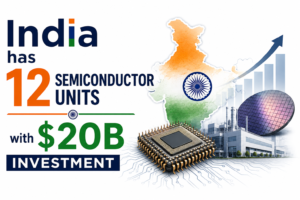
The first phase of India’s semiconductor mission, launched in 2021, was almost entirely about attracting fabrication and display plants. It worked, to a point: commercial production has already started at facilities run by Micron, Kaynes, and CG Semi, and the government has approved a dozen manufacturing projects worth well over INR 1.6 trillion so far.
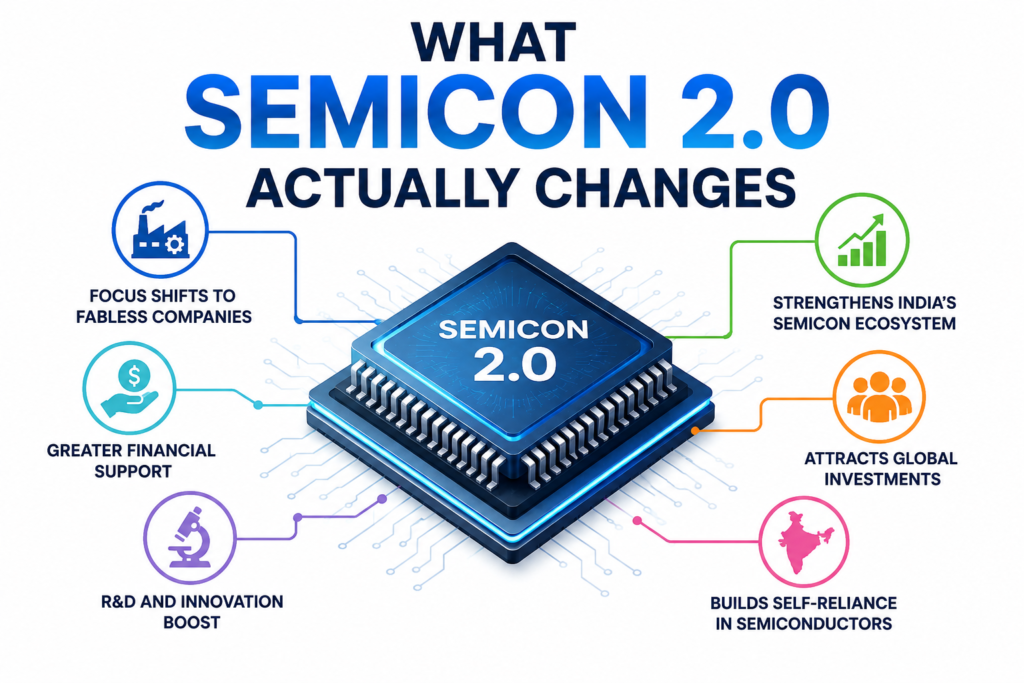
Semicon 2.0 keeps supporting those fabs, but it widens the lens considerably. The new outlay covers chip design, advanced packaging, specialty materials, semiconductor equipment, and research, alongside talent development. In practice, that means incentives are no longer reserved for companies willing to pour billions into a physical plant. A small design studio, an EDA software provider, or an automotive chip startup can now tap into government support in ways that simply weren’t available before. This is less a tweak and more an admission that fabrication alone was never going to build a self-sufficient chip industry.
The Fabless Push Takes Center Stage
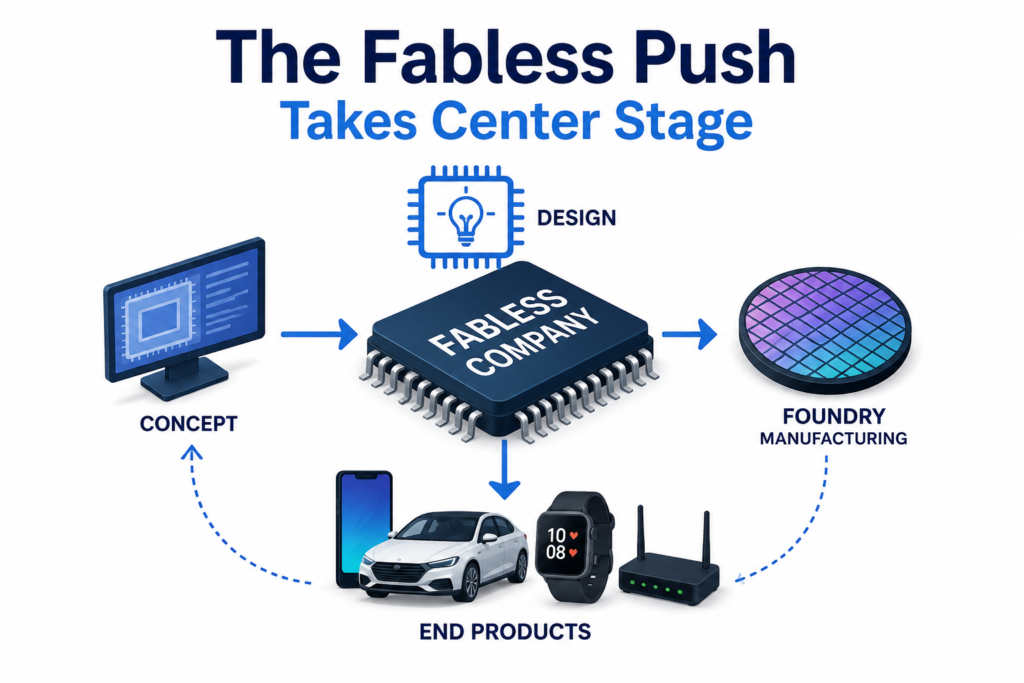
The most striking part of Semicon 2.0 is its bet on fabless companies, firms that design chips but outsource the actual manufacturing. The government has set a target of nurturing 100 such firms, and officials at the Ministry of Electronics and IT have called that number “doable,” noting that 24 have already secured approval, with more depending on the strength of each proposal.
This push isn’t happening in isolation. The India Cellular and Electronics Association recently ran a workshop bringing together fabless firms to map out a roadmap focused on priority chip products, stronger intellectual property, startup funding, and a clearer path from prototype to commercial product. Government officials have been candid that India already has strong chip design talent working for global firms; the missing piece has always been turning that design capability into Indian-owned products that can compete commercially. Semicon 2.0 backs this with milestone-based funding and a willingness to take equity stakes in promising startups, treating chip design more like a venture-backed industry than a subsidy program.
The output of this effort is meant to feed into a National Semiconductor Product Roadmap, a document that will effectively tell India’s design community which chip categories are worth chasing first, whether that’s power management ICs, sensors for automotive use, or AI accelerator building blocks. That kind of direction matters in an industry where a small design team can spend years perfecting a chip only to find the market has moved on. By pairing funding with a clearer sense of where global demand is headed, Semicon 2.0 is trying to reduce the odds of Indian fabless firms building excellent chips that nobody outside the country ends up buying.
Tower Semiconductor’s Long, Bumpy Road in India
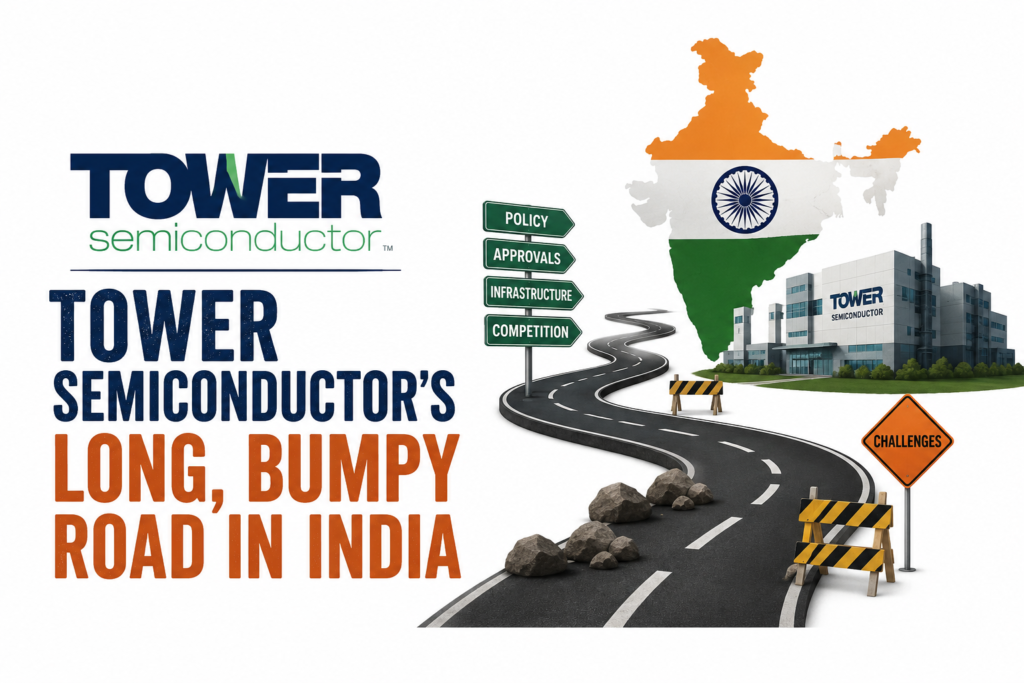
No account of India’s fab ambitions is complete without Tower Semiconductor. The Israeli company’s interest in India goes back nearly two decades, through a failed 2007 tie-up, a stalled ISMC consortium proposal, an $8 billion standalone pitch in 2024, and finally a headline-grabbing $10 billion joint venture with the Adani Group announced in September 2024 for a plant near Mumbai.
That Adani-Tower project was paused in 2025 after an internal review reportedly concluded the deal lacked commercial justification, partly because India’s semiconductor demand remains a small slice of global consumption, and partly over disagreements about how much capital each partner should commit. It would be easy to read that pause as the end of the story. It isn’t. Tower has continued expanding elsewhere, including a fresh capacity build-out in Japan backed by that country’s government, announced in July 2026. Yet industry conversations around India’s fabless ecosystem keep circling back to Tower as a technology partner of interest, particularly for analog and mixed-signal processes that fabless startups need but can’t access through pure-design routes alone. Whether a revised India proposal materializes remains uncertain, but the company’s continued visibility in India-linked discussions suggests the door hasn’t been closed on either side.
What This Shift Means for India’s Chip Ambitions
Put together, these developments point to a more layered strategy than India’s earlier semiconductor push. Fabrication remains important and continues to draw large-ticket investment, but the government is no longer betting everything on landing another mega-fab. Fabless design gives India a lower-capital, faster-to-market route to building genuine intellectual property, and it plays to a workforce that already has deep chip design experience.
For a foundry like Tower, this shift is arguably good news. A stronger fabless ecosystem in India creates exactly the kind of customer base that specialty foundries look for, without requiring Tower itself to shoulder the cost of a mega-fab. Whether that translates into a revived manufacturing deal or simply closer design partnerships, the fabless-first turn in Semicon 2.0 changes the calculus for every global player watching India’s chip market. For now, India is betting that owning the blueprint matters as much as owning the factory, and the world’s foundries are recalibrating their India strategies accordingly.