

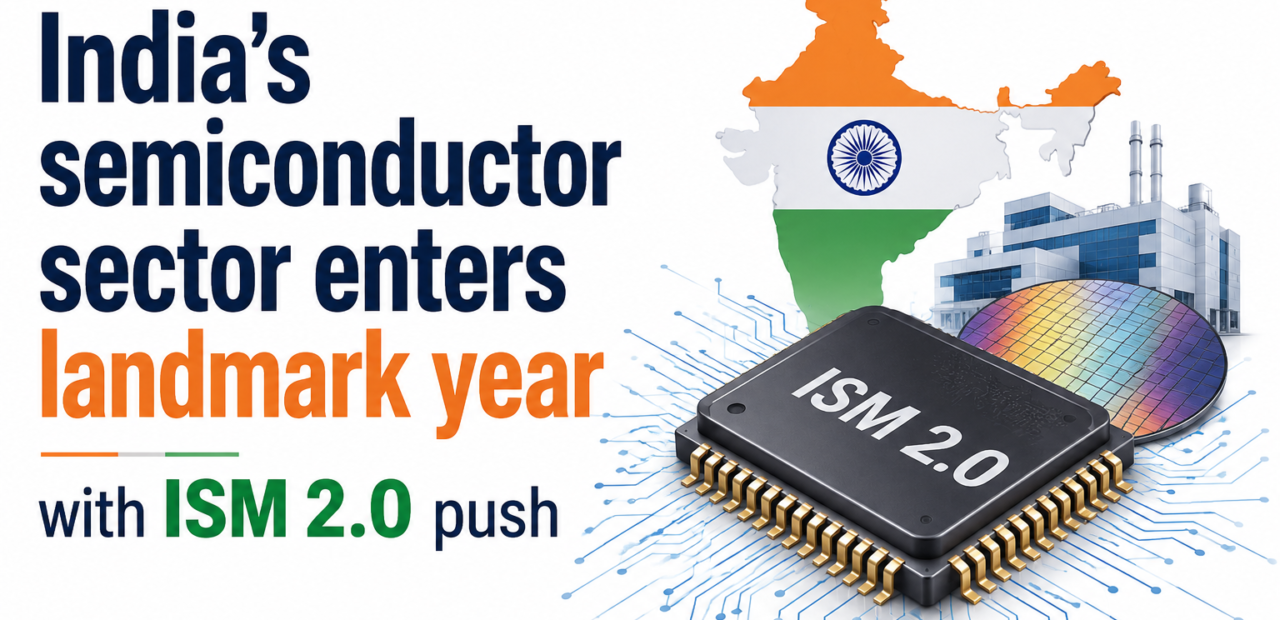
India’s Semiconductor Sector Enters Landmark Year With ISM 2.0 Push

What if the next chip inside your phone, your car, or your laptop carried the words “Made in India”? That question is no longer hypothetical. It is fast becoming a reality, and 2026 is shaping up to be the year India stops talking about chips and starts making them at scale.
For years, India’s semiconductor story was written mostly on paper — policies, incentives, and promises of a future fab. That changed with the approval of India Semiconductor Mission 2.0, a bold second chapter backed by a massive outlay that pushes the country from ecosystem-building toward full-scale manufacturing and design leadership. Government officials have openly called this a landmark year, and the numbers, projects, and momentum on the ground back that claim up.
From ISM 1.0 to ISM 2.0: A Shift in Strategy
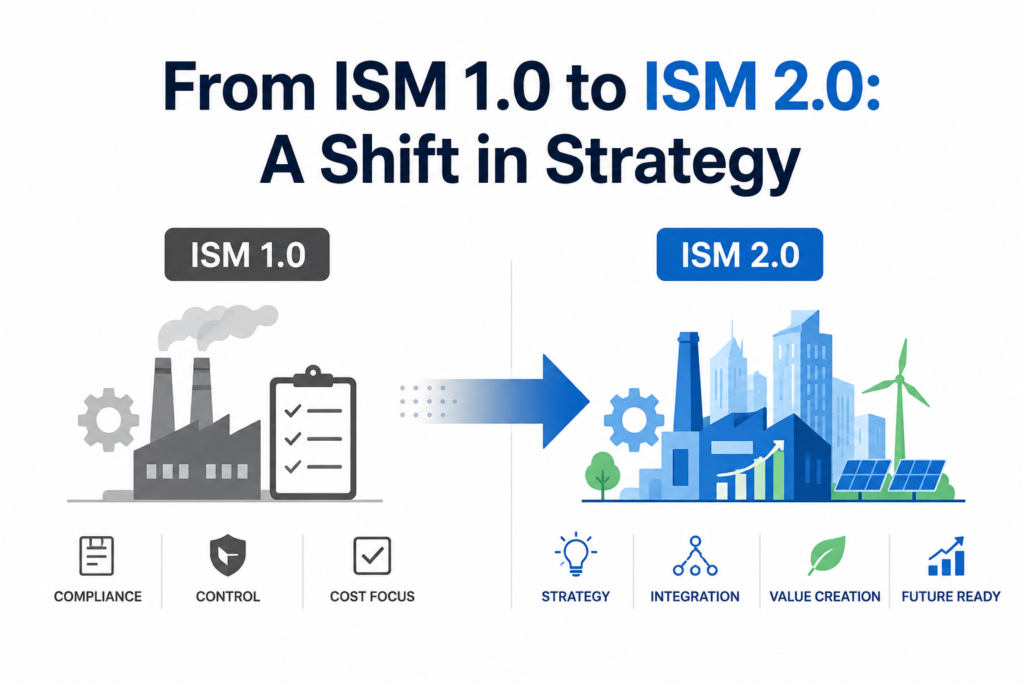
The first phase of the India Semiconductor Mission was about laying the groundwork — attracting investment, approving the earliest fabrication and packaging units, and proving that India could be a credible player in a business dominated by a handful of global giants. ISM 2.0 marks a clear pivot. Instead of just inviting companies to set up plants, the new phase focuses on building the entire value chain within India itself: semiconductor equipment, high-purity chemicals and materials, indigenous chip design, and a resilient domestic supply network.
This shift matters because a country that only assembles or packages chips designed and engineered elsewhere never truly controls its own technology destiny. ISM 2.0 is structured to change that equation by encouraging local production of the raw materials and machinery that feed fabrication units, while also pushing Indian companies to create their own chip designs rather than licensing them. The goal is consolidation and depth, not just expansion for its own sake.
The Numbers Behind the Push

Money talks, and the figures attached to ISM 2.0 are hard to ignore. The mission carries an incentive framework running into the tens of thousands of crores, offering fiscal support of up to half the project cost for silicon fabs, compound semiconductor units, and assembly and testing facilities. Reports around the mission’s approval put the overall outlay at roughly ₹1.27 lakh crore, a sharp jump compared to the first phase, signaling that the government sees this as a long-term national priority rather than a one-time push.
As of the most recent updates, around a dozen projects have been approved or are in various stages of development across multiple states, covering everything from silicon fabrication to silicon carbide fabs and specialised testing infrastructure. India’s semiconductor market itself is projected to grow into a $100 billion-plus industry by the end of the decade, driven by demand from smartphones, automotive electronics, telecom infrastructure, and artificial intelligence hardware. That scale of ambition is exactly why officials have started describing this period as a genuine turning point rather than incremental progress.
From Announcements to Actual Chips
Perhaps the most encouraging sign for India’s chip story is that the conversation has moved from plans to production. Facilities linked to global memory maker Micron, along with Tata’s fabrication plant and units backed by CG Power, have already begun commercial output, meaning chips are physically rolling off Indian production lines for the first time at meaningful scale. A few more units are expected to go live later this year, adding further weight to the claim that India’s semiconductor journey has entered its execution phase.
This is a significant psychological and strategic milestone. For years, skeptics questioned whether India could realistically compete in an industry where Taiwan, South Korea, and the United States have decades of head start. Actual commercial production changes that conversation. It shows global companies that India can deliver on infrastructure, power reliability, logistics, and skilled manpower needed to run a modern fab, which in turn makes it easier to attract the next wave of investment.
The Road Ahead: Advanced Nodes and Global Positioning

ISM 2.0 does not stop at today’s mature chip technologies. The mission’s roadmap includes an ambitious push toward advanced process nodes, with government planning documents pointing to pilot-scale production at smaller, more powerful node sizes over the next several years, eventually working toward the kind of cutting-edge fabrication technology used in today’s most advanced smartphones and AI accelerators. Reaching that level would require a leap in lithography capability and a completely different scale of technical infrastructure compared to what exists in India today.
Alongside the manufacturing roadmap, India is also positioning itself as a convening hub for the global semiconductor industry. A major industry event bringing together international chipmakers, equipment suppliers, and policymakers is scheduled later this year in New Delhi, built around the theme of trusted and resilient semiconductor ecosystems. Events like this matter because the semiconductor industry runs on trust and long-term partnerships — no single country can build a fab without imported equipment, materials, or expertise, so demonstrating reliability as a manufacturing base is just as important as the incentives on offer.
What This Means Going Forward
Put together, ISM 2.0 is less about a single announcement and more about a structural shift in how India approaches chip manufacturing. The mission’s focus on equipment, materials, design, and advanced nodes suggests a long-term strategy rather than a short-term subsidy scheme. Commercial production from the first wave of fabs, combined with a pipeline of a dozen more projects, gives the sector real momentum heading into the rest of the decade.
Whether India can eventually compete at the most advanced end of chip manufacturing remains to be seen, and that journey will likely take years rather than months. But for an industry that was largely aspirational just a few years ago, having actual chips coming off Indian production lines, a clearly funded second-phase mission, and a growing list of approved projects marks a genuine inflection point. If the current pace holds, the semiconductor story coming out of India over the next few years could look very different from anything the country has produced before.