Digital India RISC-V Symposium To Boost Semiconductor Innovation

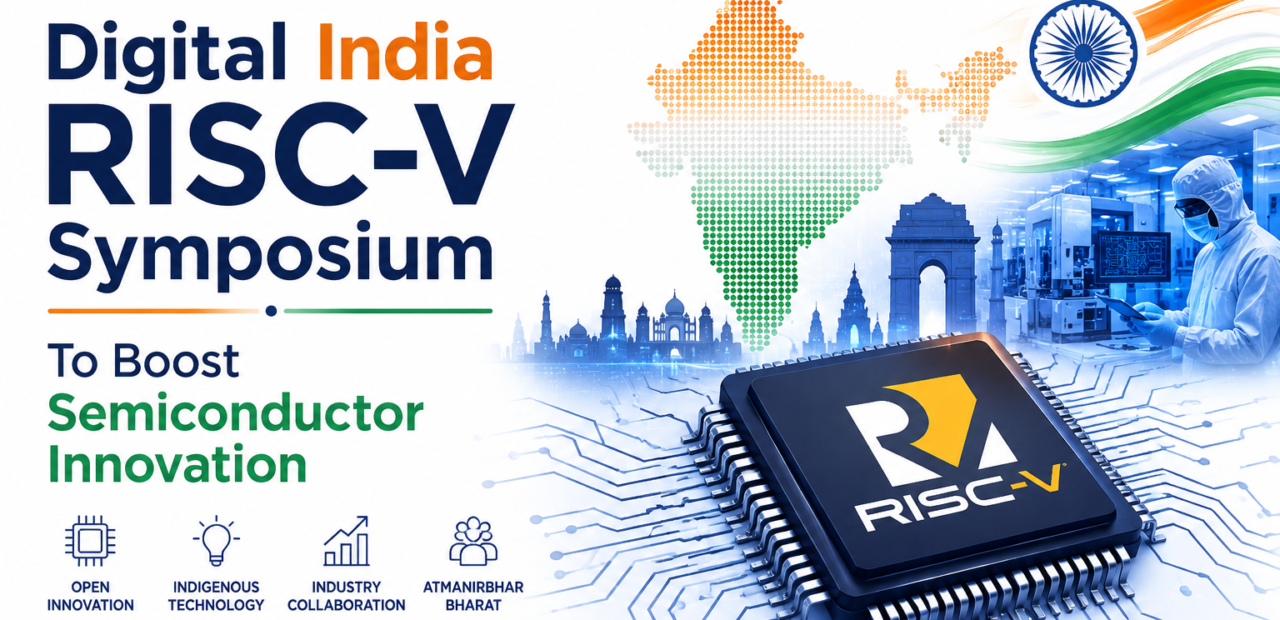
Chennai is about to become the epicenter of India’s chip ambitions. On August 1 and 2, 2026, IIT Madras Research Park will host the third edition of the Digital India RISC-V Symposium, bringing together government officials, global technology leaders, and semiconductor startups under one roof to chart the next phase of Bharat’s processor revolution and its push for technological self-reliance.
Organized by IIT Madras alongside the Ministry of Electronics and Information Technology and RISC-V International, this year’s gathering carries the theme “Empowering Bharat’s Semiconductor Future.” It arrives at a moment when India is pushing hard to design, build, and secure its own silicon rather than depend entirely on imported chip architectures and foreign intellectual property.
What Is the Digital India RISC-V Symposium
The Digital India RISC-V, or DIR-V, Symposium is not a one-off event. It is the flagship gathering of a much larger national mission that began in 2022, when the Government of India launched the DIR-V Program under the broader Atmanirbhar Bharat vision. The goal of that program was straightforward but ambitious: build homegrown microprocessors using the open-source RISC-V instruction set architecture, instead of relying on licensed designs from established chip giants abroad.
The first two editions of the symposium, held in previous years, focused on introducing the open RISC-V ecosystem to India’s innovation community and showcasing early processor prototypes. This third edition marks a shift in tone. It is less about introducing the idea of RISC-V and more about scaling it, with policymakers, investors, startups, and research institutions expected to discuss concrete roadmaps rather than just possibilities. Registration for the event is open with a nominal fee, and interest has grown steadily each year as more organizations recognize what an open, royalty-free chip architecture could mean for a country the size of India.
Key Focus Areas of the 2026 Edition
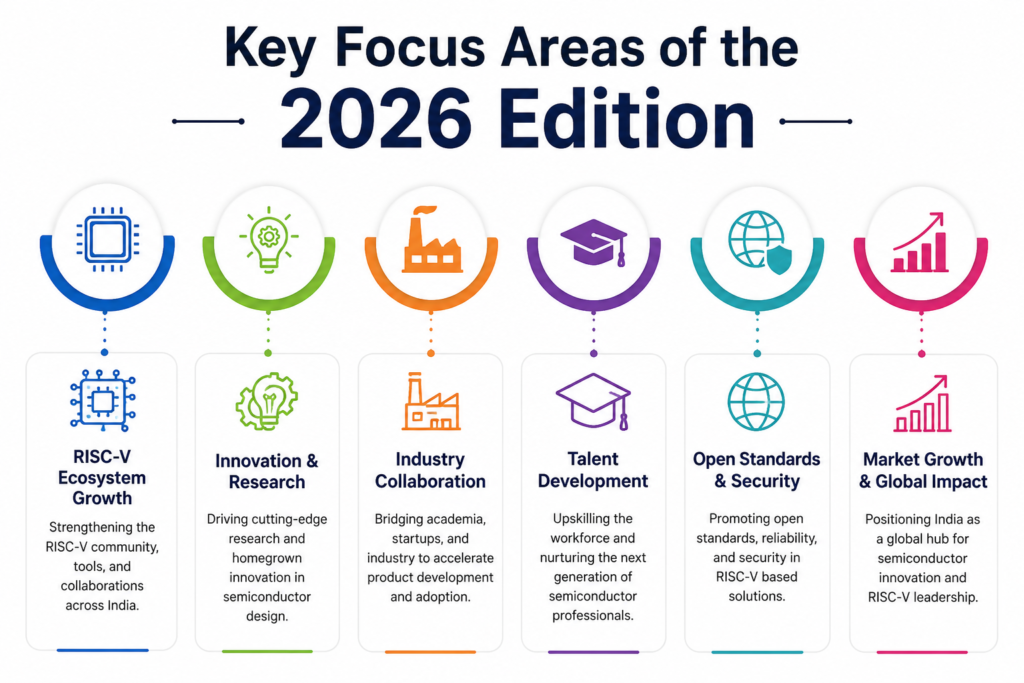
Unlike earlier editions that leaned heavily on introductory talks, the 2026 symposium is structured around four practical pillars: indigenous processor design, secure computing systems, hardware innovation, and the growing intersection between RISC-V and artificial intelligence.
Secure computing, in particular, has taken on new weight this year. As digital infrastructure becomes the backbone of banking, defense, healthcare, and governance, there is rising concern globally about chips designed or manufactured outside a country’s borders potentially carrying hidden vulnerabilities. India’s semiconductor planners see RISC-V as a way to sidestep this risk entirely, since the architecture is open, auditable, and not controlled by any single foreign entity. Sessions at the symposium are expected to dig into how trusted, indigenous hardware can be verified end-to-end, from chip design to final deployment.
AI is the other major thread running through this edition. As machine learning workloads move from cloud data centers to edge devices, there is growing demand for processors that can handle inference efficiently without the licensing costs tied to proprietary architectures. RISC-V’s flexibility makes it a natural fit for custom AI accelerators, and several sessions are expected to explore how Indian design houses can build chips tailored specifically for AI at the edge.
Why RISC-V Matters for India’s Semiconductor Ambitions
To understand why an entire national symposium is built around RISC-V, it helps to understand what makes the architecture different. Most processors people use every day are built on instruction set architectures owned and licensed by a small number of global companies. Every chip built on those architectures requires paying royalties and following licensing terms set elsewhere.
RISC-V flips that model. It is an open standard, meaning anyone, anywhere, can design a processor using it without paying licensing fees or seeking permission. For a country like India that is trying to build a domestic chip design industry from a relatively early stage, this openness removes one of the biggest barriers to entry. Design houses and startups do not need deep pockets to license a proprietary architecture before they can even begin building.
This is precisely why the Government of India has thrown institutional weight behind RISC-V through the DIR-V Program. IIT Madras, one of the founding members of the global RISC-V Foundation, has played a central role since the early days, and its continued partnership with the Ministry of Electronics and Information Technology signals that this is viewed as a long-term national strategy rather than a short-term experiment. The ambition is not just to make chips for India, but to make India a credible design and export hub for RISC-V-based processors globally.
What This Means for India’s Tech Ecosystem Going Forward
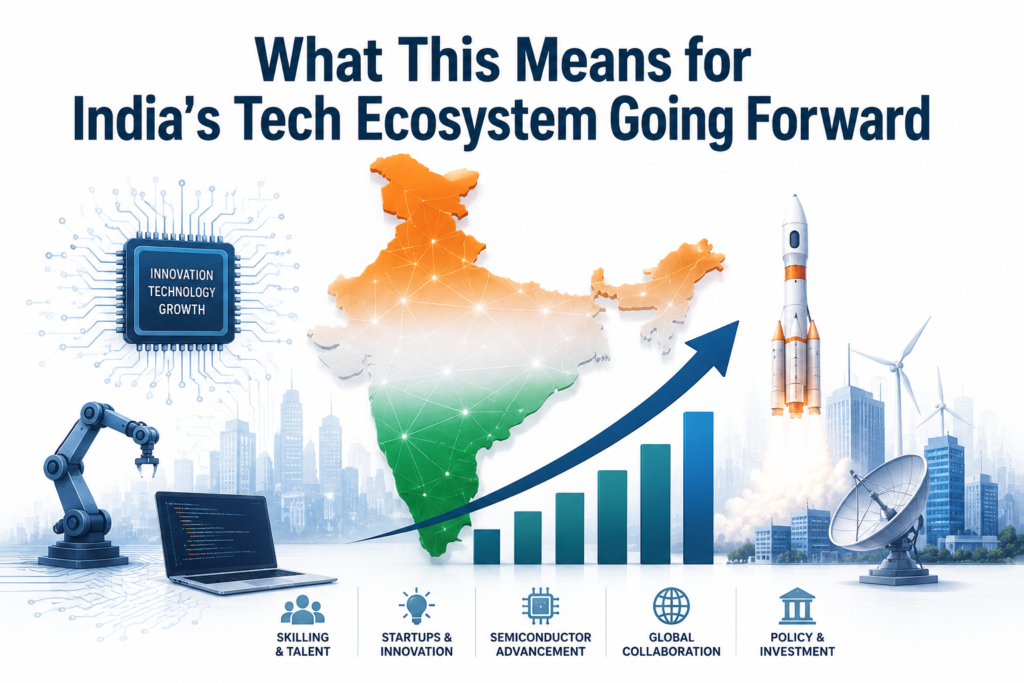
The ripple effects of an event like this extend well beyond the two days it runs. When government bodies, research institutions, and private industry sit at the same table, it tends to unlock funding, policy clarity, and collaboration opportunities that individual companies struggle to create on their own. Early-stage hardware startups working on RISC-V-based designs stand to gain visibility with investors and potential government contracts, while established companies get a clearer sense of where national priorities and incentives are headed.
There is also a manufacturing angle worth watching. India has been steadily building out its semiconductor fabrication and packaging capacity through various incentive schemes, and homegrown chip designs give that manufacturing capacity something meaningful to produce. A processor designed in India, based on an open architecture, and eventually fabricated on Indian soil would represent a fairly complete domestic semiconductor value chain, something very few countries outside a handful of established players currently have.
For now, the third Digital India RISC-V Symposium is best understood as a checkpoint. It shows how far the country’s open-architecture chip ambitions have progressed since 2022, and it sets the tone for what comes next: moving from prototypes and pilot programs toward chips that are actually manufactured at scale and deployed in real products. If the momentum visible in this edition carries through, India’s bet on RISC-V could end up shaping not just its own semiconductor future, but influencing how other countries think about chip sovereignty as well.