Semicon 2.0 Approved by Government to Strengthen India’s Chip Industry

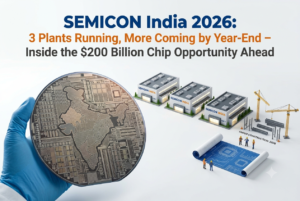
India just took its boldest step yet toward becoming a global chipmaking powerhouse — and the numbers behind it are hard to ignore. On July 15, 2026, the Union Cabinet gave its nod to Semicon 2.0, a massive Rs 1.27 lakh crore programme designed to push the country’s semiconductor ambitions into a new league entirely.
For years, India has talked about reducing its dependence on imported chips. Semicon 2.0 is the clearest sign yet that this isn’t just talk anymore. Backed by real money, a clear roadmap, and lessons learned from its predecessor scheme, this new policy aims to build a complete, self-reliant chip ecosystem — from design to fabrication to packaging — right here on Indian soil.
What Exactly Is Semicon 2.0?
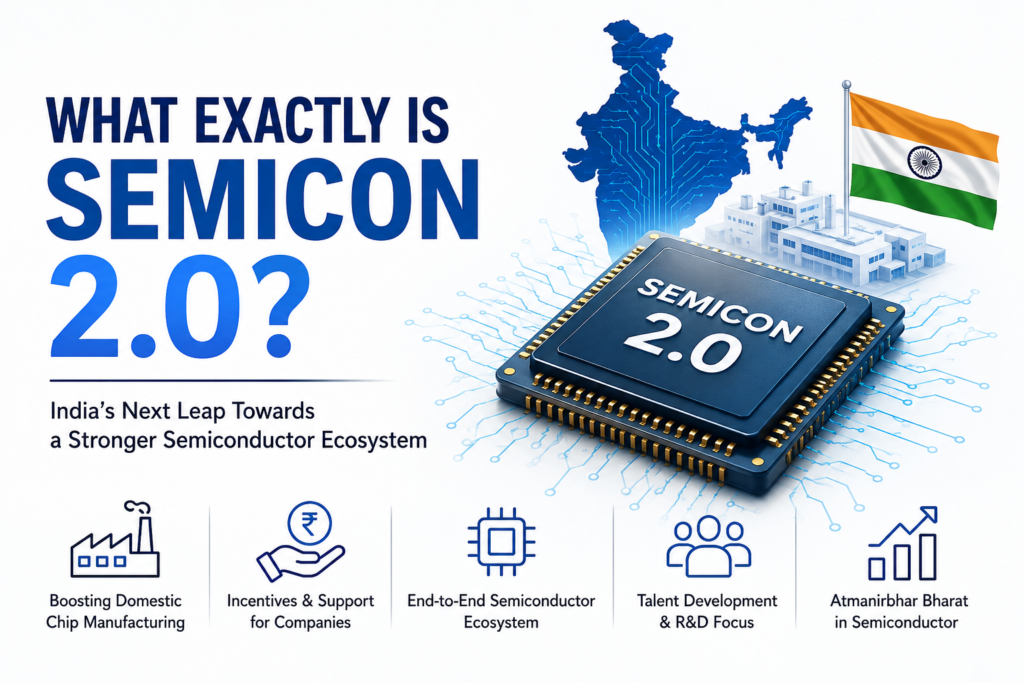
Semicon 2.0 is the second phase of the India Semiconductor Mission, and it builds directly on the foundation laid by Semicon 1.0. While the first phase focused on getting India’s semiconductor journey off the ground, this next chapter is about scaling up — attracting bigger investments, deepening chip design capabilities, and setting up more advanced manufacturing units across the country.
The scheme was formally announced during the Union Budget for FY27 by Finance Minister Nirmala Sitharaman, and it’s structured to roll out over a period of six years. IT Minister Ashwini Vaishnaw has been vocal about the scale of ambition here, noting that the programme isn’t just about manufacturing chips — it’s about building an entire ecosystem around design, materials, equipment, testing, and long-term research.
What makes this different from a typical government subsidy scheme is its breadth. Instead of focusing on just one part of the supply chain, Semicon 2.0 spreads its support across six distinct pillars, each targeting a different bottleneck that has historically slowed India’s semiconductor progress.
The Six Pillars Driving This Transformation
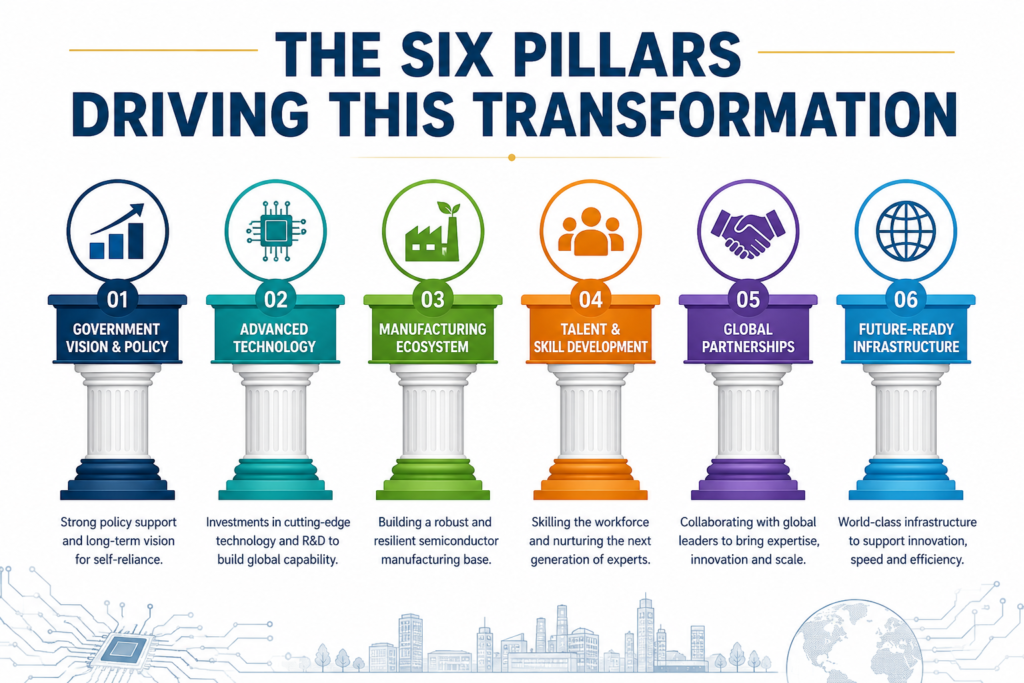
At the heart of Semicon 2.0 are six focus areas, and understanding them gives a clear picture of where India’s chip industry is headed.
The first pillar is all about chip design. India already has more than 105 startups working on semiconductor chips, and this scheme aims to deepen that ecosystem further by supporting homegrown intellectual property, next-generation chip designs, and system-level products for both commercial and strategic use.
The second pillar targets machines and materials — the chemicals, gases, and equipment that go into actually manufacturing chips. This is a smart move, because without a reliable domestic supply of these inputs, any fabrication unit remains vulnerable to global supply shocks.
The third pillar pushes for more fabrication plants, or fabs, across the country. India’s first fab is expected to be commissioned in 2028, and the government wants to use that momentum to attract even more manufacturers to set up shop locally.
The fourth pillar strengthens Assembly, Testing, Marking, and Packaging (ATMP) along with Outsourced Semiconductor Assembly and Test (OSAT) facilities — the part of the process that happens after a chip is fabricated but before it reaches a device.
The fifth pillar is research and development, aimed at pushing India beyond its current technology nodes of 28nm to 110nm and into more advanced manufacturing territory through collaboration with research institutions both in India and abroad.
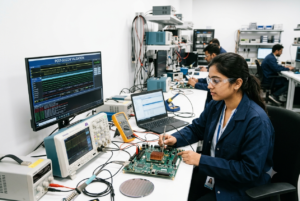
The sixth and final pillar focuses on talent development, ensuring the country has a steady pipeline of skilled professionals trained on industry-standard design tools to support this rapidly growing sector.
The Progress So Far — And Why Investors Are Paying Attention

Semicon 2.0 isn’t starting from scratch. Under the first phase of the India Semiconductor Mission, the government has already approved 12 manufacturing units with a combined investment of more than Rs 1.64 lakh crore. This includes a silicon fab, a silicon carbide fab, an integrated gallium nitride Micro LED display fab, and nine packaging units.
Commercial production is already underway at three of these facilities — Micron, Kaynes, and CG Semi — with another unit expected to go live later this year. On the design side, 24 semiconductor design projects have received financial backing, and over 105 startups and small businesses have been given access to industry-standard chip design software to build products for artificial intelligence, telecom, drones, satellite communication, and smart devices.
Global investors have clearly taken notice. Companies like Applied Materials, AMD, Microchip Technology, Lam Research, and KLA have all committed sizable investments toward India’s semiconductor ecosystem. On top of that, major players like ASML, IBL Electron, and Merck have signed agreements with the Tata Group to support the broader supply chain. This kind of international confidence doesn’t happen by accident — it reflects a genuine belief that India’s semiconductor strategy is built to last.
What This Means for India’s Technology Future
The bigger picture here is about more than just chips. Semiconductors sit at the core of nearly every modern technology — smartphones, electric vehicles, defence systems, renewable energy infrastructure, and artificial intelligence hardware all depend on a steady, secure supply of them. By building a domestic ecosystem that spans design, manufacturing, and packaging, India is positioning itself to reduce reliance on global supply chains that have proven fragile in recent years.
This also opens doors for the broader electronics and technology industry. A stronger domestic chip supply means faster product development cycles for Indian companies, fewer disruptions from international shortages, and new opportunities across sectors like automotive, aerospace, telecommunications, and consumer electronics.
For anyone tracking India’s technology and manufacturing landscape, Semicon 2.0 is a policy worth watching closely. It signals a shift from India being a promising newcomer in the chip industry to becoming a serious, long-term player on the global semiconductor stage. With the first fab set to come online in 2028 and six years of sustained policy support ahead, the next phase of India’s semiconductor story is only just beginning.
As more investments roll in and new manufacturing units come online, it will be worth revisiting how these six pillars translate into actual output — and whether India can truly close the gap with established chipmaking hubs around the world.