

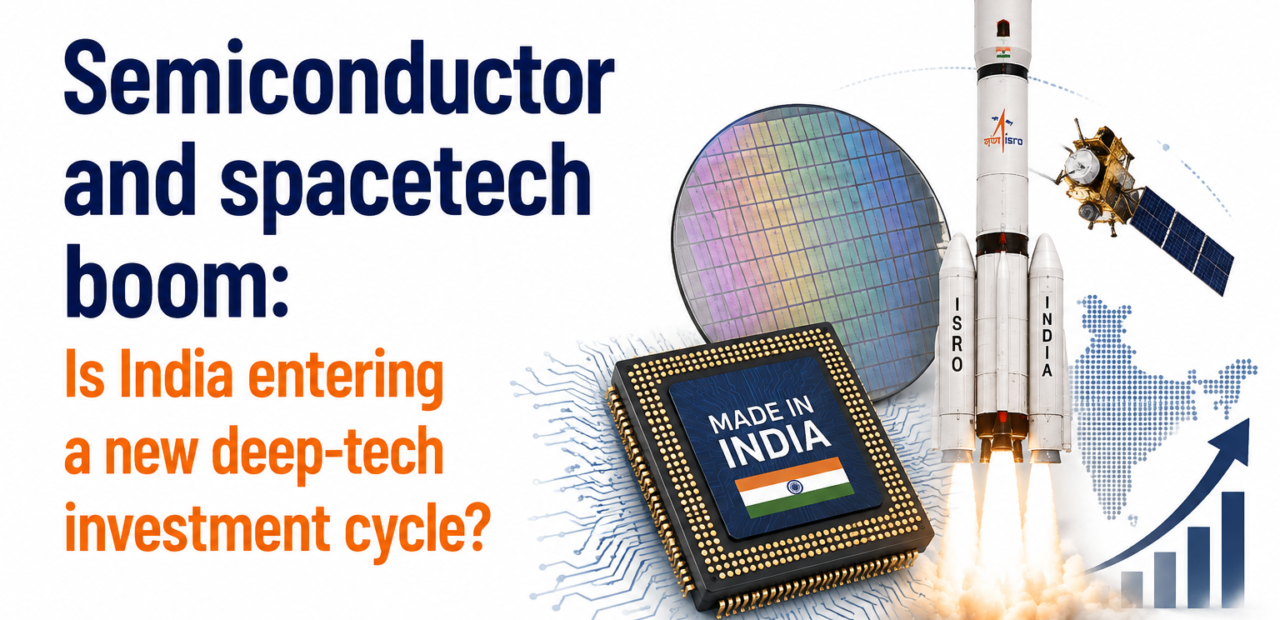
Semiconductor and Spacetech Boom: Is India Entering a New Deep-Tech Investment Cycle?

A rocket lifting off from Indian soil and a wafer coming out of an Indian fab used to belong to two different stories. In 2026, they are becoming one story. Chip fabs are breaking ground in Gujarat, private rockets are reaching orbit, and billions of rupees are moving into hardware instead of just apps. Something structural is shifting in how India builds and invests in deep technology.
For years, India’s growth story was written in software exports and digital services. That chapter isn’t closing, but a new one is opening alongside it — one written in silicon wafers, satellite constellations, and long-gestation hardware bets. The question worth asking isn’t whether India can talk about deep-tech anymore. It’s whether the money, the policy, and the manufacturing base are finally lining up at the same time.
Semicon 2.0: India Moves Beyond Assembly Into the Real Value Chain
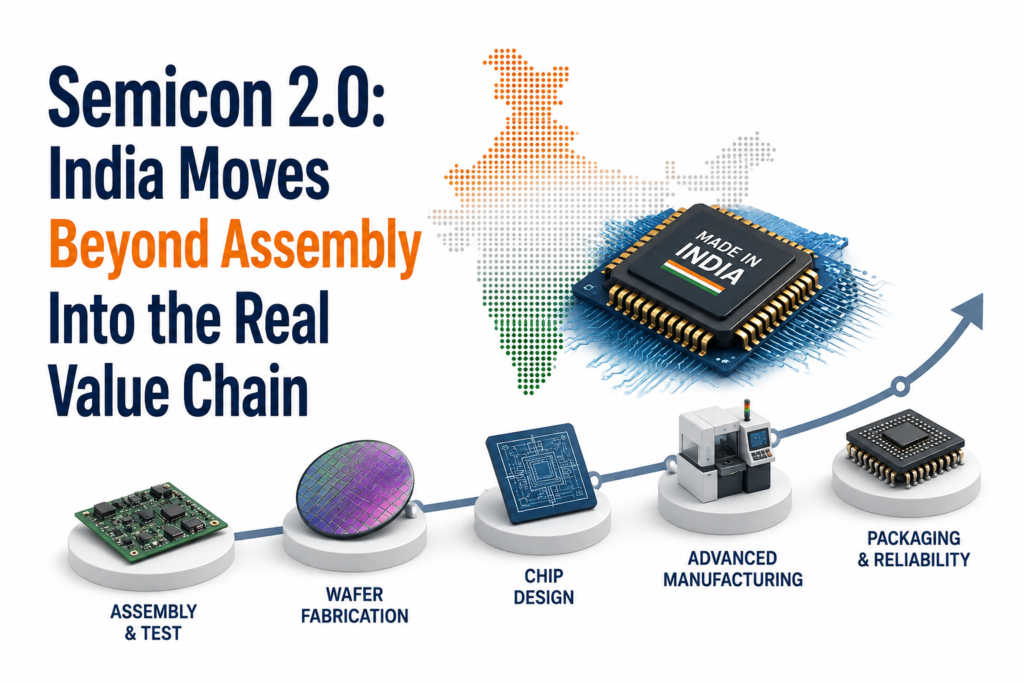
In mid-2026, the Union Cabinet cleared Semicon 2.0, an outlay of roughly ₹1.27 lakh crore aimed at strengthening chip design, advanced packaging, semiconductor equipment, specialty materials, and talent pipelines. This isn’t a repeat of the first mission — it’s a deliberate widening of scope. Where the original India Semiconductor Mission focused heavily on getting fabrication and assembly plants off the ground, Semicon 2.0 is built around the parts of the industry India has largely skipped so far: equipment manufacturing, specialty chemicals, and homegrown chip design IP.
That shift matters because it addresses a real gap. Even as Indian fabs ramp up, the vast majority of equipment and specialty chemicals used inside those facilities is still imported. A manufacturing base that depends entirely on foreign machines and materials isn’t a fully sovereign one. Semicon 2.0 is essentially India trying to build the second and third layers of the semiconductor stack, not just the visible top layer of finished chips.
From Policy Announcements to Working Fabs: The Manufacturing Reality Check
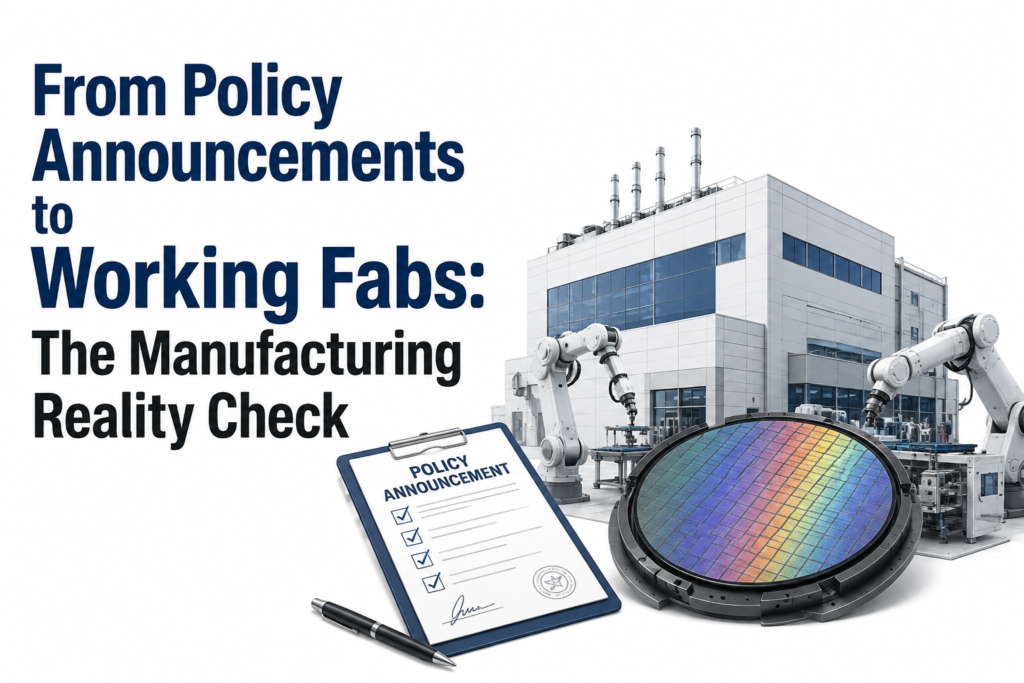
Numbers only mean something when they turn into physical output, and that’s exactly where India’s chip story has started to change. As of mid-2026, twelve semiconductor manufacturing projects have been approved across six states, with cumulative commitments crossing ₹1.64 lakh crore. Three of those facilities are already producing chips commercially, including assembly and packaging plants run by Micron and Kaynes.
The bigger milestone is still ahead. Tata Electronics’ fabrication plant at Dholera, developed with PSMC, is targeting its first silicon output by December 2026. That single event will matter more than any funding headline, because it marks India’s transition from testing and packaging chips made elsewhere to actually fabricating them domestically. Assembly builds operational skill; fabrication builds engineering depth. India has intentionally sequenced the easier step first, and the harder one is now approaching its first real test.
Spacetech’s Quiet Compounding: From ISRO’s Shadow to Private Orbit
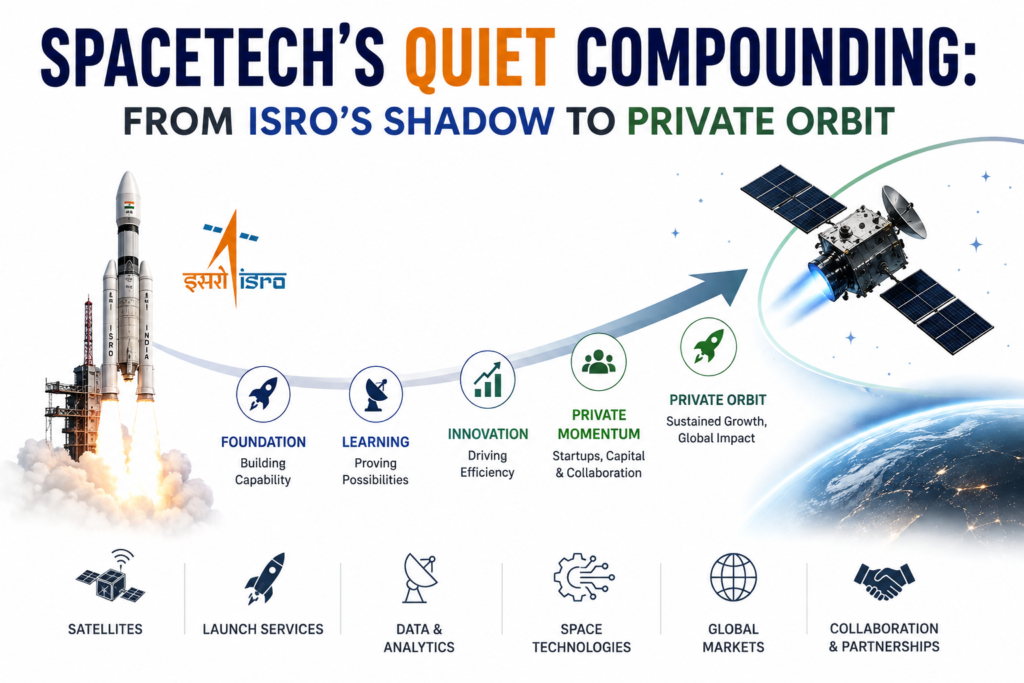
While semiconductors dominate headlines, India’s private space sector has been compounding just as steadily, with far less noise. Since the 2020 reforms that ended ISRO’s near-monopoly and created IN-SPACe as an independent regulator, private investment in Indian spacetech has grown almost sixfold — from around $100 million in 2021-22 to more than $618 million by early 2026. Nearly 285 spacetech startups now operate across satellite manufacturing, launch vehicles, propulsion, and earth observation, with Bengaluru anchoring most of that activity.
The symbolic turning point came when Skyroot Aerospace successfully launched Vikram-1, India’s first privately developed orbital rocket — proof that Indian private companies can now build and fly their own launch vehicles rather than only riding on ISRO missions. Funding has matured alongside the technology: capital is increasingly concentrating in companies with a clear path to commercial revenue, such as satellite manufacturing and launch services, rather than spreading thin across early-stage ideas.
Why Investors Are Starting to Treat Chips and Space as One Story
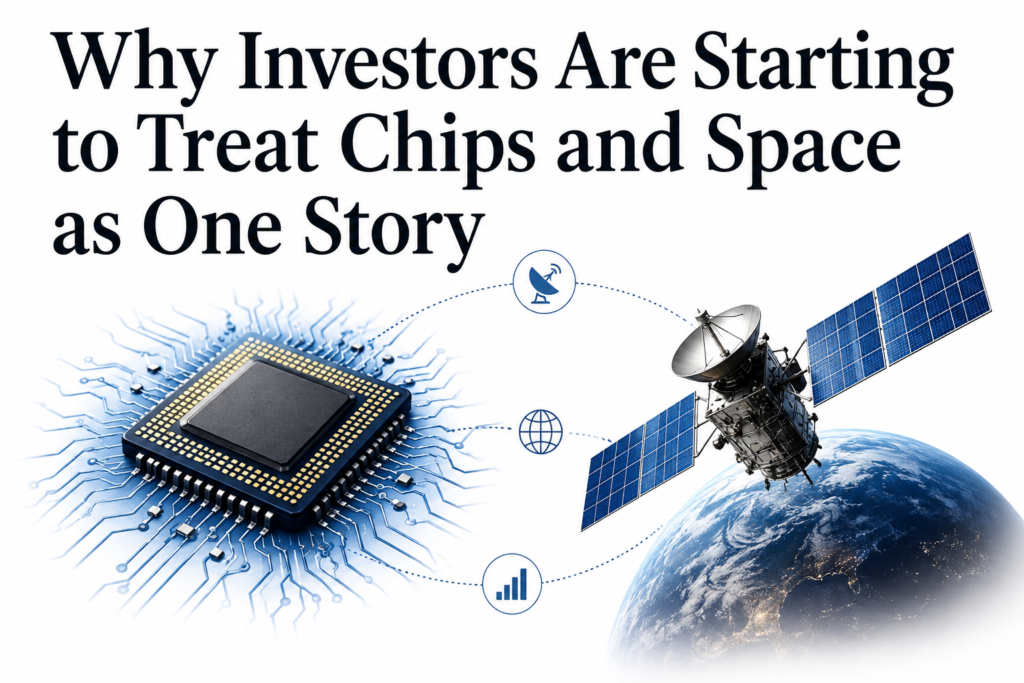
The most telling signal isn’t the size of any single investment — it’s how investors are starting to bracket semiconductors and spacetech together as one deep-tech theme rather than two unrelated sectors. In the first seven months of 2026 alone, venture capital funding into Indian chip and space startups crossed $171 million, split between chip design companies and satellite or space-systems firms. Government policy is actively encouraging this pairing: under the Semicon 2.0 framework, authorities plan to co-invest in semiconductor design startups alongside private VCs, sharing financial risk without taking over management.
That kind of co-investment model exists precisely because hardware is expensive and slow to mature. Chips and rockets don’t ship in a typical startup timeline — they demand years of capital before revenue shows up. The fact that government and private capital are now willing to move together on that timeline, across two capital-intensive sectors at once, is a stronger indicator of a genuine investment cycle than any individual funding round.