

Global Semiconductor Equipment Market Expected to Reach $229.5 Billion by 2028

The chip-making machines humming away in fabs across Taiwan, Korea, and China are about to get a lot busier. A fresh industry forecast has just put a number on what many insiders already suspected: the semiconductor equipment business is heading into one of its biggest growth runs ever, and the driver behind it is impossible to miss — artificial intelligence.
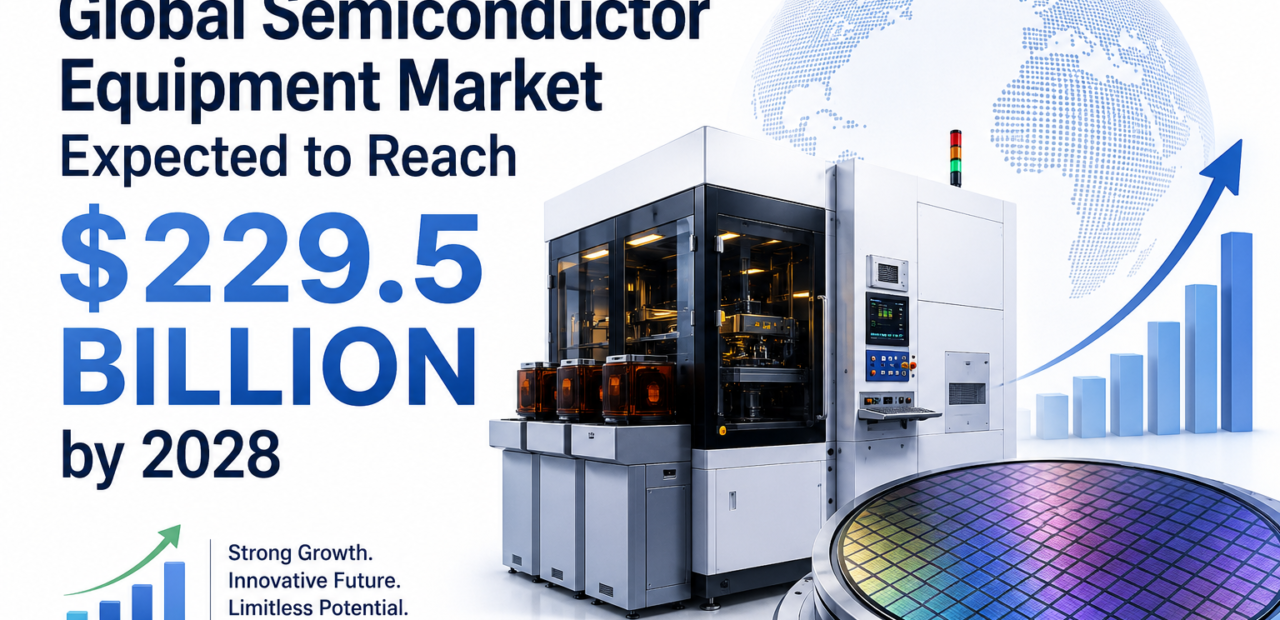
According to the latest mid-year outlook from SEMI, the global body representing thousands of companies in the electronics manufacturing supply chain, worldwide sales of semiconductor manufacturing equipment are projected to hit $165.9 billion in 2026, marking a 23.2 percent jump from the previous year. The momentum doesn’t stop there — by 2028, total equipment sales are expected to reach a record $229.5 billion, capping off five straight years of growth. That’s a staggering climb for an industry that just a couple of years ago was dealing with a demand slump.
Why the Sudden Surge?
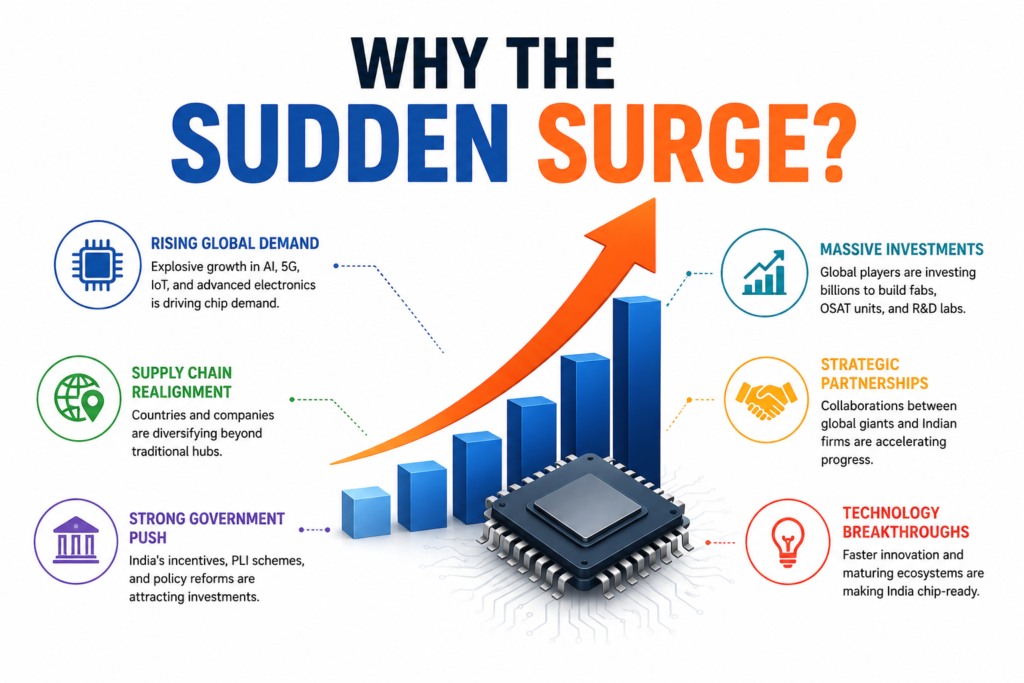
The short answer is AI. Every large language model, every data center expansion, and every new AI chip announcement translates into real orders for the machines that etch, deposit, and test silicon wafers. Chipmakers are pouring money into leading-edge logic production, next-generation memory, and advanced packaging just to keep pace with demand for compute power.
SEMI President and CEO Ajit Manocha pointed to this exact dynamic, noting that AI is pushing companies to invest more aggressively across the entire capital equipment market to build more powerful and efficient chips. It’s a straightforward chain reaction: AI models need faster chips, faster chips need cutting-edge fabs, and cutting-edge fabs need more equipment.
This isn’t a one-time bump either. The forecast reflects a meaningful upward revision from SEMI’s own year-end 2025 projections, largely because memory investment — especially around high-bandwidth memory (HBM) — has turned out stronger than expected.
Memory Chips Are Having a Moment
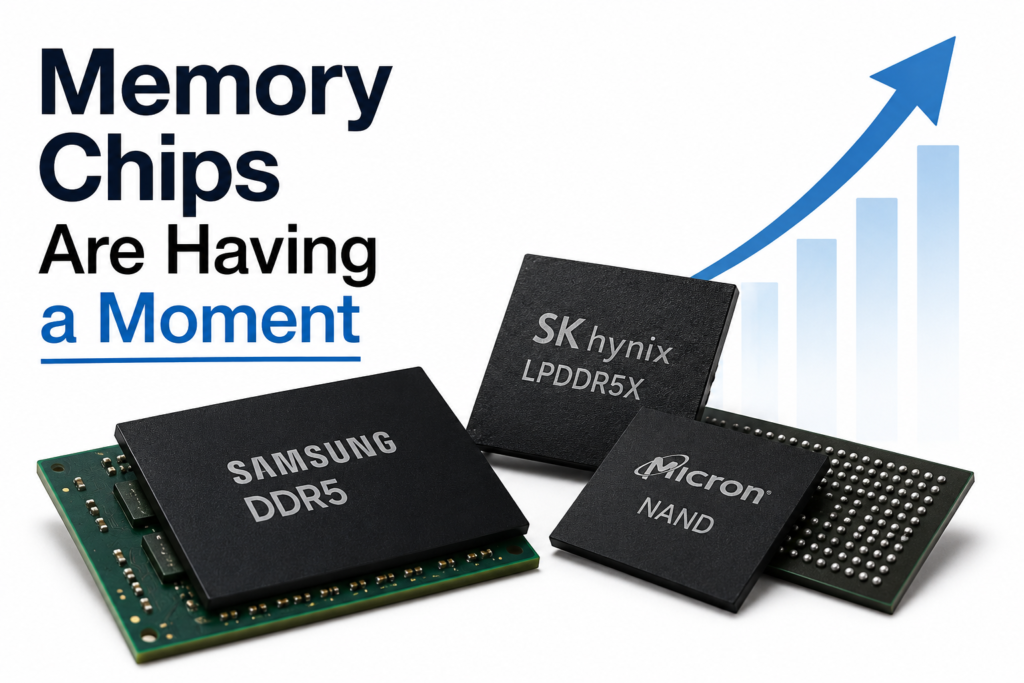
If there’s one segment stealing the spotlight in this forecast, it’s memory. DRAM equipment sales are projected to jump 39 percent to $38.8 billion in 2026, then keep climbing with 27.4 percent growth in 2027 and another 15 percent in 2028, eventually reaching $56.9 billion. That kind of sustained, multi-year growth is unusual even by semiconductor standards.
NAND isn’t far behind. Equipment sales for NAND are expected to grow 30.7 percent to $13.9 billion in 2026, followed by a sharp 31.1 percent increase in 2027 and 14.5 percent growth in 2028, taking the segment to $20.8 billion. Much of this is tied to the industry’s shift toward higher-layer 3D NAND architectures and denser storage designs.
The reason memory is booming comes down to HBM. High-bandwidth memory has become a critical ingredient in AI accelerators, sitting right next to processors to feed them data at the speeds modern AI workloads demand. As more companies race to build AI infrastructure, HBM-related DRAM investment has become one of the strongest pillars of this entire forecast.
Wafer Fab Equipment and the Road to $200 Billion
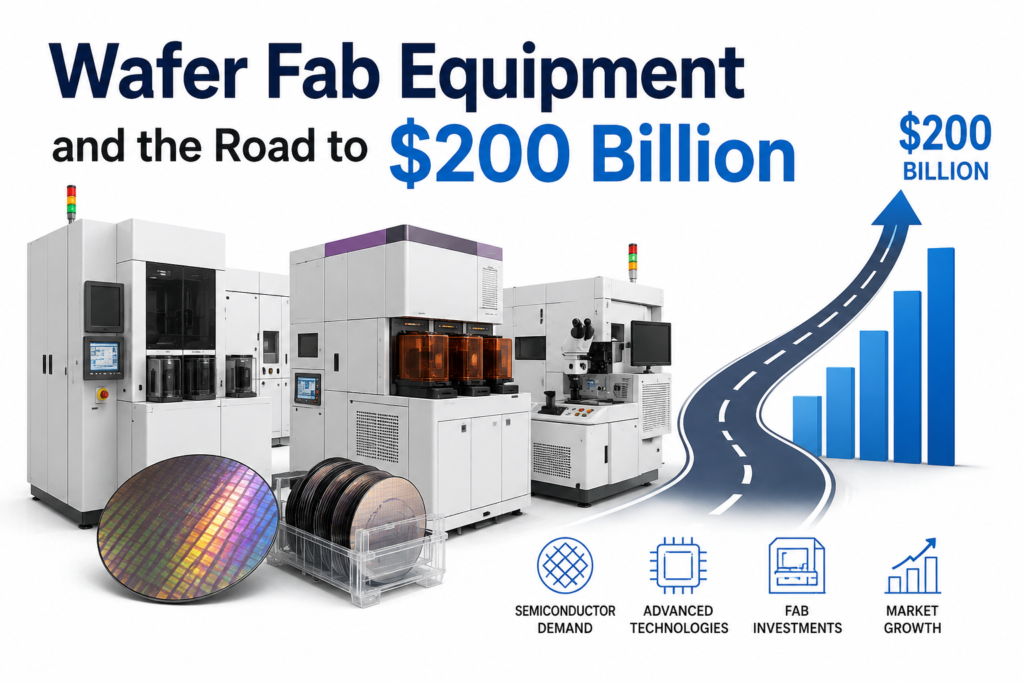
Wafer Fab Equipment, or WFE, remains the largest and most closely watched category in this market. It covers everything involved in wafer processing, along with mask and reticle equipment and fab facilities gear. After registering $116.9 billion in sales, the WFE segment is projected to rise 23.1 percent to $143.9 billion in 2026.
From there, growth doesn’t slow down much. WFE sales are expected to expand another 21.8 percent in 2027 and 14.1 percent in 2028, pushing the segment past the $200 billion mark for the first time. That milestone alone says a lot about how much capital is flowing into building and upgrading fabs right now, particularly for leading-edge logic and advanced memory production.
Assembly and packaging equipment, while smaller in scale, is also on an upward trend. This segment grew 20.8 percent in 2025 and is projected to rise another 9.6 percent to $6.7 billion in 2026, reflecting how important advanced packaging techniques have become for squeezing more performance out of AI chips without always shrinking transistor sizes further.
Which Regions Are Leading the Spending Spree?
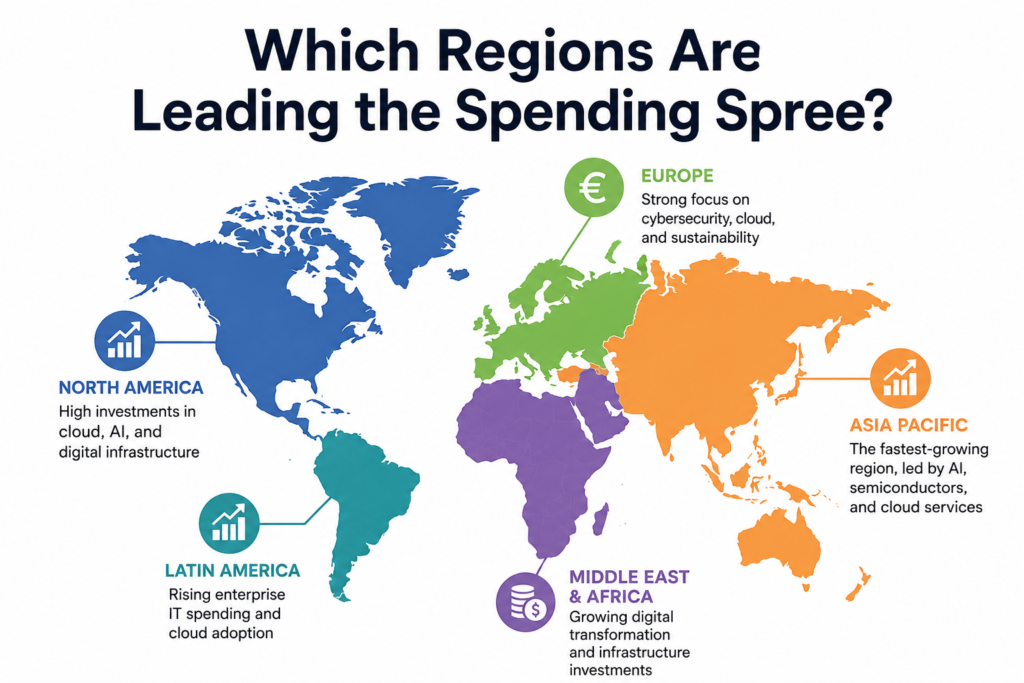
Geography matters just as much as technology in this story. China, Taiwan, and Korea are expected to remain the top three destinations for semiconductor equipment spending all the way through 2028. China is projected to hold onto the top spot throughout the forecast period, though its growth rate is expected to cool off a bit in 2026 after several years of unusually high investment levels.
Taiwan and Korea continue to anchor much of the world’s advanced logic and memory production, respectively, and both are expected to keep investing heavily to maintain their competitive edge as global demand for AI-capable chips intensifies. Together, these three markets illustrate just how concentrated — and strategically important — the semiconductor supply chain has become.