
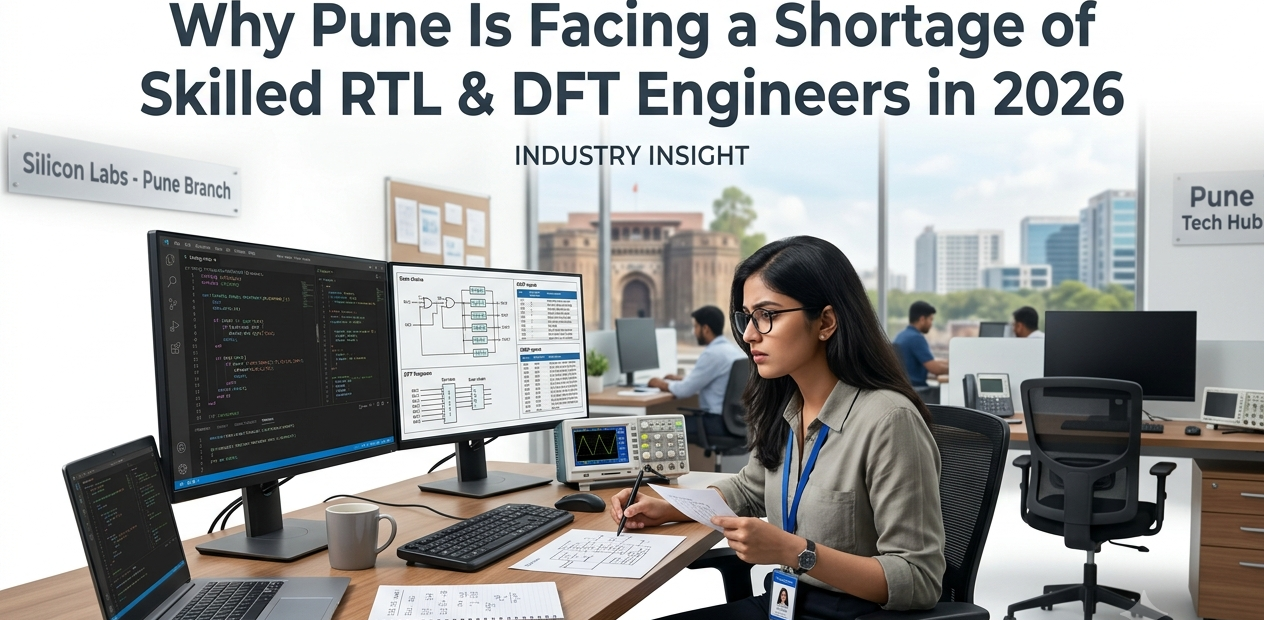
Why Pune Is Facing a Shortage of Skilled RTL & DFT Engineers in 2026

A chip doesn’t fail on the fab floor. It fails months earlier, in a meeting room, when a hiring manager in Pune realizes there simply aren’t enough people who can write clean RTL or close DFT coverage on a tight tape-out schedule. That quiet moment is playing out across the city’s design centers right now, and it’s becoming one of the most talked-about problems in India’s semiconductor story.
Pune has spent the last few years positioning itself as a serious VLSI hub, pulling in global names and local design houses alike. But growth in office space and job postings hasn’t been matched by growth in ready, capable engineering talent. The result is a widening gap between what companies need and what the local talent pool can actually deliver, and it’s worth understanding why.
Pune’s Chip Design Ambitions Have Outgrown Its Talent Supply
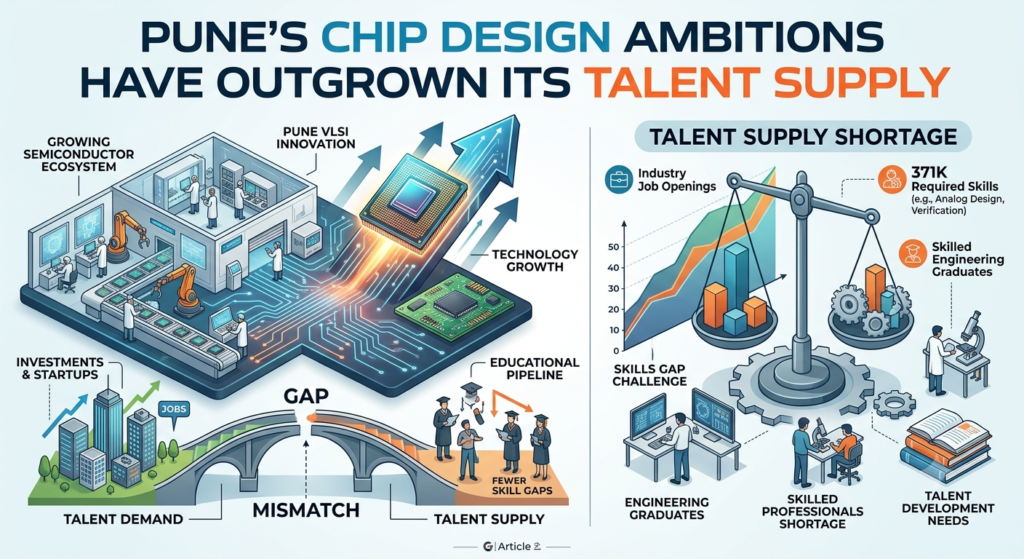
Pune has quietly become one of India’s rising semiconductor addresses, with global players and design-services firms expanding their footprint in the city. Multinational names in automotive, connectivity, and embedded systems have set up or scaled engineering centers here over the past few years, drawn by the city’s existing base of hardware and software talent.
The problem is that hiring plans were built faster than the local pipeline could support them. A design center can be staffed with office space and infrastructure in a matter of months, but building a bench of engineers who understand RTL coding, timing closure, and scan insertion takes years of hands-on exposure. Pune’s colleges and training ecosystem simply haven’t scaled at the same pace as the hiring demand, so companies are left competing over the same narrow slice of ready talent instead of drawing from a deep, renewable pool.
The Gap Between Classroom Knowledge and Interview-Ready Skills

Across India, industry surveys keep pointing to the same issue: the shortage isn’t about headcount, it’s about readiness. Plenty of engineers know Verilog or SystemVerilog on paper, but far fewer can sit through a real design review, debug a synthesis warning, or explain why a scan chain failed to stitch correctly. RTL design and DFT are disciplines that reward practical exposure to EDA tools, not just theoretical familiarity with hardware description languages.
This gap shows up hardest in DFT, a specialization that most engineering programs barely touch. Concepts like ATPG, MBIST, boundary scan, and test compression are usually picked up on the job, which means very few candidates walk into an interview with real fluency in the subject. Pune’s companies are feeling this acutely because DFT sits at the intersection of design and manufacturing test, and a weak bench in this one area can stall an entire tape-out.
There’s also a sequencing problem baked into how most people enter chip design. RTL coding is usually the first serious hands-on skill anyone picks up, so it becomes the default entry point, while DFT gets treated as a later add-on rather than a core competency. By the time someone is ready to specialize, they’ve often already built momentum in verification or physical design, and DFT loses out simply because it wasn’t introduced early enough to feel like a first choice.
Everyone Is Fishing in the Same Small Pond

When multiple companies chase the same handful of experienced RTL and DFT engineers, the natural result is a bidding war rather than genuine capacity growth. Pune-based teams frequently find themselves competing not just with local firms but with Bangalore and Hyderabad offices offering relocation packages, remote flexibility, or steeper compensation jumps. Experienced professionals become harder to retain, and every departure leaves a project short-staffed at a critical stage.
This dynamic also discourages companies from investing in long training cycles. Why spend a year mentoring someone through the RTL-to-GDSII flow when a competitor might poach them the moment they become productive? The short-term instinct to hire away ready talent, rather than build it, keeps the overall pool shallow even as individual salaries climb.
DFT’s Chronic Understaffing Is a Structural Problem, Not a Passing Trend
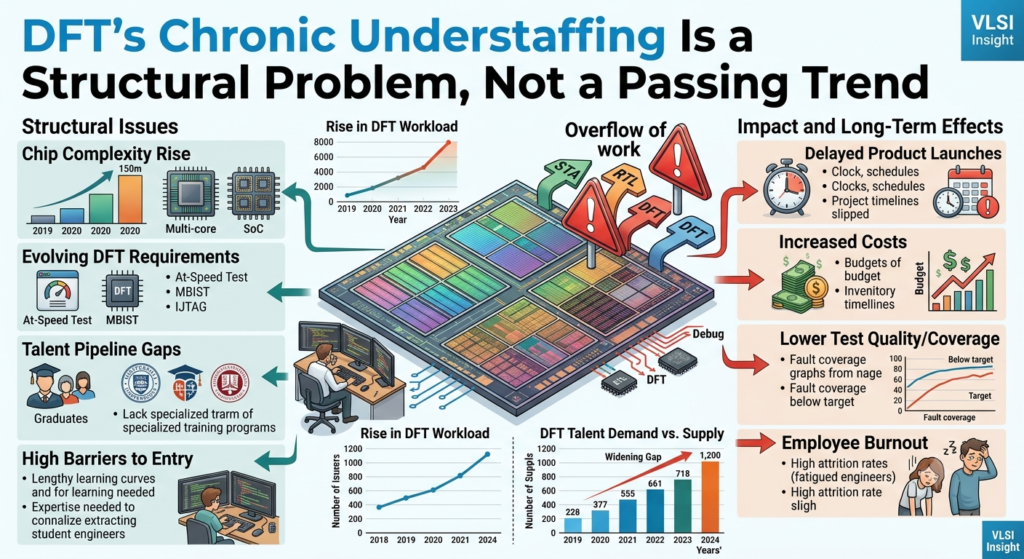
Design-for-Test rarely gets the spotlight that physical design or verification enjoy, yet it’s one of the most consistently under-resourced specializations in chip design. As process nodes shrink and defect rates rise, the need for solid scan insertion, fault coverage, and yield-aware test strategies only grows. Pune’s semiconductor employers, many of whom work on automotive and connectivity chips where reliability is non-negotiable, feel this shortage especially sharply.
Part of the problem is visibility. Early-career engineers gravitate toward RTL design or verification because those paths are better known and more commonly taught. DFT tends to be discovered almost by accident, often after someone already has a foothold in a company. Until that changes, Pune will keep producing engineers who are strong in design and verification but thin on test expertise, leaving a structural weak point in the local hiring market.
Bridging the Gap: What’s Actually Working
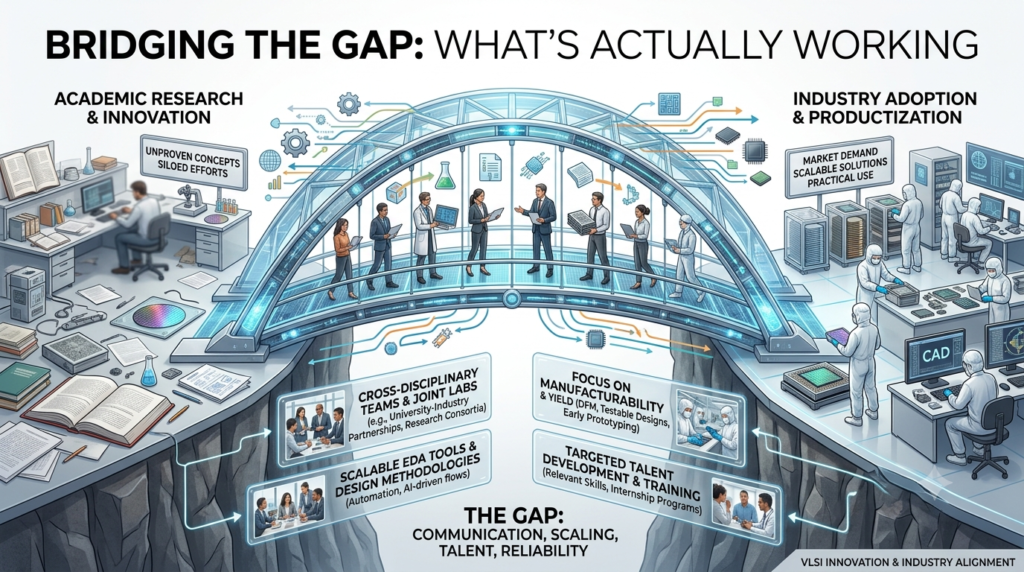
The good news is that the shortage isn’t unsolvable, and a few approaches are already showing results. Companies that build internal upskilling tracks, rather than waiting for the market to hand them finished talent, are seeing better retention and faster ramp-up times. Pairing newer engineers with senior mentors for real tape-out cycles, rather than isolated training modules, tends to produce far more confident hires within a year.
On the individual side, engineers who specialize early, whether in UVM-based verification, physical design at advanced nodes, or DFT methodology, are commanding stronger offers than generalists spreading themselves thin. Hands-on exposure to Cadence and Synopsys tool flows, even through short-term lab-access programs, is proving to be a bigger differentiator than another certificate on a resume. Python, Tcl, and scripting fluency around EDA flows are also becoming quiet expectations rather than nice-to-haves.
For Pune specifically, closer coordination between local design centers and training providers could shorten the readiness gap considerably. A handful of companies have already started running structured onboarding bootcamps that mirror real project work instead of generic coursework, and early results suggest engineers coming through these programs reach production-level output months faster than those relying purely on self-study.
Conclusion
Pune’s semiconductor ambitions aren’t in question. The city has the infrastructure, the multinational interest, and the momentum to become a genuine chip design hub over the next few years. What it doesn’t yet have is a talent pipeline that matches that ambition, particularly in RTL design and DFT, where practical, tool-heavy expertise takes real time to build.
Closing that gap will take patience from employers willing to invest in training rather than only compete for existing talent, and it will take engineers willing to specialize in the harder, less glamorous corners of chip design like DFT. Neither happens overnight, but the companies and individuals who start now, while the rest of the market is still scrambling for the same short list of names, are the ones most likely to come out ahead as Pune’s semiconductor story keeps unfolding.
Why is Pune facing a shortage of skilled RTL engineers in 2026?
Pune’s growing semiconductor ecosystem and demand for chip design talent have increased the need for skilled RTL engineers with Verilog and SystemVerilog expertise.
Why are DFT engineers in demand in Pune?
DFT engineers are in demand due to increasing chip complexity and the need for better test coverage, yield, and reliability in modern semiconductor designs.
Is Pune a good city for RTL and DFT careers?
Yes. Pune is emerging as a VLSI and semiconductor hub, offering opportunities for RTL Design, DFT, Verification, Physical Design, and related engineering roles.v
Are RTL and DFT engineers in demand in India in 2026?
Yes. India’s expanding semiconductor industry is increasing demand for skilled RTL, DFT, Verification, Physical Design, and other VLSI professionals.
What skills are required for RTL Design jobs in Pune?
RTL engineers should know Verilog, SystemVerilog, digital electronics, RTL coding, simulation, debugging, and basic knowledge of industry-standard EDA tools.