


India Joins US-Led Pact to Secure AI and Semiconductor Supply Chains

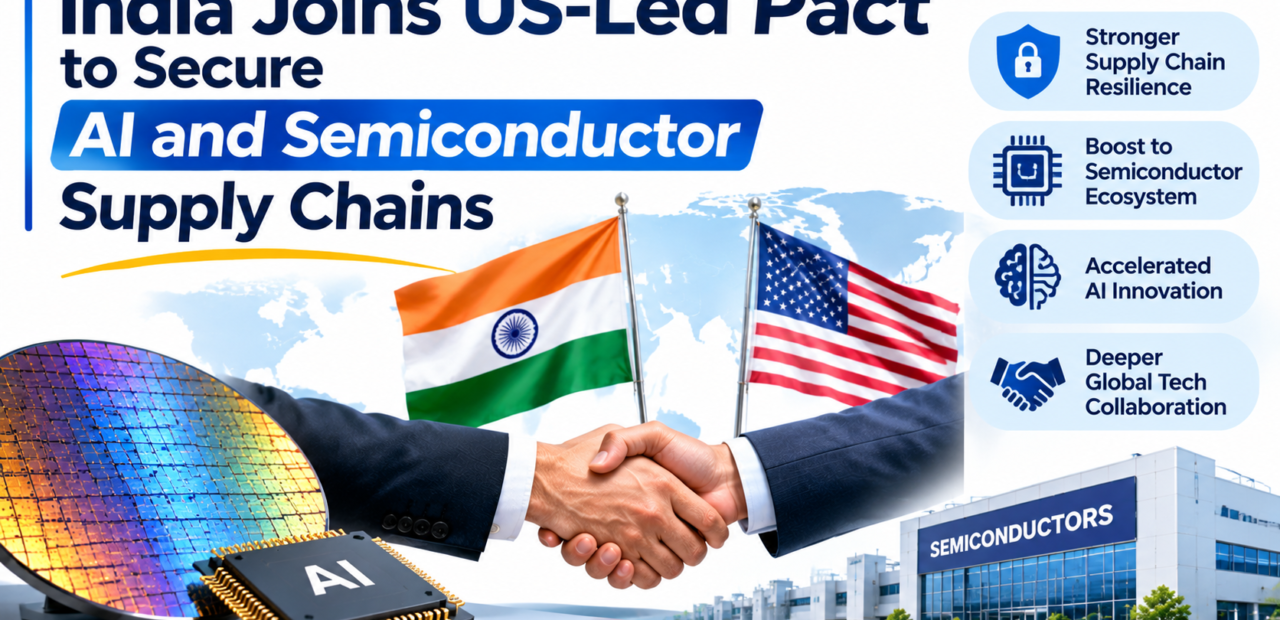
The global semiconductor industry is entering a new phase where technological leadership is no longer determined by chip manufacturing capabilities alone. Access to critical minerals, advanced semiconductor equipment, artificial intelligence infrastructure and reliable supply chains has become equally important. Recognising these challenges, India has strengthened its participation in international technology partnerships led by the United States. On November 16, 2026, India joined nine other countries in signing the San Francisco Declaration, an agreement focused on protecting critical technologies and infrastructure supporting artificial intelligence supply chains. The development highlights how semiconductor security and AI infrastructure are becoming important parts of international economic and technology strategies.
This development builds on India’s earlier participation in Pax Silica, a US-led initiative that India formally joined in February 2026 during the India AI Impact Summit in New Delhi. The initiative focuses on strengthening cooperation across the semiconductor and AI ecosystem, including critical minerals, chip manufacturing, advanced computing and energy infrastructure. India’s involvement reflects its ambition to become a more significant participant in global technology supply chains. However, international cooperation alone cannot guarantee semiconductor independence. Domestic manufacturing capabilities, research investments, skilled professionals and reliable infrastructure will remain essential to achieving long-term technological resilience.
Understanding the US-Led AI and Semiconductor Supply Chain Agreement
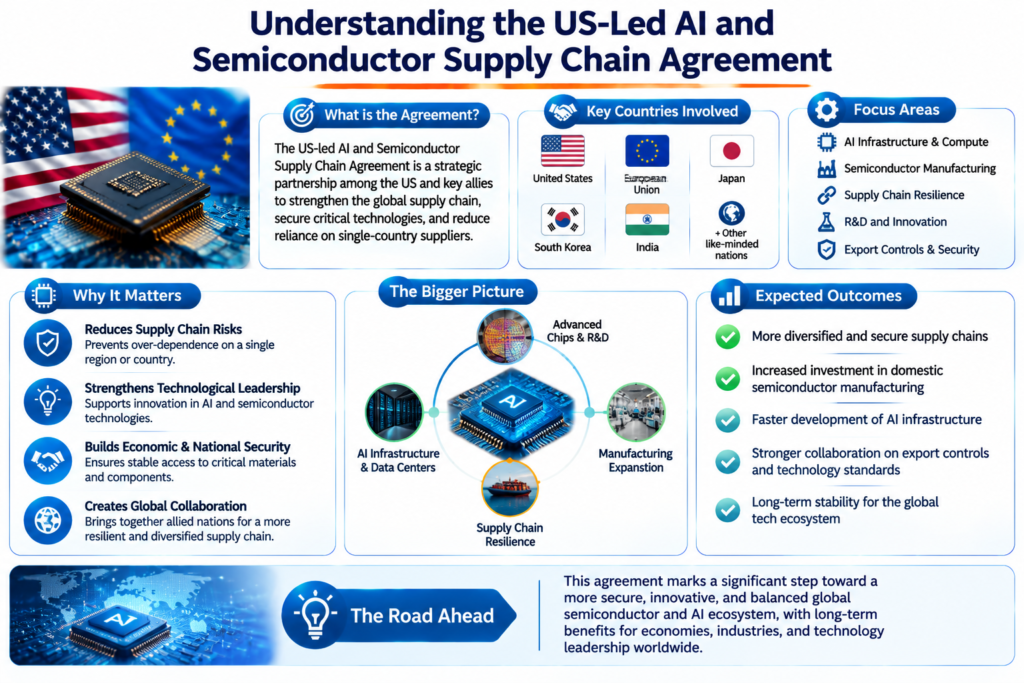
The San Francisco Declaration brings together the United States, India, Australia, Israel, Japan, South Korea, Qatar, Singapore, the United Arab Emirates and the United Kingdom. Its primary objective is to strengthen cooperation in protecting the technologies and infrastructure that support artificial intelligence development. The participating countries recognise that AI supply chains extend beyond software and computing systems to include semiconductor components, manufacturing equipment, logistics and critical infrastructure.
The declaration also reflects growing concerns about technological dependencies and supply-chain vulnerabilities. Semiconductor manufacturing requires specialised equipment, advanced materials and international collaboration. Disruptions in any part of this ecosystem can affect the availability of chips and computing resources. By coordinating security priorities and cooperation, participating countries aim to improve the reliability of technology supply chains and strengthen their collective technological capabilities.
Why Semiconductor Supply Chain Security Matters
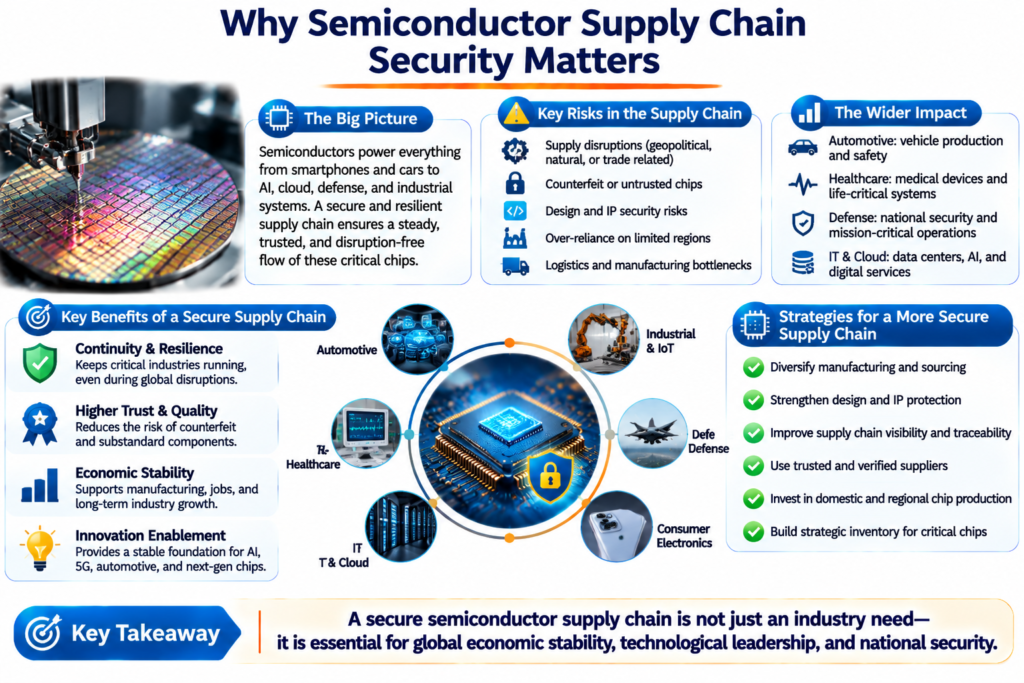
Semiconductors are essential components in modern electronics, including smartphones, automotive systems, telecommunications equipment, industrial automation and AI servers. Their manufacturing process involves multiple stages, from raw material extraction and wafer production to fabrication, packaging and testing. These activities are distributed across different countries, making the semiconductor ecosystem highly interconnected.
Supply-chain disruptions can affect production schedules, increase manufacturing costs and delay technology development. Dependence on a limited number of suppliers or manufacturing locations can also create strategic vulnerabilities. International partnerships can help diversify sourcing, encourage technology cooperation and improve access to essential resources. For India, strengthening these connections is particularly important as it expands its semiconductor manufacturing ambitions.
What India’s Participation Means for the Semiconductor Industry
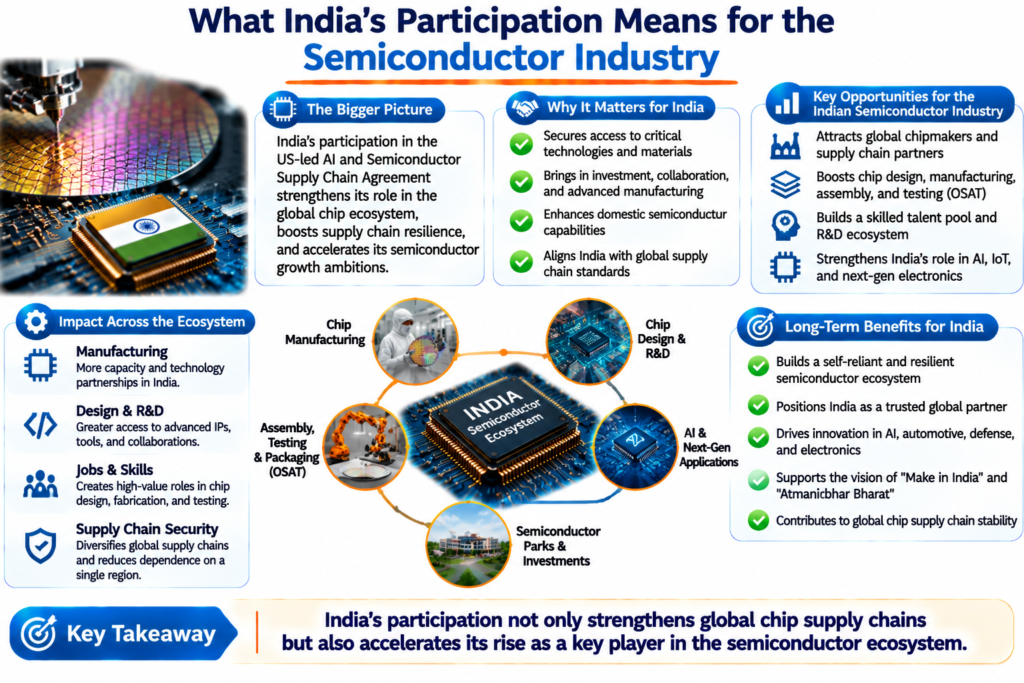
India’s participation creates opportunities to strengthen its position in the international semiconductor ecosystem. The country already has an established semiconductor design talent base and is expanding investments in fabrication, assembly, testing and packaging. Cooperation with international partners could support technology exchange, industrial investment and participation in more advanced semiconductor supply-chain activities.
However, it is important to understand that joining an international declaration does not automatically establish new semiconductor fabrication facilities or guarantee access to every advanced technology. Progress will depend on practical implementation, investment commitments, infrastructure development and collaboration between government institutions, research organisations and private companies. India’s long-term opportunity lies in converting international partnerships into sustainable domestic capabilities.
The Growing Connection Between Artificial Intelligence and Semiconductor Manufacturing
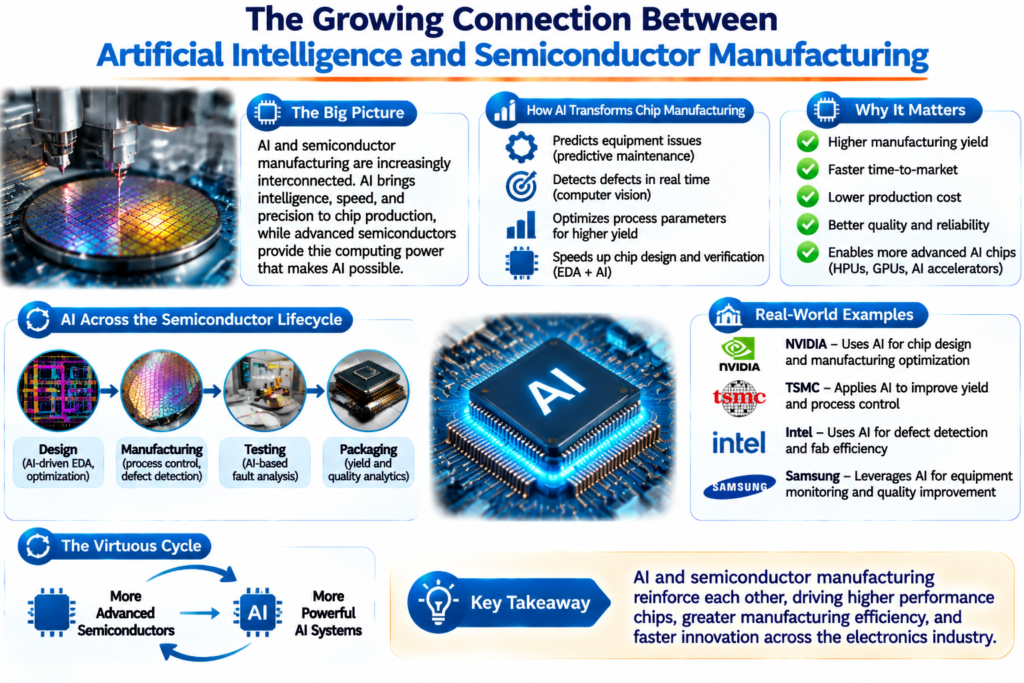
Artificial intelligence is increasing demand for advanced processors, GPUs, memory technologies and high-performance computing infrastructure. Training and operating sophisticated AI models require substantial computing capacity, which depends on reliable semiconductor manufacturing and access to advanced electronic components. Consequently, AI development and semiconductor supply-chain security are becoming closely connected.
The new agreement highlights the importance of protecting the wider infrastructure supporting AI technologies. This includes computing facilities, semiconductor production, energy availability and the systems connecting different stages of the supply chain. For India, this creates an opportunity to develop capabilities across both AI infrastructure and semiconductor technology rather than focusing exclusively on software development or chip design.
Opportunities and Challenges for India’s Technology Ecosystem
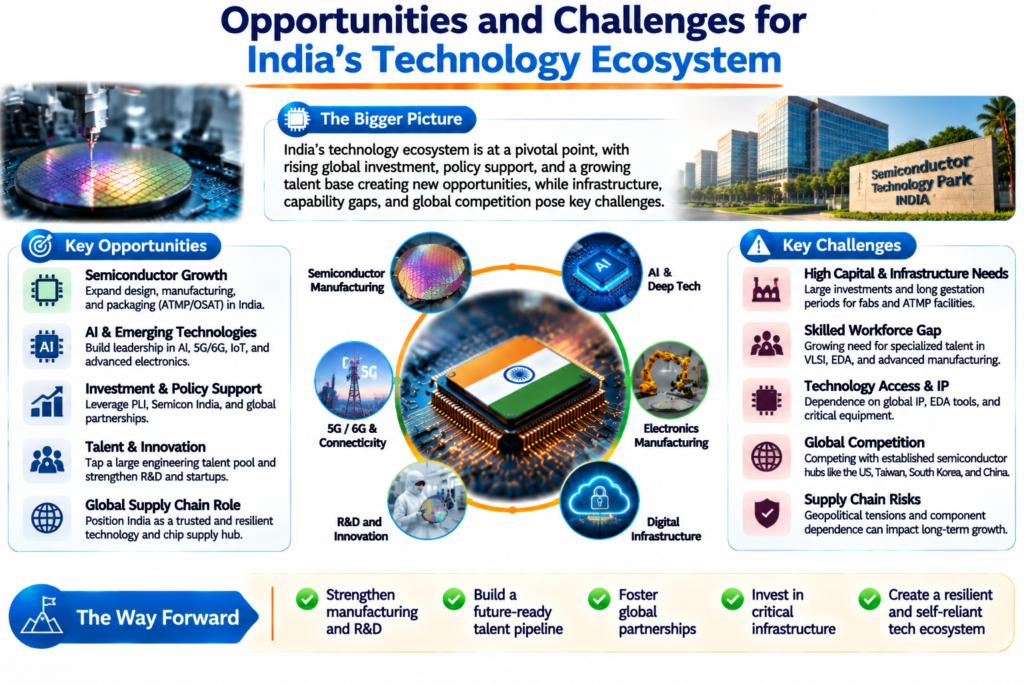
India could benefit from stronger international cooperation through potential investment opportunities, technology partnerships, research collaboration and improved integration with global semiconductor manufacturers. The development may also create opportunities for Indian engineering companies, semiconductor design organisations, equipment suppliers and technology professionals. Growing demand for advanced computing could further increase the importance of India’s technical workforce.
Nevertheless, several challenges remain. Semiconductor fabrication requires substantial capital, specialised equipment, reliable electricity, high-quality water and a mature industrial ecosystem. India must also strengthen advanced packaging, materials research, manufacturing expertise and semiconductor equipment capabilities. International partnerships can accelerate progress, but consistent policy support, long-term investment and domestic innovation will determine how effectively the country converts these opportunities into industrial growth.