



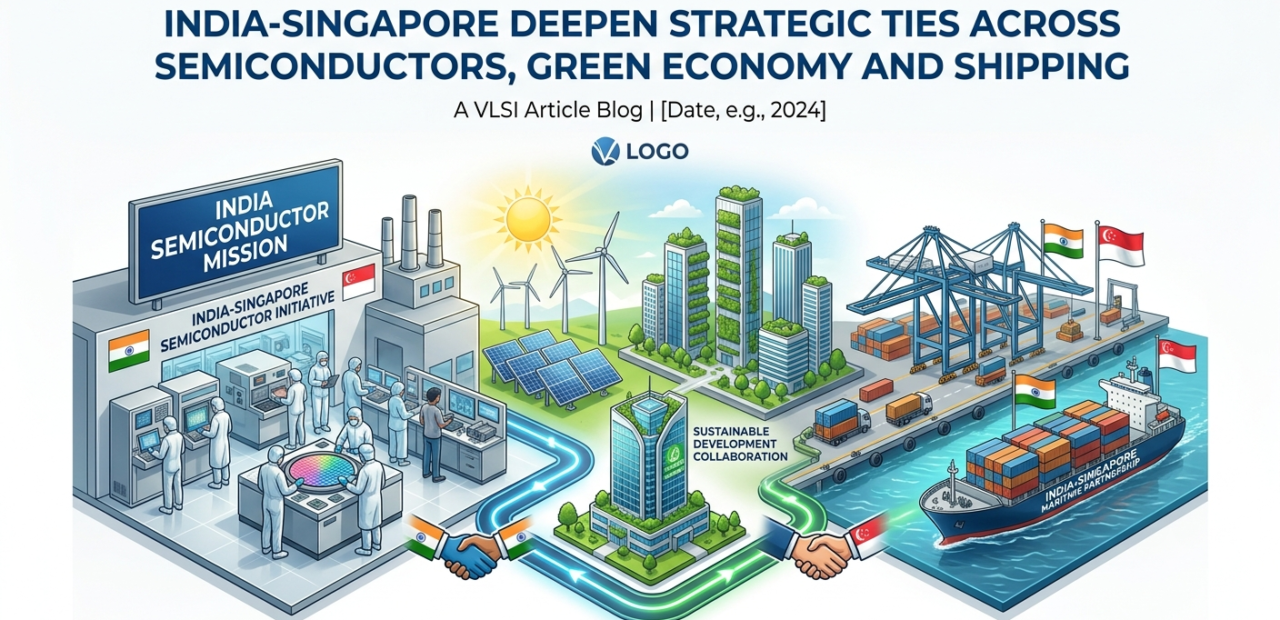
India-Singapore Deepen Strategic Ties Across Semiconductors, Green Economy and Shipping

When two of Asia’s most trusted economies decide to bet big on chips, clean energy and cargo ships in the same breath, the world takes notice. India and Singapore have just wrapped up their fourth Ministerial Roundtable, and the outcomes go far beyond the usual trade talk that has defined this relationship for decades.
From semiconductor corridors to green hydrogen supply chains and eco-friendly shipping lanes, the latest round of talks signals a partnership that is maturing into something far more strategic. For anyone following electronics manufacturing, clean-tech policy or maritime trade in the region, this roundtable lays out a clear picture of where things are headed next.
A New Chapter for Semiconductors
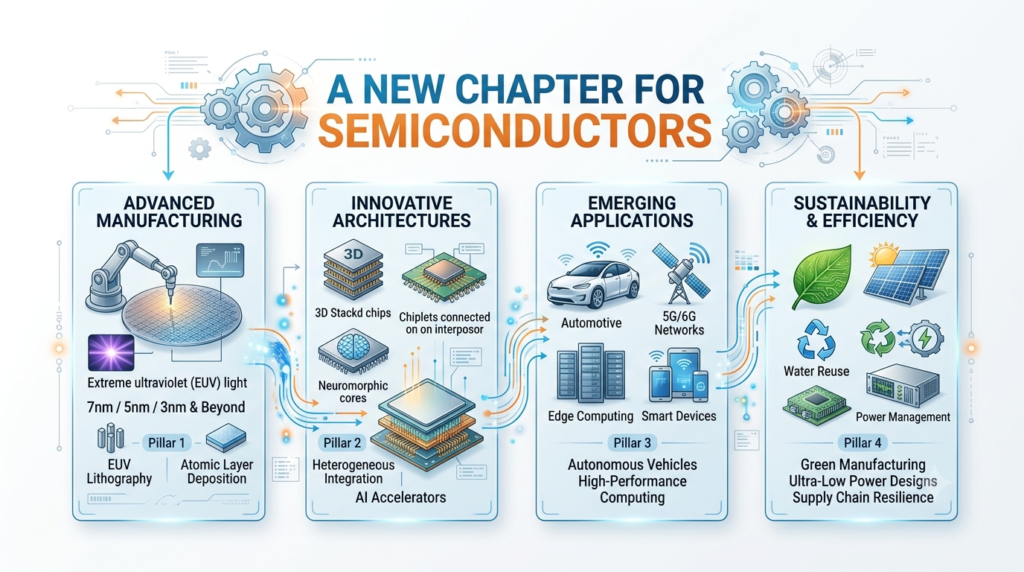
Semiconductors sat right at the center of the discussions, and for good reason. India has spent the last couple of years building out its chip manufacturing base at speed, and Singapore brings decades of experience in equipment, wafer fabrication, and advanced packaging to the table. The two sides used this roundtable to push forward a shared vision: a semiconductor corridor that runs on trust rather than convenience.
This isn’t just diplomatic language. Concrete steps are already in motion. A Green Lane Initiative for the semiconductor sector is set to roll out soon, designed to speed up the movement of critical equipment and materials between the two countries. Institutions on both sides are also collaborating on research and lithography, pairing India’s growing manufacturing capacity with Singapore’s deep-tech expertise. Industry bodies from both nations have been holding regular meetings to align on supply chain resilience, something that has become a top priority as global chip demand keeps climbing.
What makes this partnership interesting is the complementary fit. Singapore has long been a hub for chip equipment and process technology, while India offers scale, a large domestic market, and an expanding base of fabrication and assembly facilities. Bringing these strengths together gives both countries a stronger hand as the global semiconductor map continues to shift.
Green Economy: A Shared Bet on Sustainability
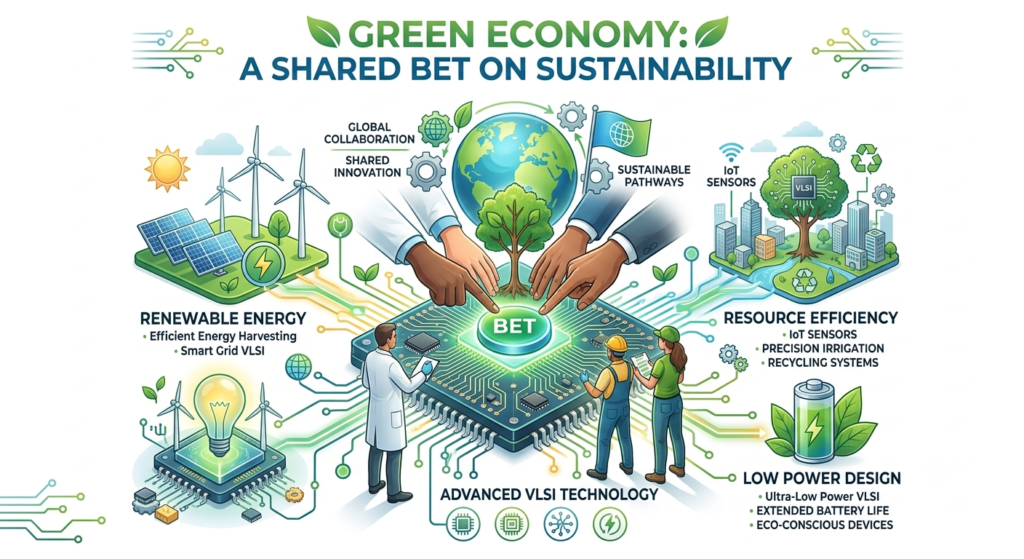
The green economy emerged as one of the standout themes of this year’s talks. Officials from both sides pointed to green hydrogen as an area ripe for deeper collaboration, with discussions covering everything from supply chain development to joint pilot projects. This lines up with broader ambitions in both countries to scale up clean energy production and cut reliance on fossil fuels over the coming decade.
Industrial parks were another focus area, with both governments exploring how dedicated green industrial zones could attract investment in renewable energy, sustainable manufacturing, and clean technology. The idea is to create spaces where companies can build and scale sustainable operations with the right infrastructure and policy support already in place.
Food security also found its way into the green economy conversation, an area that might not seem obvious at first glance but ties in closely with sustainability goals. Cooperation here spans agricultural research, food processing, and building more resilient supply chains for essentials like rice. It reflects a broader shift in how both countries are thinking about strategic partnerships: not just trade and technology, but resilience across the systems that keep economies running.
Shipping and Maritime Cooperation Take Center Stage
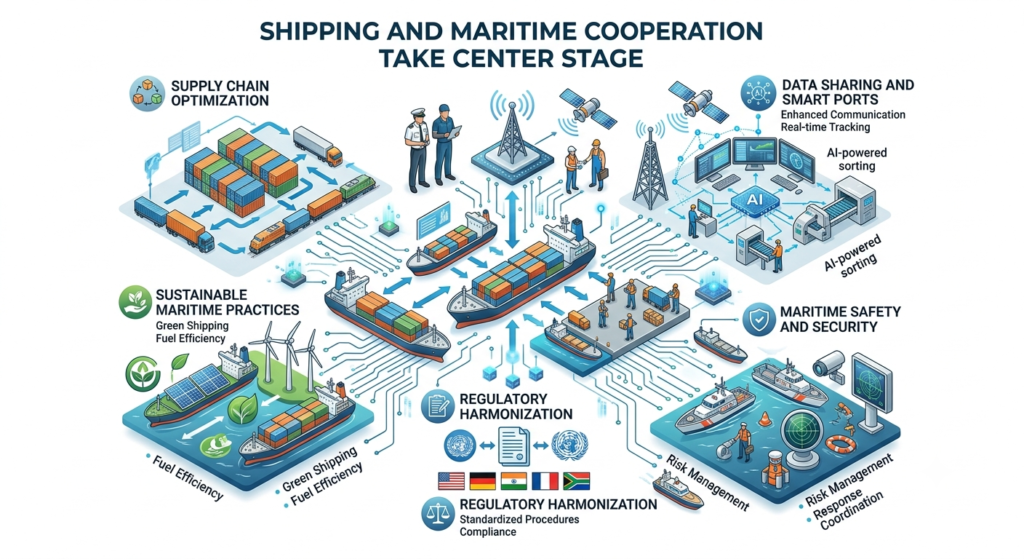
Shipping might not always grab headlines the way semiconductors do, but it plays an equally critical role in this partnership. Green shipping was explicitly flagged as an emerging area of cooperation, with both countries looking at ways to decarbonize maritime trade routes that connect South and Southeast Asia.
A maritime memorandum of understanding was signed as part of the roundtable outcomes, setting the stage for closer coordination on port operations, vessel efficiency, and cleaner fuel standards. Given how much trade between India and Singapore already moves by sea, even incremental improvements in shipping efficiency and emissions can have an outsized impact on both economies.
This focus on green shipping also connects back to the broader green economy push. Ports, vessels, and fuel supply chains are all pieces of the same puzzle, and aligning policy across these areas gives both countries a more coherent path toward lower-emission trade.
Beyond Trade: A Broader Strategic Roadmap
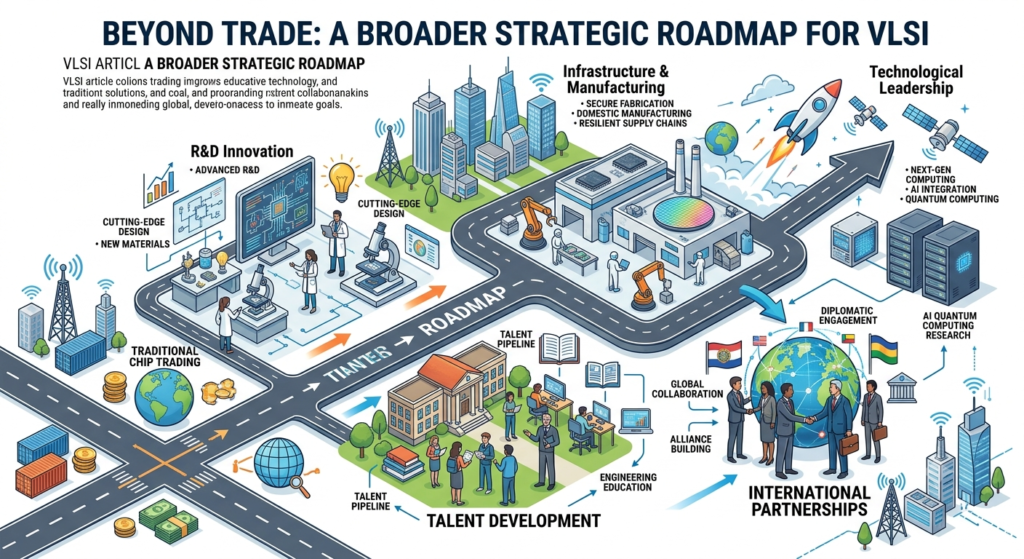
What ties all of this together is the framework both countries are using to guide the relationship: the Comprehensive Strategic Partnership, built around six pillars covering advanced manufacturing, connectivity, digitalization, healthcare, skills development, and sustainability. The roundtable reviewed progress across all of these areas, and the list of new initiatives is long.
A National Centre of Excellence for skilling is being developed in Chennai, aimed at building up talent for advanced manufacturing and technology sectors. Plans are also underway for the next Singapore-India Hackathon later this year, bringing together innovators from both countries. On the business side, the Singapore Business Federation is opening an office in Bengaluru, a signal of growing confidence in India’s tech and manufacturing hubs. Ministers also agreed to encourage more regular visits between Indian state leaders and Singapore, strengthening ties beyond the national level.
Two memorandums of understanding and a letter of intent were signed during the talks, covering areas including food safety, telecommunications, and maritime cooperation. Taken together, these outcomes show a relationship that has moved well past its early trade-focused years into something built on shared technology goals, sustainability commitments, and long-term economic planning.