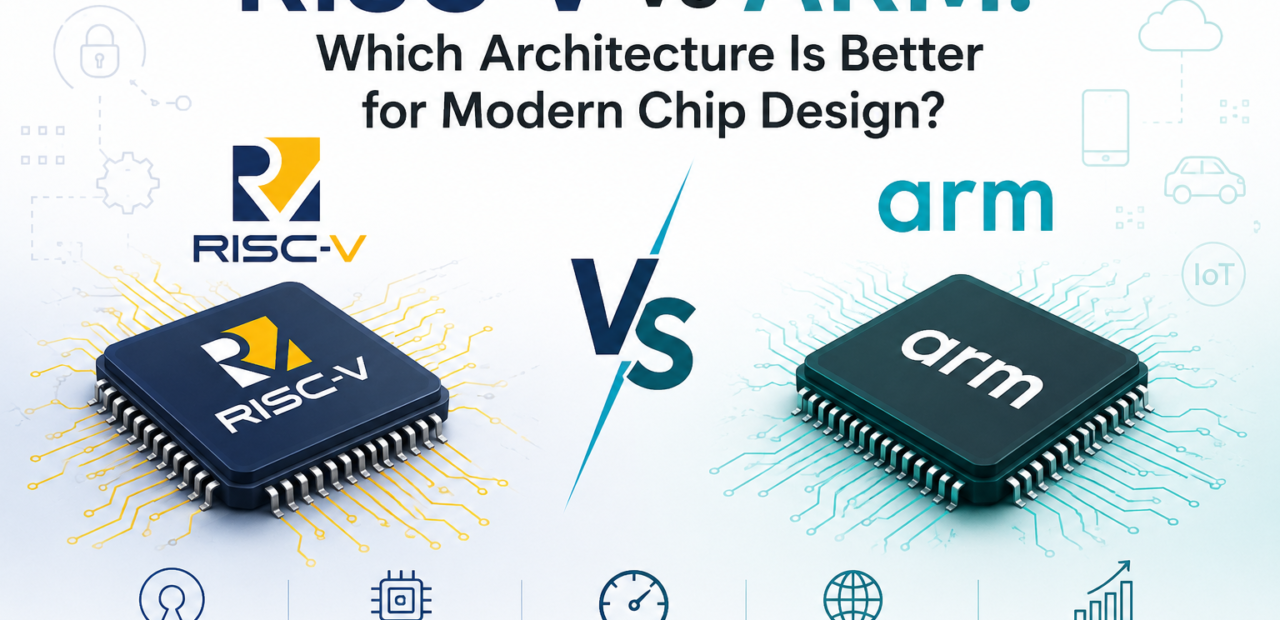
RISC-V vs ARM: Which Architecture Is Better for Modern Chip Design?

For three decades, one company controlled the blueprint for almost every phone, tablet, and embedded device on the planet. That grip is loosening faster than anyone expected. A once-obscure academic project out of Berkeley has grown into a genuine rival to ARM, and in 2026 it is no longer a question of “if” but “how fast.”
Chip designers, hardware startups, and even governments are now picking sides in a debate that used to be purely academic. RISC-V offers freedom from licensing fees and total design control, while ARM brings decades of maturity, tooling, and battle-tested performance. Neither side is going away quietly, and the choice between them now shapes everything from smartphones to data centers to electric vehicles.
What Actually Separates RISC-V From ARM
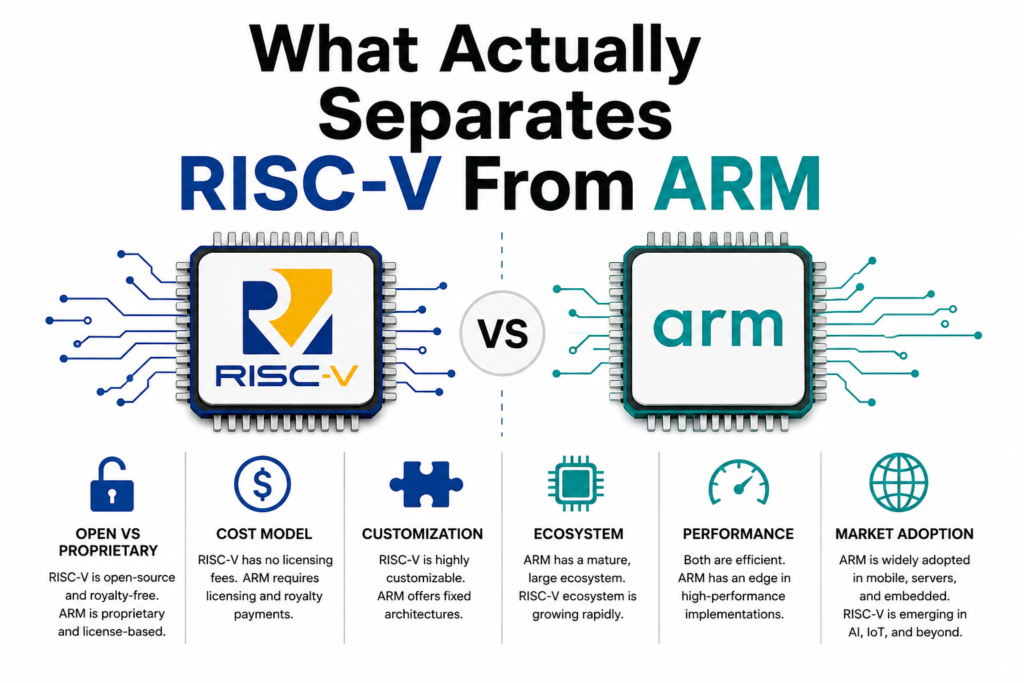
The core difference comes down to ownership. ARM is a proprietary instruction set architecture controlled by Arm Holdings, and any company that wants to build a chip around it has to pay licensing fees plus per-unit royalties, which typically run 1 to 2 percent of a chip’s selling price. That cost adds up fast at scale, and it also means the underlying design decisions are locked behind closed doors.
RISC-V flips that model entirely. It is an open instruction set, free for anyone to use, modify, or extend without paying a licensing fee to a central authority. A company can strip it down to a bare-bones core for a low-power sensor or extend it heavily for a data center processor, all without asking permission. This flexibility is why chipmakers building highly specialized silicon, from AI accelerators to automotive controllers, increasingly reach for RISC-V when a generic core doesn’t fit the job.
Performance, Power, and How Close the Gap Really Is
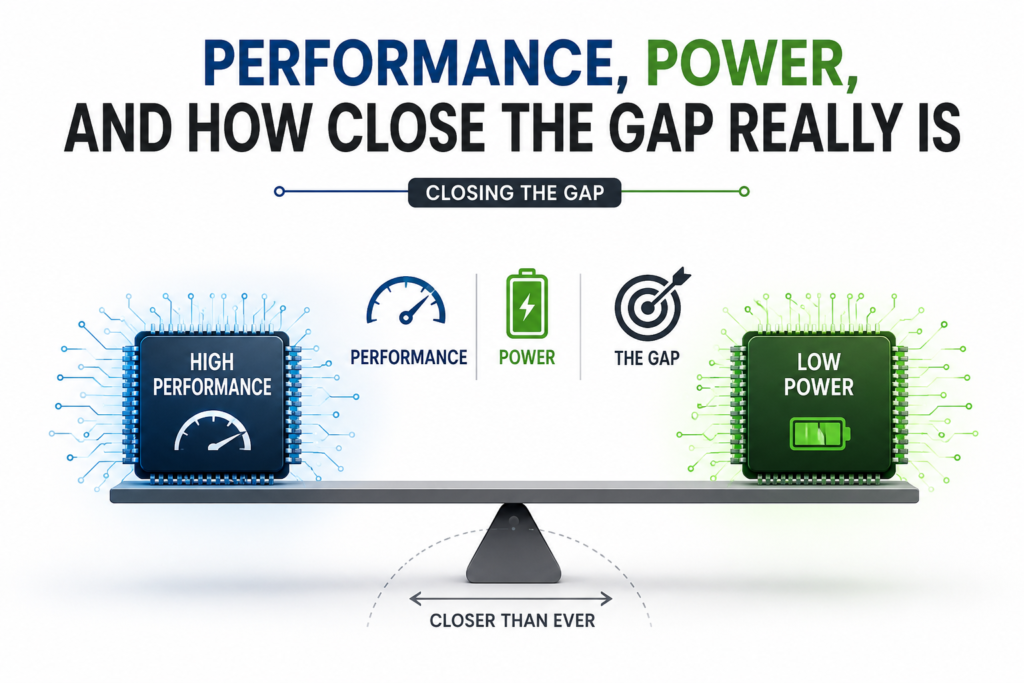
For years, the honest answer was that ARM simply performed better on anything demanding. That gap has narrowed considerably. High-performance RISC-V cores from companies like SiFive and Tenstorrent are now within one or two generations of top-tier ARM designs, and some newer RISC-V implementations are reportedly delivering meaningfully better performance-per-watt on cloud-native workloads compared to similarly positioned ARM cores.
A major turning point has been the arrival of a standardized application profile that guarantees every compliant RISC-V chip runs the same software stack. This matters because fragmentation was RISC-V’s biggest weakness in the past. With that baseline now in place, along with built-in vector extensions that accelerate machine learning workloads, RISC-V has become a serious contender for AI inference at the edge and beyond, not just for low-cost microcontrollers.
ARM still holds a clear lead where mature, optimized software libraries matter most, particularly in premium smartphones and high-end application processors, where years of ecosystem investment are hard to replicate overnight.
Real Industry Momentum Behind Each Architecture
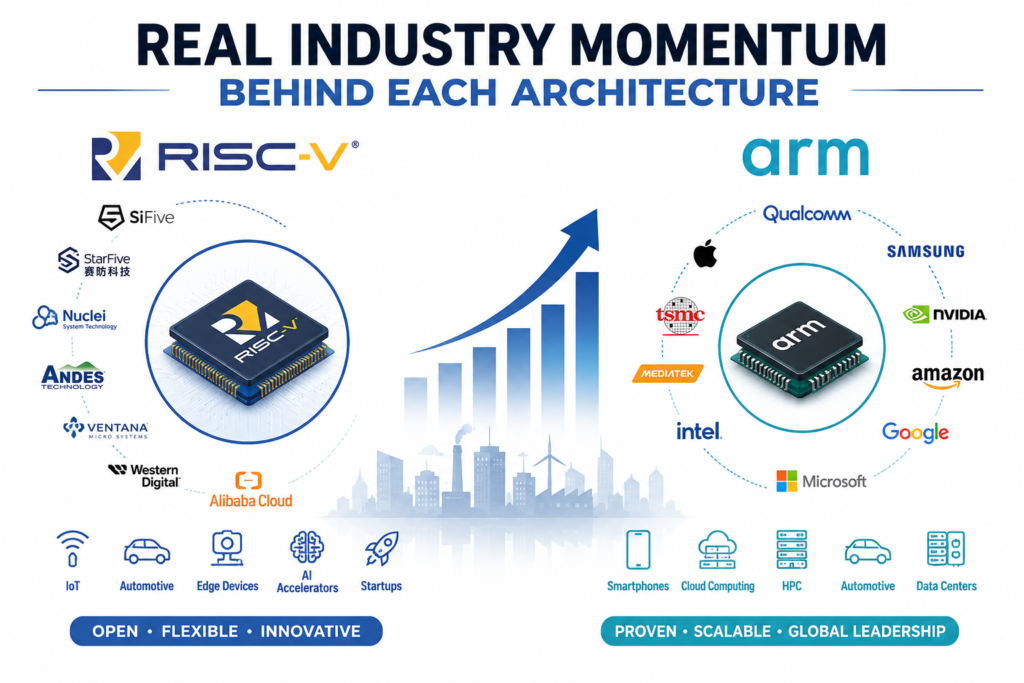
The numbers tell an interesting story. RISC-V has reportedly crossed roughly a quarter of global processor market share across microcontrollers, application processors, and AI accelerators combined, a milestone that would have seemed unlikely just a few years ago. Major players including Qualcomm, NVIDIA, Google, and Meta are investing directly in RISC-V silicon, and Qualcomm’s acquisition of a RISC-V server core designer signals that the open architecture is being taken seriously for high-performance computing, not just embedded devices.
Automotive is turning into one of the biggest battlegrounds. A consortium of major chip suppliers formed early in 2026 specifically to push RISC-V into safety-critical automotive systems, a domain ARM has dominated for decades. Meanwhile, geopolitical pressure has pushed China to invest heavily in homegrown RISC-V designs as a hedge against dependence on Western-controlled architectures.
ARM, for its part, is not standing still. It remains the default choice for mobile devices, retains a commanding share of the smartphone market, and continues to benefit from an enormous, mature software ecosystem that took years to build and isn’t disappearing anytime soon. The reality emerging from 2026 is less a story of one architecture replacing the other and more a story of coexistence, with both often sitting on the same chip depending on the workload.
What This Shift Means for Chip Design Careers
This changing landscape is opening up a wide range of opportunities for hardware engineers. Companies moving into RISC-V need people skilled in RTL design, verification using SystemVerilog and UVM, physical design, and processor microarchitecture, and many of these roles didn’t exist in this form even five years ago. Engineers with a solid foundation in traditional chip design skills can transition into RISC-V-focused roles without starting from scratch, since the underlying principles of digital design, timing closure, and verification methodology carry over directly.
Beyond pure RTL and verification work, there is growing demand in areas like toolchain development, compiler support, and safety certification for automotive-grade RISC-V cores. Salaries in chip design roles remain strong, with experienced engineers in advanced roles commanding significant compensation, particularly in regions with dense semiconductor hubs. For anyone building a long-term career in hardware, developing familiarity with both ARM and RISC-V ecosystems is quickly becoming a practical advantage rather than a nice-to-have.