


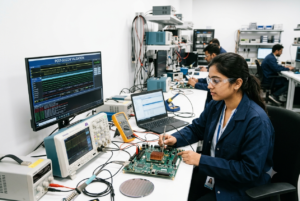

Telangana Voices Concerns Over Unaddressed Semiconductor Proposals

A state with ready land, cleared subsidies, and a committed investor still walked away empty-handed — while a rival state’s incomplete paperwork got the green light. That is the accusation now rattling India’s semiconductor corridor, and it is coming straight from Telangana’s own government.
The Telangana administration has publicly accused the Centre of overlooking its semiconductor proposals despite the state doing everything on paper — from land allotment to subsidy clearance — well ahead of competing states. The dispute has reignited a long-simmering debate about how India decides where its chip factories go, and whether merit or politics is driving the map.
A State That Says It Did Everything Right

Telangana’s Industries Minister has laid out a fairly specific case. According to the state, it allotted around ten acres of prime land in Maheshwaram, cleared every subsidy on its end, and completed regulatory formalities in record time — all to host an advanced packaging and testing facility. The investor, the state says, was ready to sign. The only missing piece was the final nod from the India Semiconductor Mission.
Instead, a comparable project was cleared for a different state, one where, by the Minister’s own account, no land had been handed over and groundwork hadn’t even started. That contrast — a fully prepared applicant losing out to a proposal still on paper — is the crux of Telangana’s grievance. State officials have called it a step-motherly approach that rewards political alignment over actual readiness, and they’ve said this isn’t an isolated instance either. Similar claims have surfaced before, including allegations that companies once eyeing Telangana were later redirected to other states.
Whether this is deliberate favoritism or simply how a young, fast-moving incentive scheme allocates limited slots is up for debate. But the pattern, real or perceived, is now shaping how states approach Delhi when it comes to chip investments.
The Bigger Picture: India’s Semiconductor Push Is Accelerating Fast

This controversy isn’t happening in isolation — it’s unfolding right as India’s semiconductor ambitions are scaling up dramatically. The Union Cabinet has approved the next phase of the country’s chip programme, often referred to as Semicon 2.0, with an outlay well over a lakh crore rupees. This builds on the earlier phase of the Semicon India Programme and shifts the focus from simply attracting assembly units to building a fuller ecosystem — covering design, fabrication, packaging, specialty materials, and equipment manufacturing.
The scale of ambition here is hard to overstate. India wants to move from being a net importer of chips to eventually meeting a large share of its own demand, while also building indigenous intellectual property and reducing reliance on a handful of global fabrication hubs. New facilities have already begun production in some states, and more groundbreaking ceremonies are lined up through the rest of the year.
For states like Telangana, this expansion is exactly why the stakes feel so high. A bigger national pie means more opportunities, but it also means more competition for a limited number of approvals each cycle — and a bigger cost to being left out.
A Familiar Pattern in India’s Federal Politics
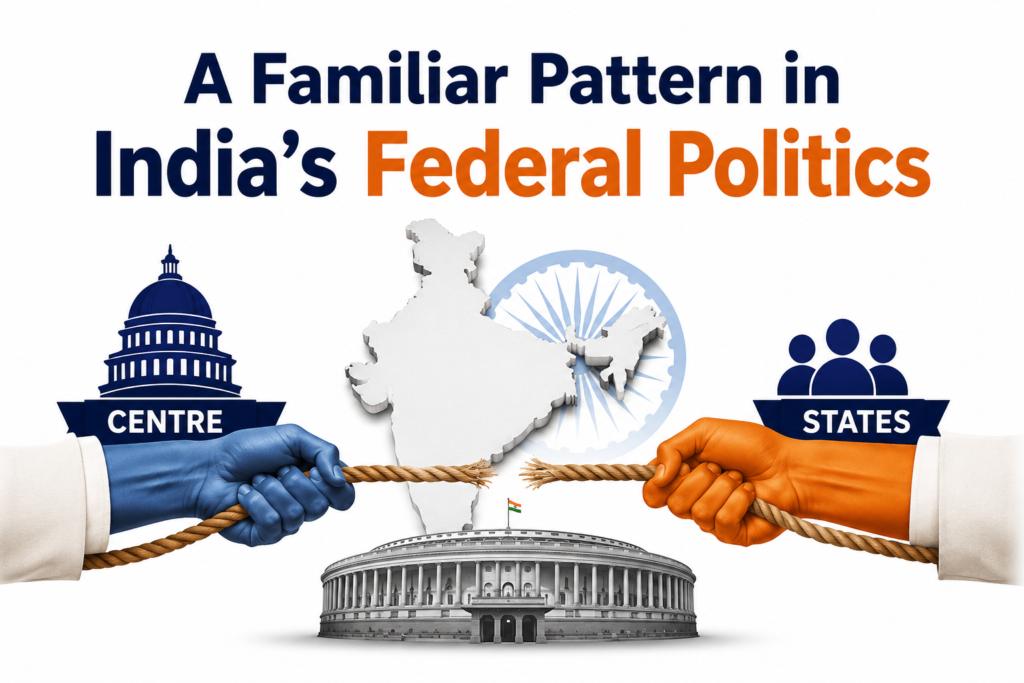
Semiconductor allocation has quickly become another flashpoint in the broader tug-of-war between the Centre and opposition-ruled states. Telangana isn’t alone in raising these concerns — other parties have pointed to what they describe as a pattern where investment-heavy sectors, from semiconductors to large manufacturing units, tend to cluster around states aligned with the ruling party at the Centre.
This isn’t a new complaint in Indian federal politics. Infrastructure spending, industrial clusters, and now high-value tech manufacturing have all, at different points, triggered similar accusations from state governments that feel bypassed. What makes the semiconductor case sharper is the sheer size of the investment involved and the long-term economic weight these facilities carry — a single approved unit can shape a region’s industrial identity for a generation.
Officials from the Centre, for their part, generally frame approvals as being based on project viability, investor commitments, and ecosystem fit rather than any regional bias. But when a state can point to specific, verifiable readiness — land, subsidies, timelines — and still see the project go elsewhere, that explanation understandably invites scrutiny.
What This Means for Investors and India’s Chip Ambitions

For companies actually deciding where to build, this back-and-forth matters more than it might seem. Semiconductor manufacturing involves enormous upfront capital and multi-year commitments, so predictability in how governments allocate incentives is almost as important as the incentives themselves. If the process appears unclear or inconsistent, it can quietly discourage the kind of long-horizon investment India is trying to attract.
There’s also a competitive angle worth watching. Telangana has been positioning itself around infrastructure, governance stability, and a broader push to move its tech economy up the value chain — including efforts to diversify investment into smaller cities and deepen engineering capability within global capability centres operating in the state. Losing out on marquee semiconductor projects doesn’t just cost jobs and investment; it affects how the state’s broader tech pitch is perceived by future investors.
At a national level, the resolution of this dispute — or the lack of one — could set a precedent. As the next wave of approvals under the expanded semiconductor mission rolls out, how transparently those decisions are made, and how clearly the criteria are communicated, will likely determine whether more states raise the same objections Telangana has.
The Road Ahead
For now, Telangana has made its position clear: it wants a fair, merit-based evaluation of its proposals and a seat at the table as India’s semiconductor story unfolds. Whether the Centre responds with fresh approvals or simply more assurances remains to be seen. What’s certain is that as the money on the table grows larger, so will the scrutiny over exactly how it gets divided — and every state left waiting will be watching the next round of decisions closely.