
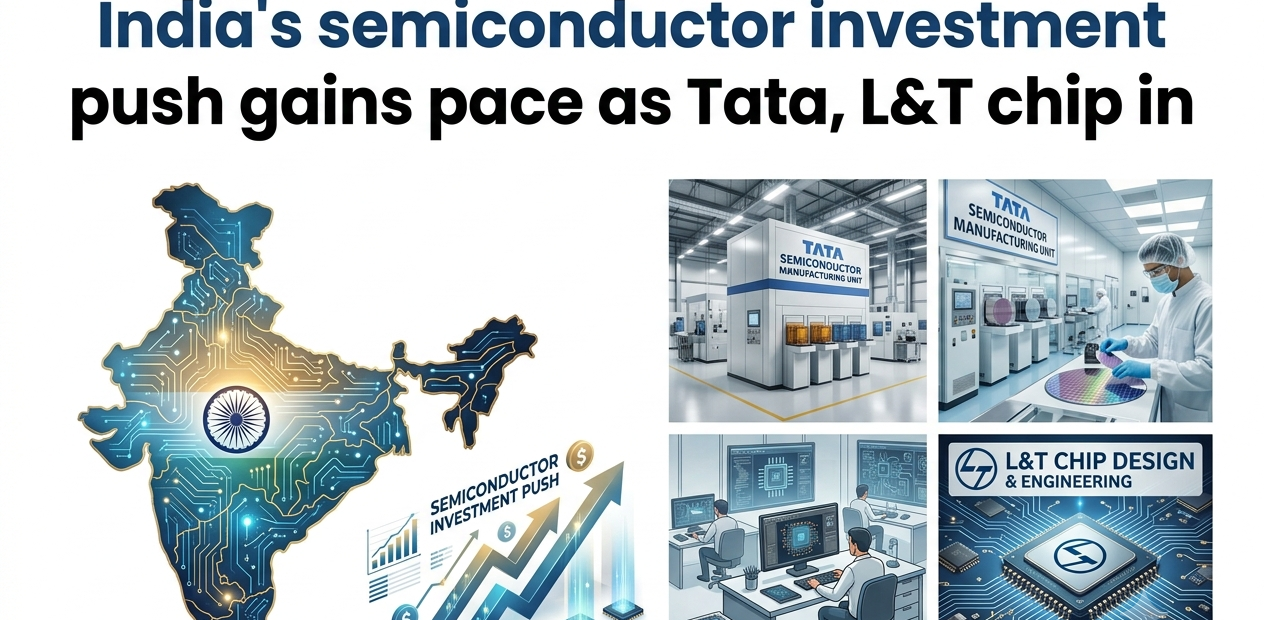
India’s Semiconductor Investment Push Gains Pace as Tata, L&T Chip In

For decades, “Made in India” and “microchip” rarely showed up in the same sentence. That’s changing fast, and not because of another government announcement — this time it’s the country’s biggest industrial names putting real money and real factories behind it.
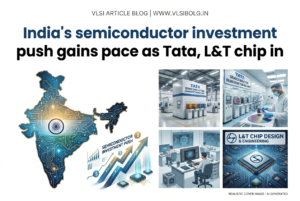
Tata Electronics is racing toward its first locally fabricated chip, expected out of its Dholera plant before the end of this year. Meanwhile, L&T Semiconductor Technologies has quietly started shifting chip assembly and testing work back to India, betting that domestic capacity is now cost-competitive on its own merits. Add a doubled-down government mission and a flagship global event landing in New Delhi next month, and India’s chip story is shifting from ambition to execution.
Tata’s Dholera Fab Nears Its First Chip
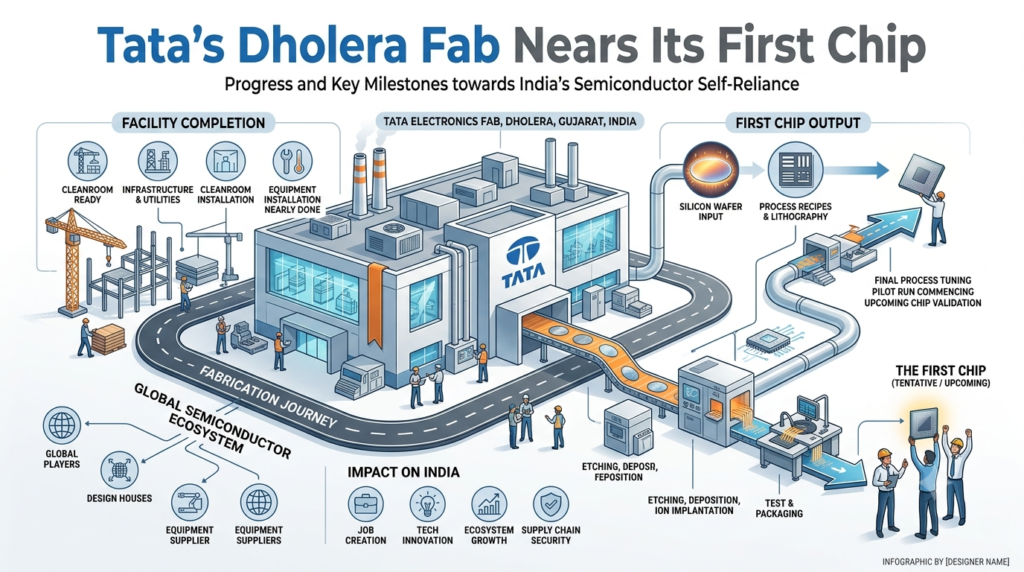
Tata Electronics’ semiconductor fabrication plant in Dholera, Gujarat, has become the flagship project of India’s chip push. Built in partnership with Taiwan’s Powerchip Semiconductor Manufacturing Corporation, the facility represents an investment of roughly ₹91,000 crore and is designed to produce up to 50,000 wafers a month once it reaches full capacity. It will focus on chips used in power management, displays, microcontrollers, and computing applications across automotive, telecom, and consumer electronics.
A major milestone came when Tata Electronics signed an agreement with Dutch lithography giant ASML to equip the Dholera facility with the tools needed for front-end wafer fabrication — the most technically demanding stage of chipmaking, where microscopic circuits are etched onto silicon. That partnership signals something beyond a single factory deal: global equipment leaders are treating India as a serious, long-term manufacturing base rather than a one-off project. Government officials have indicated the plant’s first commercial chips should roll out by the close of 2026, a timeline that would mark India’s entry into front-end semiconductor manufacturing for the first time.
L&T Semiconductor Brings Chip Backend Work Home
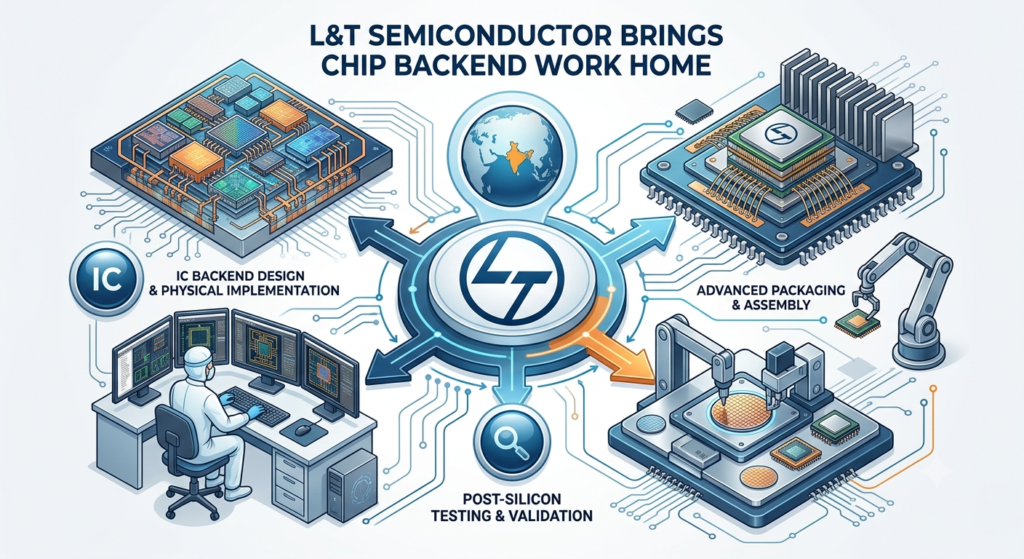
While Tata builds the fab, L&T Semiconductor Technologies is tackling a different, less-discussed part of the supply chain: assembly and testing. The company, a fabless chip designer that outsources manufacturing, has begun moving its outsourced semiconductor assembly and test operations away from overseas partners and into India.
What makes this shift notable is the reasoning behind it. Company leadership has pointed out that Indian OSAT (outsourced assembly and test) players are now genuinely competitive on cost, not merely subsidized into relevance. With government incentives covering a significant share of fab project costs and Indian facilities scaling up, L&T expects its India-based operations to break even within roughly two years. It’s a sign that the economics of chip manufacturing in India are starting to hold up on their own, which matters far more for long-term credibility than any single headline investment.
ISM 2.0: A Bigger, Broader Policy Push
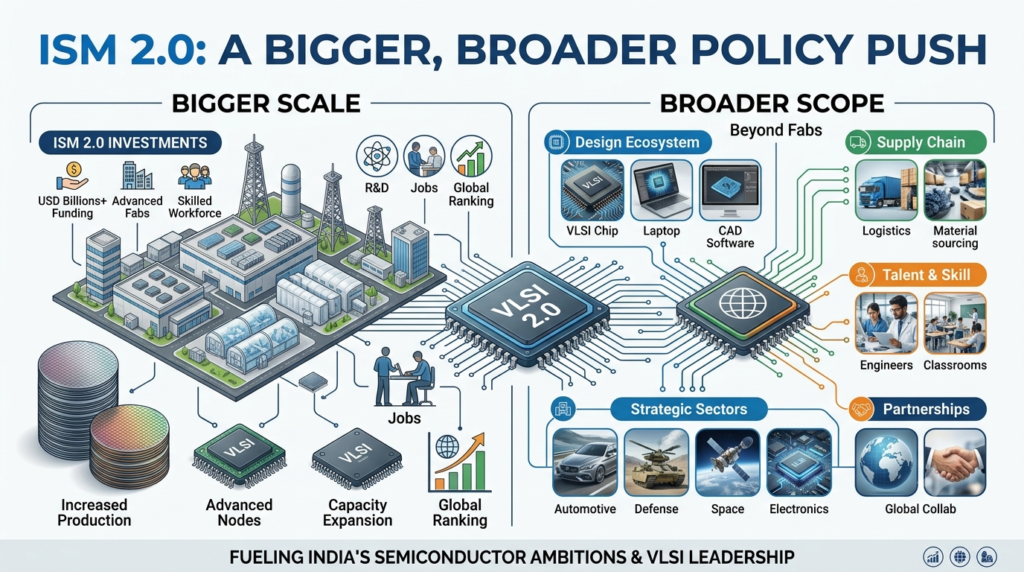
None of this growth happens in a vacuum. The Union Cabinet has approved the framework for India Semiconductor Mission 2.0, a significantly expanded follow-up to the original ₹76,000 crore mission launched in 2021. ISM 2.0 carries an allocation north of ₹1.25 lakh crore and widens its focus well beyond fabs alone — covering semiconductor equipment, specialty materials, chip design, advanced packaging, and building out domestic intellectual property.
This broader scope matters because a fab without local suppliers of gases, chemicals, and precision components is still dependent on imports for its inputs. By extending incentives to equipment and materials manufacturers, the government is trying to build a fuller ecosystem rather than a handful of isolated factories. As of mid-2026, more than a dozen semiconductor projects are approved and either operational or under construction across states including Gujarat, Assam, Rajasthan, and Odisha — a spread that suggests the mission is deliberately avoiding overconcentration in any single region.
Semicon India 2026 and What Comes Next

The next big checkpoint for the industry arrives in September, when New Delhi hosts the fifth edition of Semicon India, expected to draw hundreds of exhibitors and delegations from more than 40 countries. The event is being positioned around the theme of moving from “silicon to systems” — building not just chip fabs, but the full stack of design, packaging, and electronics manufacturing around them.
Some of that progress is already tangible rather than promotional. Facilities in Sanand, Gujarat have started shipping commercial memory chips and completing assembly and packaging runs, showing that India’s first wave of projects has moved past groundbreaking ceremonies into actual production. The real test for Semicon India 2026 will be whether it converts into fresh commitments from global equipment and materials suppliers — the layer of the industry that determines whether India’s chip ecosystem becomes self-sustaining or stays dependent on imported inputs.