



India Plans Up to Eight Additional Semiconductor Plants – PM Modi Outlines Manufacturing Push

Picture this: the chip inside your next smartphone, your car’s dashboard, or a hospital monitor built not in Taiwan or South Korea, but a few hours’ drive from your own city. That is no longer a distant dream for India — it is now a stated national target.
Speaking from the ramparts of the Red Fort on India’s 80th Independence Day, Prime Minister Narendra Modi announced that the country is set to add five to eight new semiconductor plants over the next seven to eight years, building on three facilities that have already begun commercial production. It’s a statement that instantly grabbed the attention of the global chip industry, and it says a lot about where India’s manufacturing ambitions are headed next.
This piece breaks down what was actually announced, what has already been built, where the money is going, and why this push matters far beyond the semiconductor industry itself.
What PM Modi Actually Announced
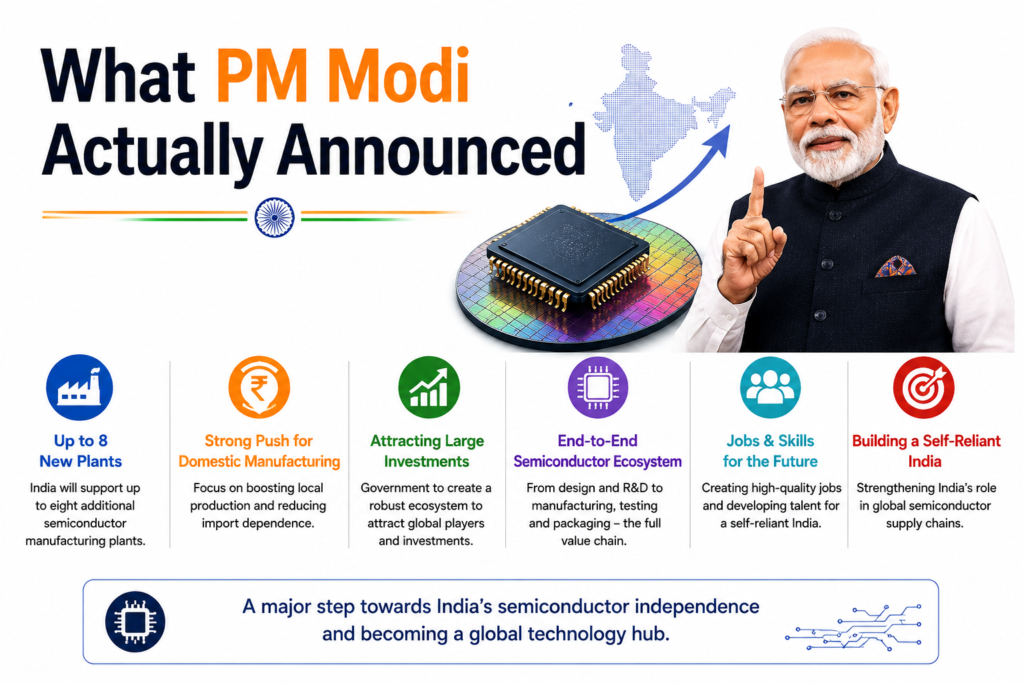
During his Independence Day address, the Prime Minister framed the semiconductor push as part of a larger vision around self-reliance, often referred to as Atmanirbhar Bharat. He pointed out that three semiconductor facilities are already operational and have started exporting output — a milestone that marks India’s shift from planning to actual production. Building on that base, he said five to eight additional plants are expected to come online over the next seven to eight years.
What stood out was the framing. Modi didn’t present chips as a niche industrial category — he called them indispensable to electronics, medical equipment, and transportation systems, essentially arguing that without a steady chip supply, entire sectors of the modern economy could stall. That framing positions semiconductors alongside energy and critical minerals as a strategic resource India wants to control rather than import.
One important caveat: the government hasn’t yet released specifics on the new five to eight plants — no confirmed locations, partner companies, or investment figures. It’s also unclear how these new projects will connect with the facilities already sanctioned under the existing mission. So while the ambition is public, the fine print is still to come.
From Announcements to Operations: Where Things Stand Today
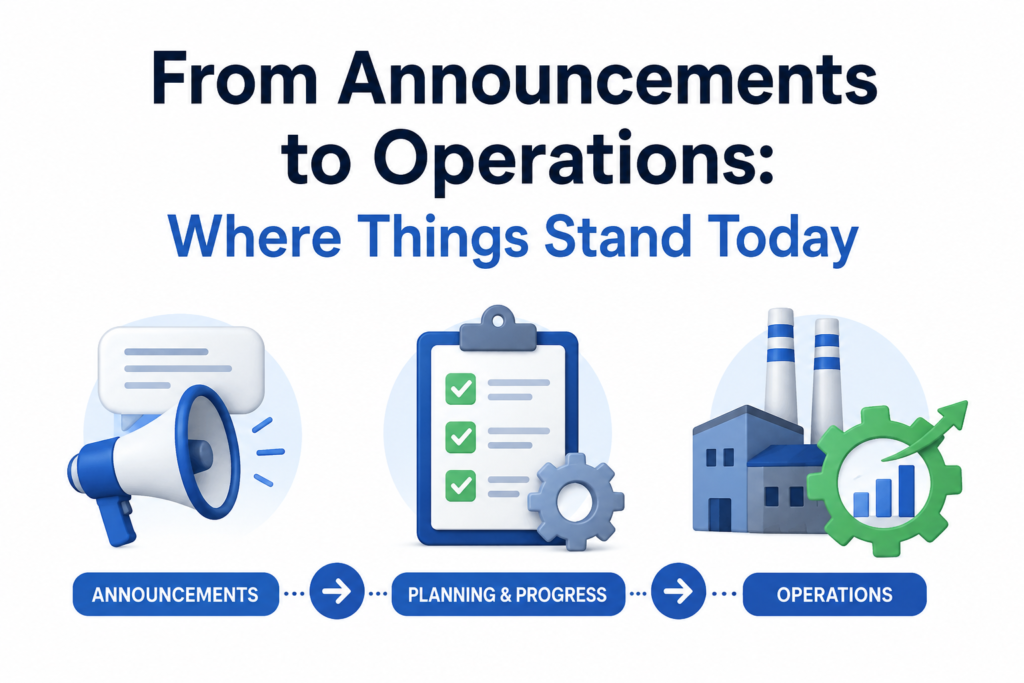
India’s semiconductor story didn’t begin with this speech — it’s been building for a few years now. The India Semiconductor Mission, launched in 2021 with an incentive outlay of roughly ₹76,000 crore, was the starting point. Since then, the government has approved 12 manufacturing projects with combined investment commitments exceeding ₹1.64 lakh crore.
That portfolio isn’t limited to one type of facility. It spans a full silicon fabrication plant, a silicon-carbide fab, an integrated gallium-nitride and Mini/Micro-LED display unit, and nine semiconductor packaging and assembly units. Notably, India’s first silicon fabrication plant is scheduled for commissioning in 2028, which will be a genuine turning point — moving the country from packaging and testing into actual chip fabrication, historically the hardest and most capital-intensive part of the supply chain to localize.
The three plants Modi referenced as already running production reflect years of groundwork: approvals, land acquisition, equipment procurement, and the slow, technical process of ramping up a fab or packaging line to commercial output. Getting even this far has taken sustained policy support, and it’s the base the next wave of plants is meant to build on.
The Money Behind the Mission: Semicon India 2.0

None of this expansion happens without capital, and the government has backed its ambitions with a significantly larger financial commitment. Earlier this year, it approved Semicon India Mission 2.0 with an outlay of ₹1,27,500 crore — nearly double the size of the original mission’s incentive package.
This second phase isn’t just about building more fabs. It covers a wider slice of the value chain, including chip design support, manufacturing equipment and materials, fabrication facilities, packaging capacity, and workforce and research development. That breadth matters because a semiconductor ecosystem isn’t just about factories — it needs designers, equipment suppliers, materials vendors, and a skilled workforce to actually run these highly specialized plants.
The scale of investment also signals confidence from private players. Facilities from companies like Tata Electronics, in partnership with international semiconductor firms, have anchored several of the projects approved so far, with cumulative investments running into the lakhs of crores. As Semicon 2.0 rolls out, expect more such large-ticket collaborations, particularly as global companies look to diversify their supply chains beyond a handful of existing manufacturing hubs.
Why This Push Matters Beyond Chips
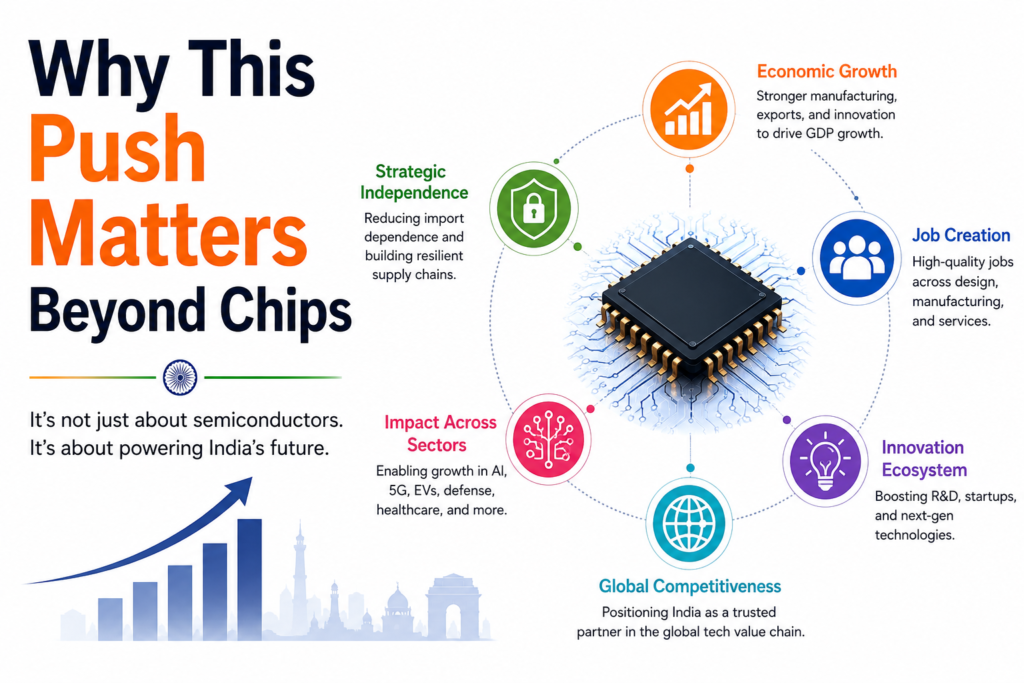
It’s tempting to view this purely as an industrial policy story, but the implications run wider. Modi’s speech linked the semiconductor expansion directly to India’s critical minerals strategy, noting that the entire technology sector depends on secure access to these raw materials. Programs like the National Critical Minerals Mission and a proposed Critical Minerals Corridor are being positioned as the upstream support system for chip manufacturing, alongside new international agreements to secure mineral supplies.
There’s also a global supply chain angle. Countries worldwide have been rethinking how concentrated their chip supply chains are, especially after recent years of shortages and geopolitical disruptions. India entering this space with a coordinated, well-funded push gives global manufacturers another option for diversifying production, and it gives India a chance to capture a slice of an industry projected to nearly double from around $600 billion to close to $1 trillion in the coming years.
For India specifically, a functioning domestic semiconductor base means fewer disruptions for its electronics, automotive, telecom, and defense sectors, all of which rely heavily on a steady chip supply. It also creates a multiplier effect on jobs — industry estimates suggest every position created directly in a fab can support several more in supporting units and services around it.