


India’s Semiconductor Ecosystem Needs Demand Across Sectors to Scale, Say Industry Leaders

India’s semiconductor industry is moving beyond its initial focus on establishing manufacturing facilities and attracting investments. The next major challenge is creating a strong and sustainable market for domestically manufactured semiconductor products. At the ET Silicon Shift 2026 event in New Delhi, industry leaders highlighted that semiconductor manufacturing cannot scale through production capacity alone. It requires consistent demand from multiple industries, including consumer electronics, automotive, industrial automation, energy infrastructure and artificial intelligence. As India expands its semiconductor ambitions, connecting manufacturing capabilities with real market requirements will become essential for building a commercially sustainable ecosystem.
Industry experts also emphasised that domestic consumption can provide an important starting point, but the semiconductor business ultimately operates in a global market. Manufacturers need reliable customers, long-term partnerships and confidence in the quality of locally developed components. Smartphones already represent a significant source of semiconductor demand, while electric mobility, AI data centres and industrial digitalisation are creating additional opportunities. The discussion highlights an important shift in India’s semiconductor strategy: the focus must now extend beyond setting up fabrication and packaging facilities to developing an integrated ecosystem where manufacturers, OEMs, suppliers and technology companies grow together.
Why Demand Is Essential for India’s Semiconductor Growth
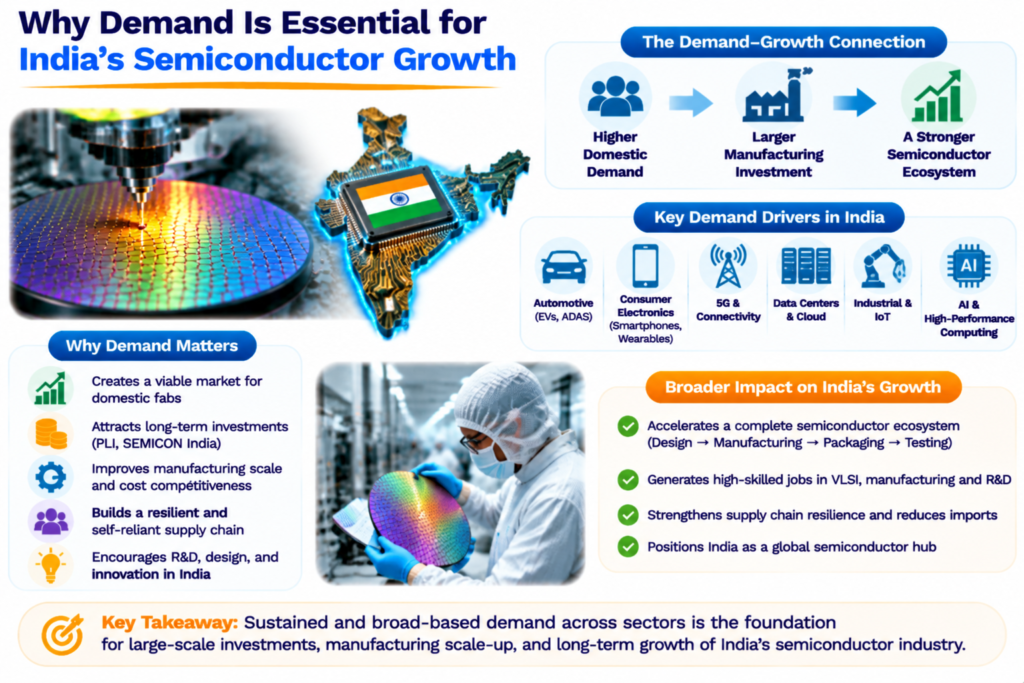
Semiconductor manufacturing is a capital-intensive industry that requires substantial investment in equipment, infrastructure, research and specialised talent. Establishing a fabrication or packaging facility is only one part of the process. Manufacturers must also secure consistent orders to utilise production capacity, recover investments and maintain operational efficiency. Without predictable demand, even technologically capable facilities may struggle to achieve commercial sustainability.
Industry leaders believe India needs demand from several industries rather than depending on a single application. A broader customer base can support different semiconductor product categories, including processors, memory devices, power management chips and connectivity components. This diversified demand can also encourage suppliers and supporting industries to establish operations in India.
Multiple Industries Can Drive Semiconductor Demand
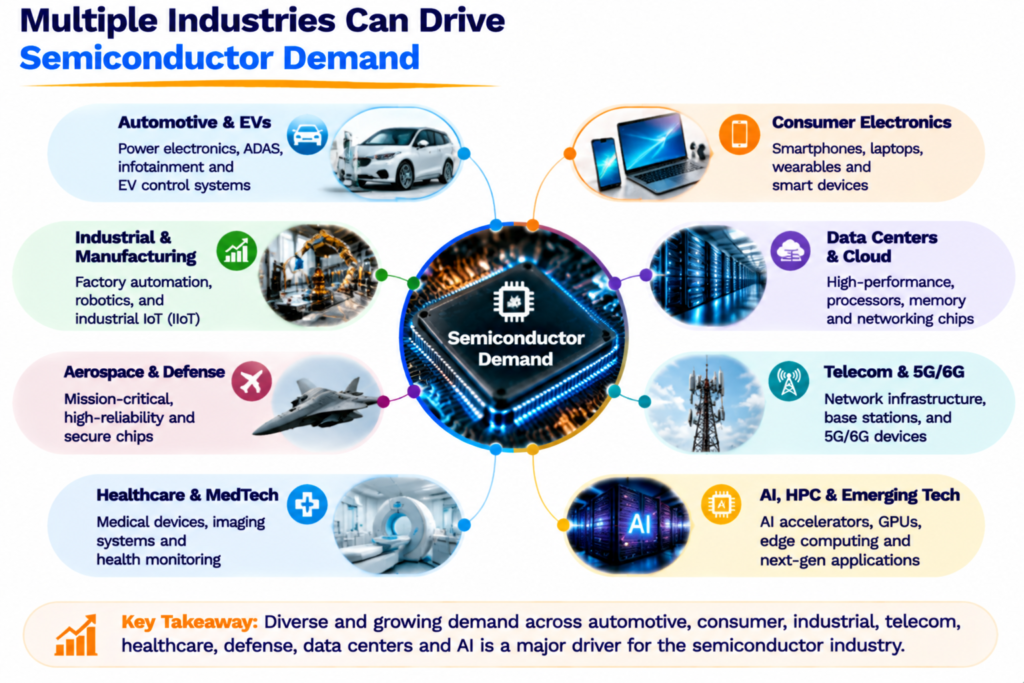
Consumer electronics and smartphones continue to play an important role in semiconductor consumption. Modern smartphones contain hundreds of semiconductor components supporting processors, memory, wireless connectivity, sensors, power management and display functions. Increasing device capabilities and electronics production create opportunities for semiconductor suppliers serving this segment.
Beyond consumer electronics, automotive electrification, renewable energy, industrial automation and smart infrastructure are expanding the need for specialised chips. Electric vehicles require power semiconductors, battery management systems and control electronics, while industrial equipment depends on sensors, controllers and communication chips. These applications can collectively create a more diversified domestic market.
AI and Data Centres Are Creating New Opportunities
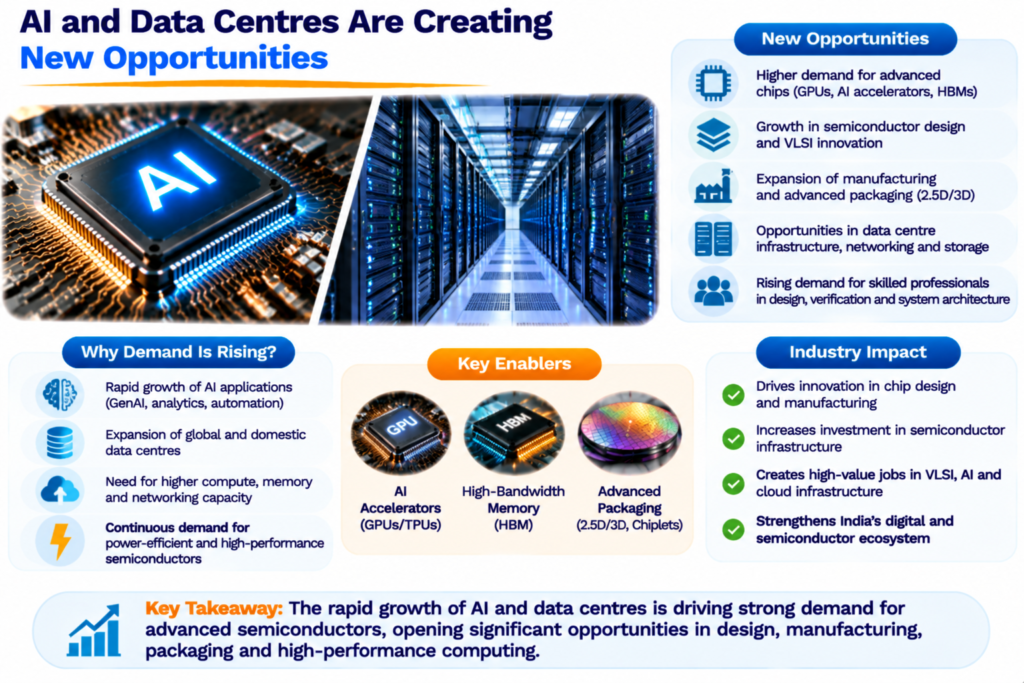
Artificial intelligence is emerging as another important source of semiconductor demand. AI applications require powerful processors, GPUs, high-bandwidth memory, networking components and advanced computing infrastructure. As organisations expand AI adoption, the demand for computing hardware and supporting semiconductor technologies is expected to increase.
Data centres also require substantial semiconductor content across servers, storage systems, networking equipment and power management infrastructure. India’s expanding digital economy could support this demand, although domestic chip manufacturing will need to develop capabilities that match specific performance, reliability and cost requirements. AI growth therefore represents an opportunity, not an automatic guarantee of manufacturing success.
OEM Partnerships and Domestic Supply Chains Matter
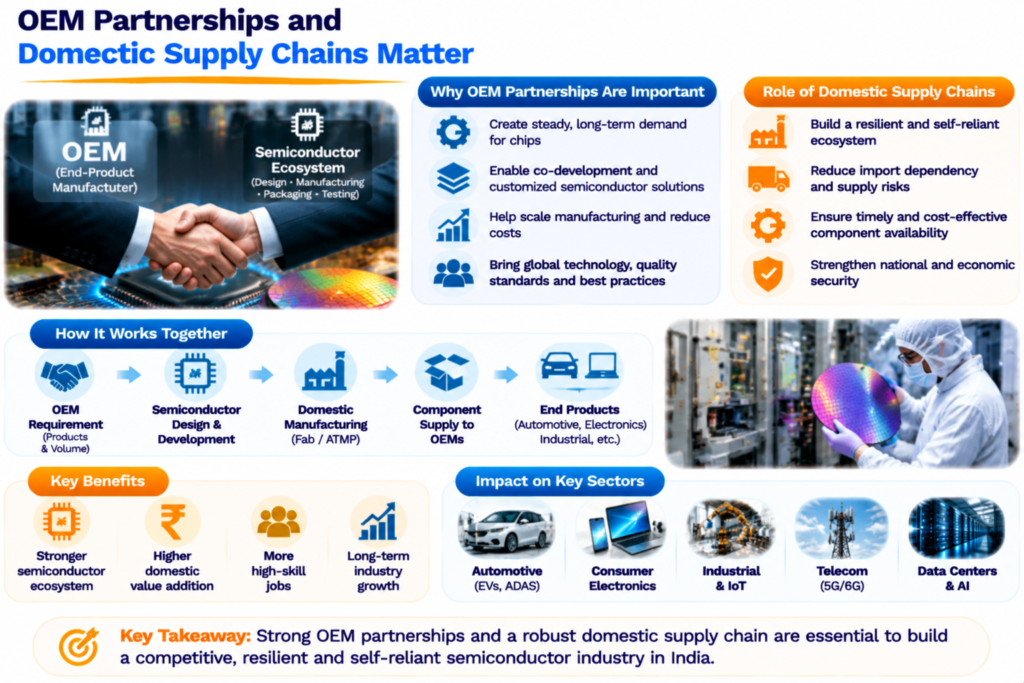
Original Equipment Manufacturers (OEMs) play an important role in connecting semiconductor suppliers with actual product requirements. Early collaboration allows chip developers and manufacturers to understand customer expectations regarding performance, quality, reliability and cost. It also reduces the risk of developing semiconductor products without a clearly identified market or customer base.
Industry experts have highlighted the importance of building confidence among OEMs in locally developed components. Strong partnerships can help Indian manufacturers validate products, improve technical capabilities and establish long-term commercial relationships. Developing domestic suppliers for materials, components and manufacturing equipment will further strengthen the ecosystem and reduce vulnerabilities caused by supply-chain disruptions.
Challenges and the Road Ahead for India’s Semiconductor Ecosystem
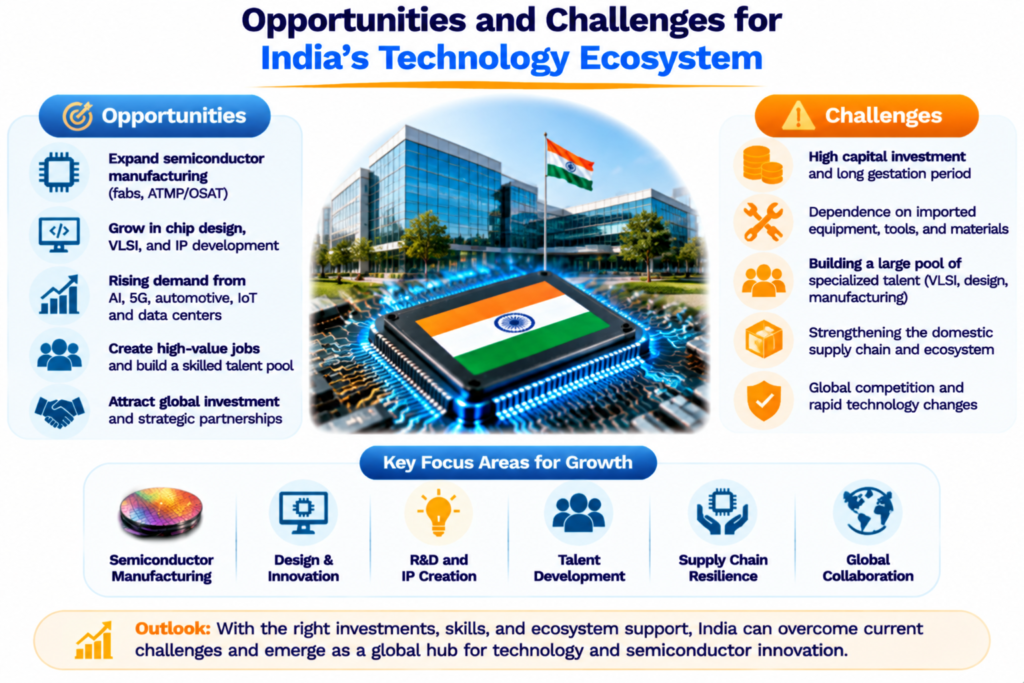
India still needs to strengthen several areas of its semiconductor ecosystem, including specialised materials, semiconductor equipment, advanced packaging, research and development, and manufacturing expertise. Building these capabilities requires long-term investment and coordination between government agencies, semiconductor companies, research institutions and educational organisations.
The next phase should focus on connecting manufacturing capacity with real market demand. Government initiatives such as Semicon India 2.0 provide a broader framework for developing design, materials, machines, fabrication, packaging, research and talent. However, sustained commercial orders, technology partnerships and successful product qualification will be equally important in determining how effectively India can scale its semiconductor industry.