




Tamil Nadu CM Launches Semiconductor Ecosystem Scheme 2026 to Boost Chip Industry Growth

In a landmark decision aimed at transforming Southern India into a global hardware and microelectronics powerhouse, the Chief Minister of Tamil Nadu has officialized the “Tamil Nadu Semiconductor Ecosystem Scheme 2026”. This forward-thinking policy framework is engineered to accelerate semiconductor fabrication, advanced chip packaging, electronic design automation (EDA), and raw material supply chain development. By aligning state-level financial grants with the Union Cabinet’s Semicon India Programme 2.0, Tamil Nadu is proactively positioning itself as the premier destination for multi-billion-dollar VLSI investments and global foundry setups.
The strategic initiative addresses the vital requirements of global technology majors, domestic semiconductor startups, and research consortiums looking to expand their footprint in India. Featuring streamlined single-window clearances through Guidance Tamil Nadu, high-value capital expenditure subsidies, and dedicated industrial parks like the planned Semiconductor and Electronics Park at Madhuramangalam, the scheme sets a strong foundation. Industry leaders anticipate that this policy drive will create a robust self-sustaining microelectronics cluster, reducing supply chain vulnerabilities and generating thousands of specialized VLSI design and fabrication jobs.
Dual-Track Subsidy Structure and Financial Incentives
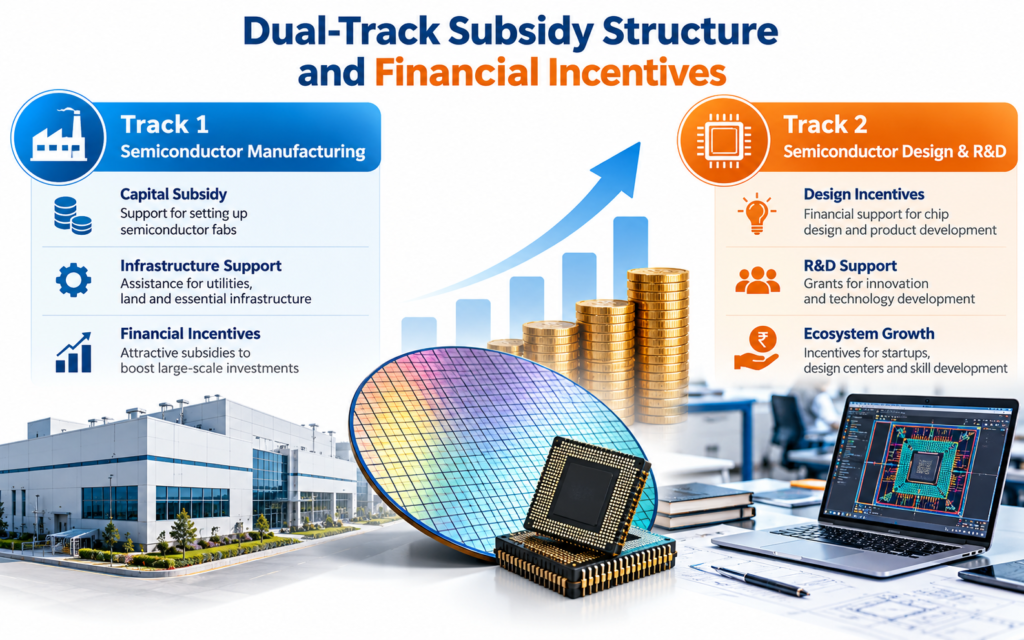
The core strength of the Semiconductor Ecosystem Scheme 2026 lies in its innovative dual-track financial framework tailored to accommodate diverse project scales. Track 1 provides direct top-up support for projects already greenlit under the Union government’s central Semicon 2.0 initiative. Under this track, state capital expenditure subsidies range from 15% to 25%. Eligible 300-mm silicon wafer fabrication units receive an additional 25% state subsidy on top of central grants, while advanced packaging, assembly, and testing (OSAT/ATMP) facilities gain up to 25% financial coverage.
Track 2 offers customized, state-level financial backing for strategically important semiconductor projects that fall outside the central program’s immediate scope. This track caters to legacy packaging, specialized materials, testing equipment, and chemical suppliers, offering fixed capital subsidies between 15% and 25% alongside an annual turnover-based incentive of up to 2% for five consecutive years. Minimum investment thresholds are calibrated pragmatically, starting at ₹50 crore for essential supply chain inputs up to ₹500 crore for advanced packaging plants, ensuring both niche component makers and major foundries thrive.
Infrastructure, Power, and Industrial Land Concessions

Semiconductor manufacturing demands exceptionally high levels of infrastructure resilience, particularly regarding uninterrupted clean power and industrial water supply. To satisfy these extreme operational requirements, the Tamil Nadu government is establishing specialized chip manufacturing parks equipped with dedicated sub-stations, high-purity water treatment units, and hazardous waste management plants. The scheme offers substantial concessions on industrial land allocation, complete stamp duty exemptions, and a full electricity tax waiver for the first five years of operational setup.
Beyond basic utilities, financial overheads are mitigated through a 5% interest subsidy on eligible term loans over a six-year repayment window, dramatically improving project internal rates of return (IRR). By establishing plug-and-play manufacturing infrastructure at locations like Madhuramangalam in Kancheepuram district, the state minimizes capital setup delays and logistical bottlenecks for incoming semiconductor foundries, wafer test facilities, and precision equipment refurbishers.
Human Capital Development and Local Employment Mandates
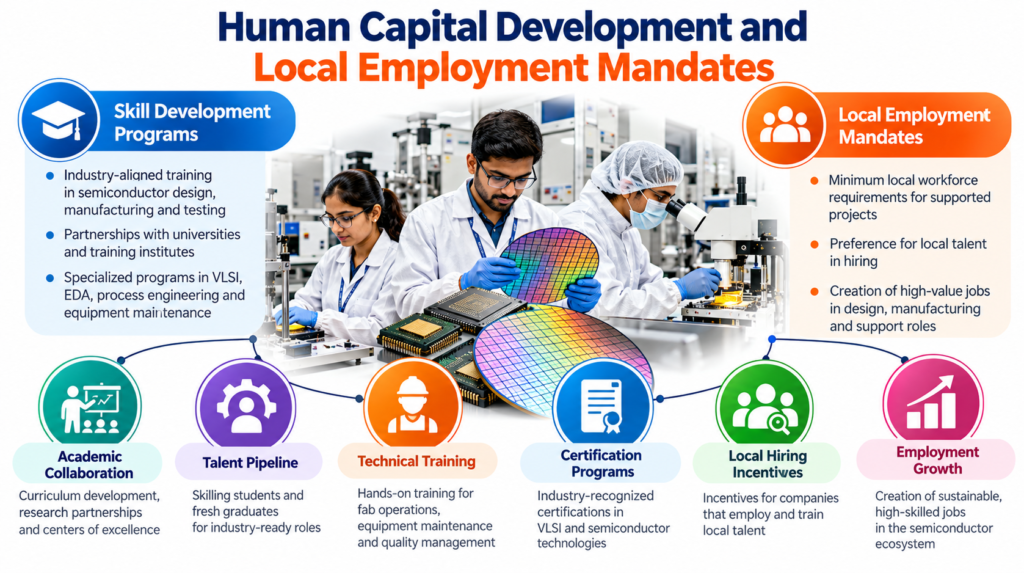
A successful semiconductor ecosystem requires a steady supply of highly skilled VLSI design engineers, fab operators, and materials scientists. The 2026 scheme addresses this talent requirement by providing training assistance of ₹10,000 per month per trainee alongside direct payroll subsidies for qualified technical staff. The state government is actively partnering with top academic institutes, engineering colleges, and technical universities across Tamil Nadu to upgrade VLSI design curriculums, cleanroom training modules, and silicon characterization labs.
To ensure that the localized economic impact remains sustained and inclusive, the policy outlines explicit workforce recruitment directives for participating corporations. Companies benefiting from state subsidies must ensure that at least 50% of their total direct workforce consists of Tamil Nadu residents. Furthermore, a minimum of 60% of high-value technical and managerial roles—defined as positions with basic monthly salaries exceeding ₹25,000—must be filled by local talent, fostering a specialized technological workforce.
Strengthening the Complete Supply Chain and Equipment Ecosystem
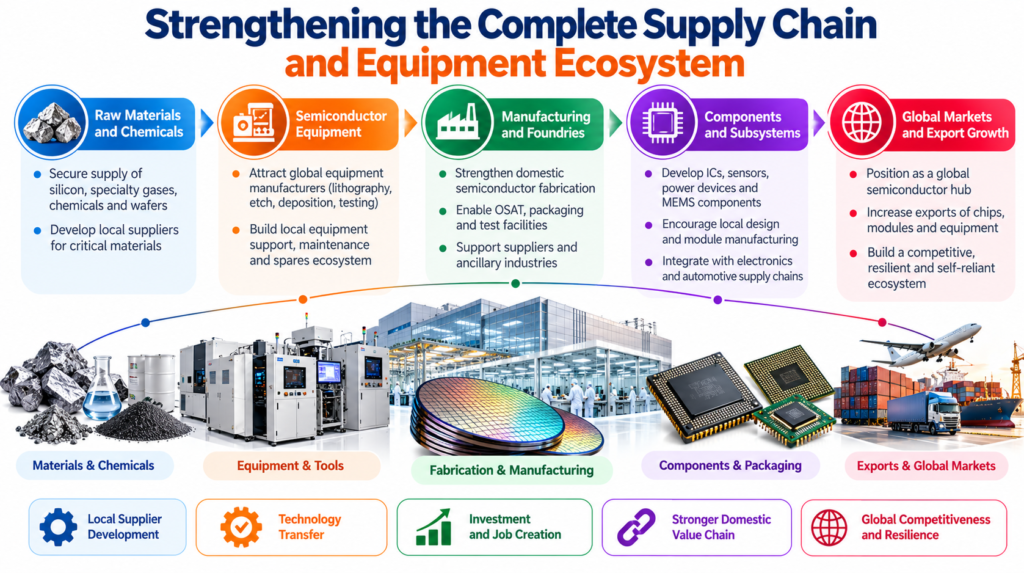
Semiconductor fabrication plants cannot function in isolation; they depend heavily on ultra-pure gases, silicon ingots, specialty chemicals, photomasks, and high-precision photolithography tools. Recognizing this critical interdependence, the Tamil Nadu Semiconductor Ecosystem Scheme 2026 explicitly allocates dedicated 15% financial subsidies for manufacturers of semiconductor equipment, assembly machinery, testing systems, and raw material processing units.
By encouraging chemical suppliers, quartz glass refiners, and precision toolmakers to co-locate alongside major assembly and testing plants, Tamil Nadu aims to eliminate international supply chain vulnerabilities and reduce logistics lead times. This holistic policy coverage ensures that small-to-medium enterprises (SMEs) supplying niche VLSI components gain equal access to growth capital, fostering a comprehensive microelectronics industrial cluster.
Strategic Alignment with National Semicon India 2.0 Goals
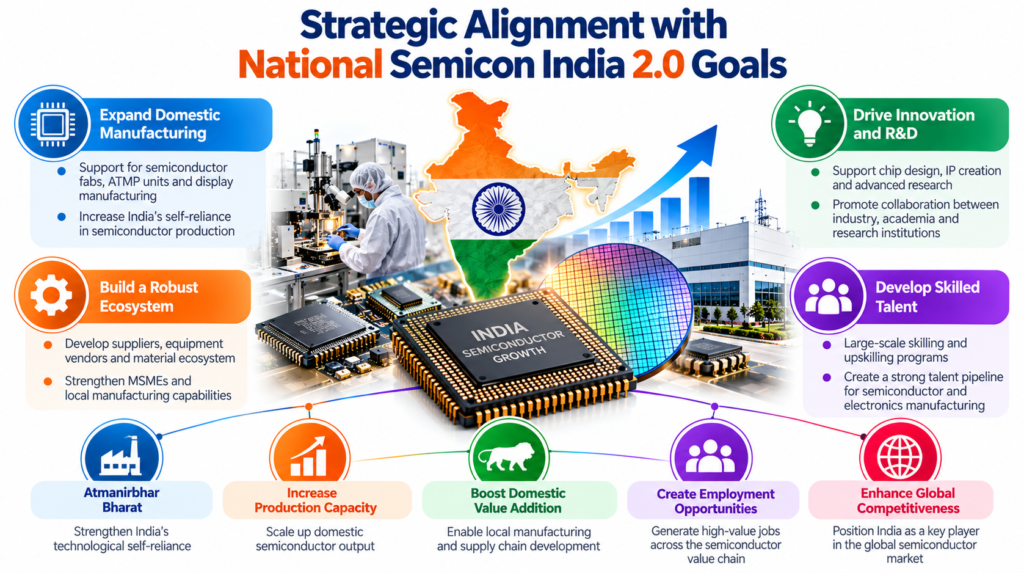
The launch of Tamil Nadu’s state-specific policy seamlessly aligns with India’s broader national vision to achieve strategic self-reliance in critical electronics technologies. By complementing the Union Cabinet’s Semicon India Programme 2.0, Tamil Nadu effectively doubles down on government incentives, offering one of the most attractive financial subsidy packages in the entire South Asian region.
This federal-state synergy significantly lowers the capital entry barriers for global semiconductor giants looking to diversify their manufacturing geographic footprints away from single-region risks. Through proactive administrative facilitation by Guidance Tamil Nadu, setting clear project execution timelines, and establishing a firm proposal application window open until September 30, 2027, the state has positioned itself as an agile leader in India’s ongoing semiconductor renaissance.