


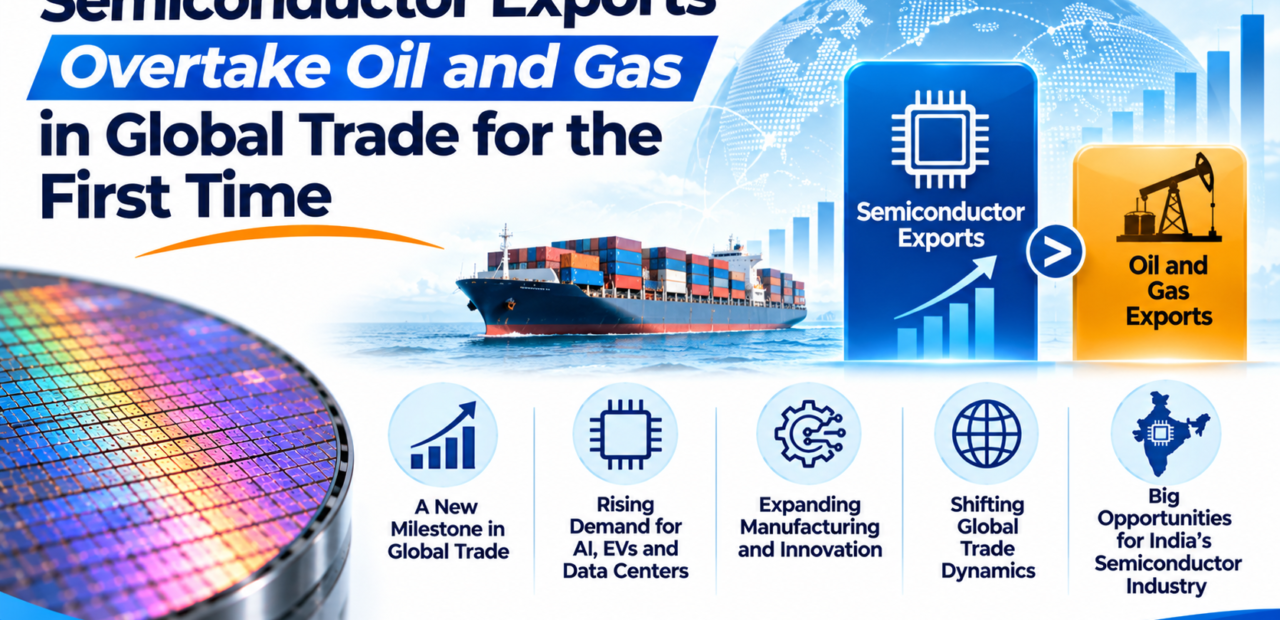
Semiconductor Exports Overtake Oil and Gas in Global Trade for the First Time

The global economy is witnessing a significant shift in international trade as semiconductors emerge as one of the most valuable traded technology products. For decades, oil and natural gas dominated discussions around global exports, economic influence and international trade relationships. However, the rapid expansion of artificial intelligence, cloud computing, advanced electronics and data centre infrastructure is changing this landscape. According to a Deutsche Bank analysis of International Trade Centre data, global semiconductor exports surpassed combined oil and gas exports for the first time during the January–March 2026 period, measured using four-quarter rolling totals. Semiconductor exports reached approximately $1.61 trillion, compared with $1.53 trillion for oil and gas. This milestone highlights the growing economic importance of the semiconductor industry.
The development reflects more than an increase in chip sales. Semiconductors have become essential to the infrastructure supporting artificial intelligence, telecommunications, automotive electronics, industrial automation and modern computing. Companies are investing heavily in advanced processors, high-bandwidth memory, GPUs and semiconductor manufacturing capabilities to support increasing computing requirements. At the same time, geopolitical developments and disruptions to traditional energy supply chains have influenced global export values. The comparison does not mean oil and gas are becoming less important to the global economy. Instead, it demonstrates how technology-driven products are gaining a larger position in international trade and creating new economic relationships between semiconductor-producing countries and major technology markets.
How Semiconductor Exports Surpassed Oil and Gas
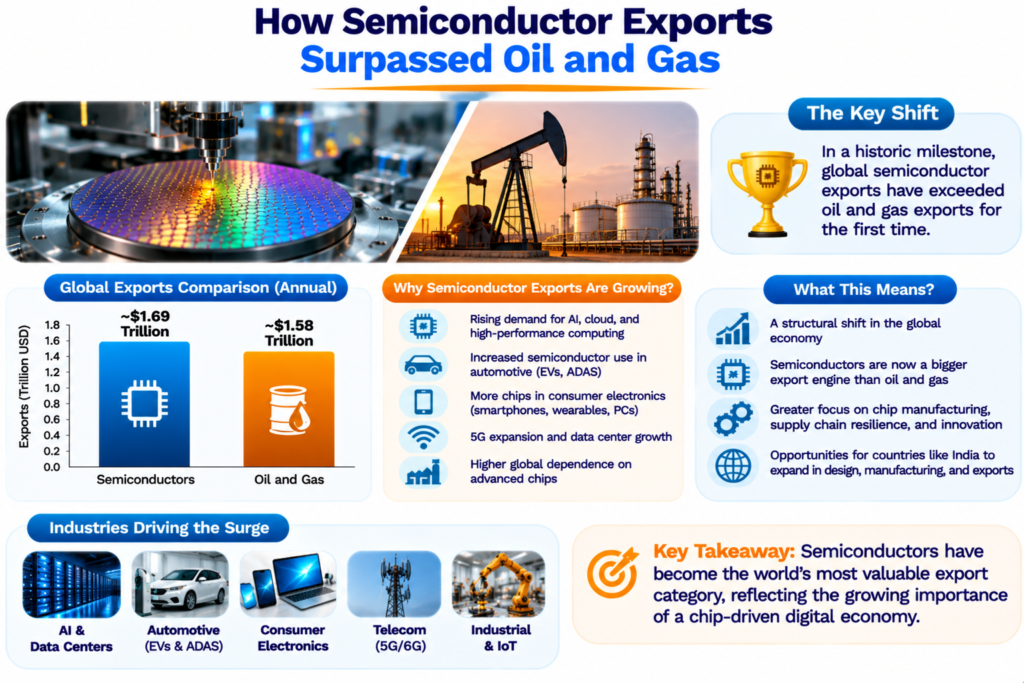
The latest trade analysis marks an important milestone for the semiconductor industry. During the first quarter of 2026, semiconductor exports reached approximately $1.61 trillion on a four-quarter rolling basis, exceeding combined oil and gas exports of approximately $1.53 trillion. The gap increased during the second quarter, with semiconductor exports at around $1.60 trillion compared with $1.47 trillion for oil and gas. These figures indicate how strongly semiconductor trade has expanded alongside the global demand for advanced computing technologies.
One important factor behind this development is the increasing value of semiconductor products in international markets. Advanced processors, memory chips and AI accelerators are becoming essential components of modern infrastructure. Meanwhile, energy export values have faced pressure from supply disruptions and geopolitical uncertainty. The crossover therefore reflects both growing demand for semiconductor products and changing conditions in traditional energy markets.
Artificial Intelligence Is Driving Semiconductor Trade Growth
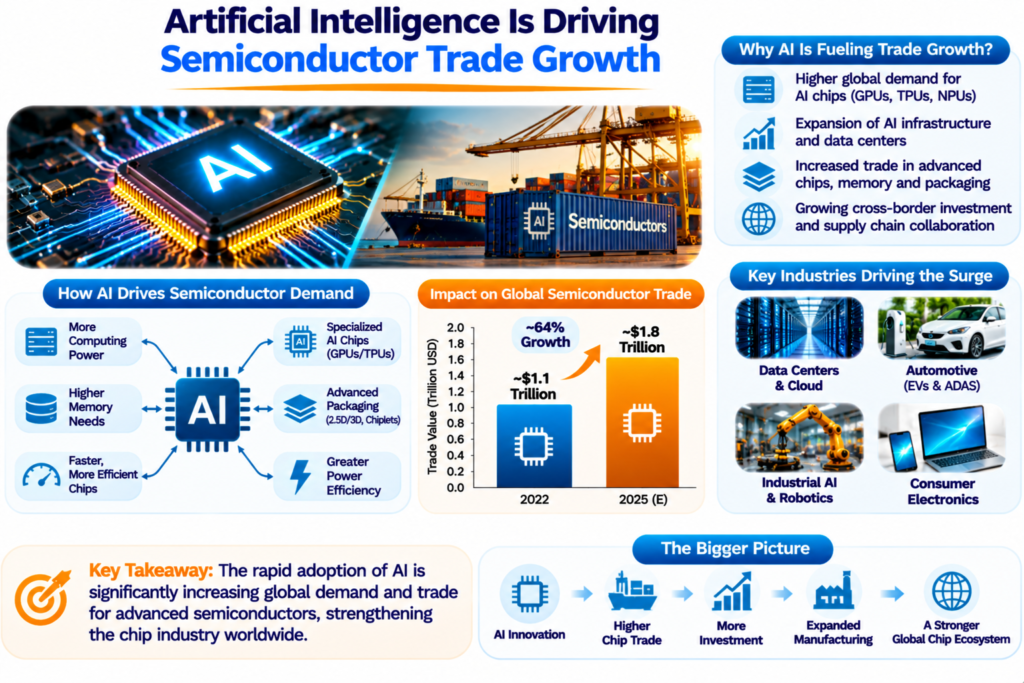
Artificial intelligence has become one of the strongest growth drivers for semiconductor demand. Training and operating advanced AI models require powerful processors, GPUs, high-performance memory and specialised computing systems. Technology companies are expanding data centre infrastructure to support these workloads, increasing their demand for advanced semiconductor components. This has created significant opportunities for chip manufacturers and companies involved in semiconductor design and production.
The expansion of generative AI, machine learning and cloud computing is also changing the types of chips required by the technology industry. High-bandwidth memory, advanced packaging and specialised AI accelerators are receiving greater attention. As businesses invest in AI infrastructure, semiconductor manufacturers are under pressure to increase production capacity, improve chip performance and develop more energy-efficient technologies.
Asia’s Growing Influence in the Global Semiconductor Market
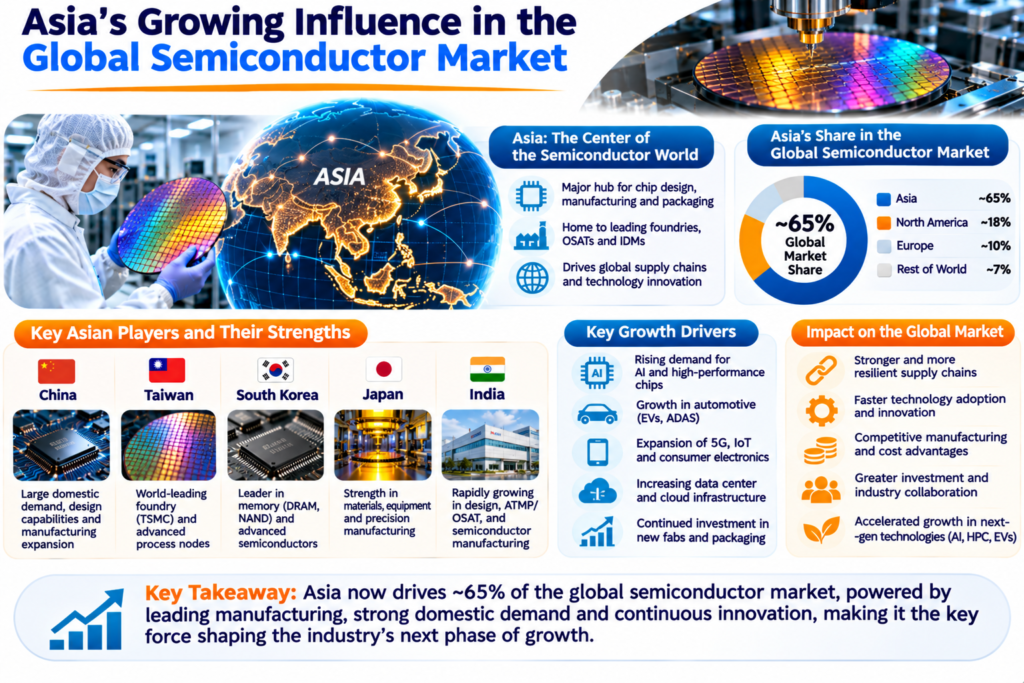
Asia plays a central role in the global semiconductor supply chain. Countries and economies such as Taiwan, South Korea and Japan have developed important capabilities in semiconductor manufacturing, memory production, materials and equipment. Their industrial ecosystems support international technology companies that depend on reliable access to advanced chips. The growing demand for AI hardware has further strengthened the importance of these manufacturing and export centres.
South Korea and Taiwan are particularly important to the global semiconductor ecosystem because of their positions in memory and advanced chip manufacturing. At the same time, Japan contributes through semiconductor materials and manufacturing equipment. This concentration of industrial capabilities demonstrates why international trade relationships and supply-chain security have become major concerns for governments and technology companies.
Semiconductor Exports vs Oil and Gas: What Is Changing?
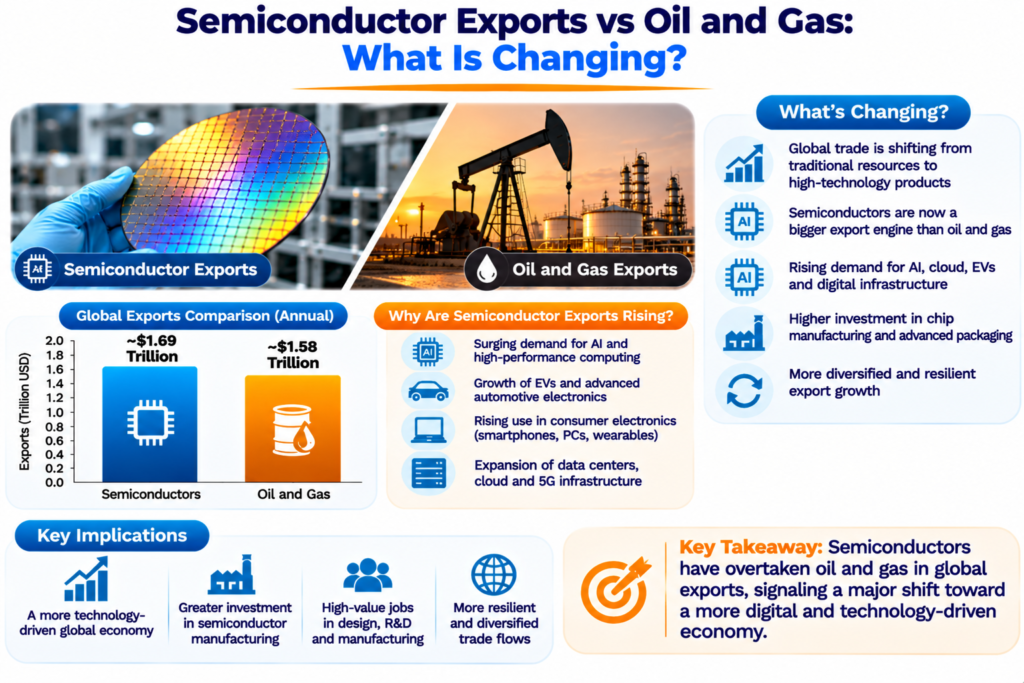
Oil and gas have traditionally played a major role in international trade because they support transportation, electricity generation, industrial production and economic activity. Their export markets are closely connected to energy demand, production capacity and geopolitical developments. Semiconductor exports, on the other hand, are increasingly connected to digital infrastructure, computing demand and technological innovation. The recent crossover highlights the growing trade value of technology products alongside traditional commodities.
An important difference is how export earnings can influence other parts of the economy. Oil-exporting countries have historically recycled substantial trade surpluses into financial assets, including government bonds. Semiconductor-exporting economies are closely connected to global technology companies and investment markets. Deutsche Bank analysts have highlighted the possibility of chip-related trade surpluses influencing international capital flows differently from traditional petroleum revenues.
What This Development Means for India’s Semiconductor Industry
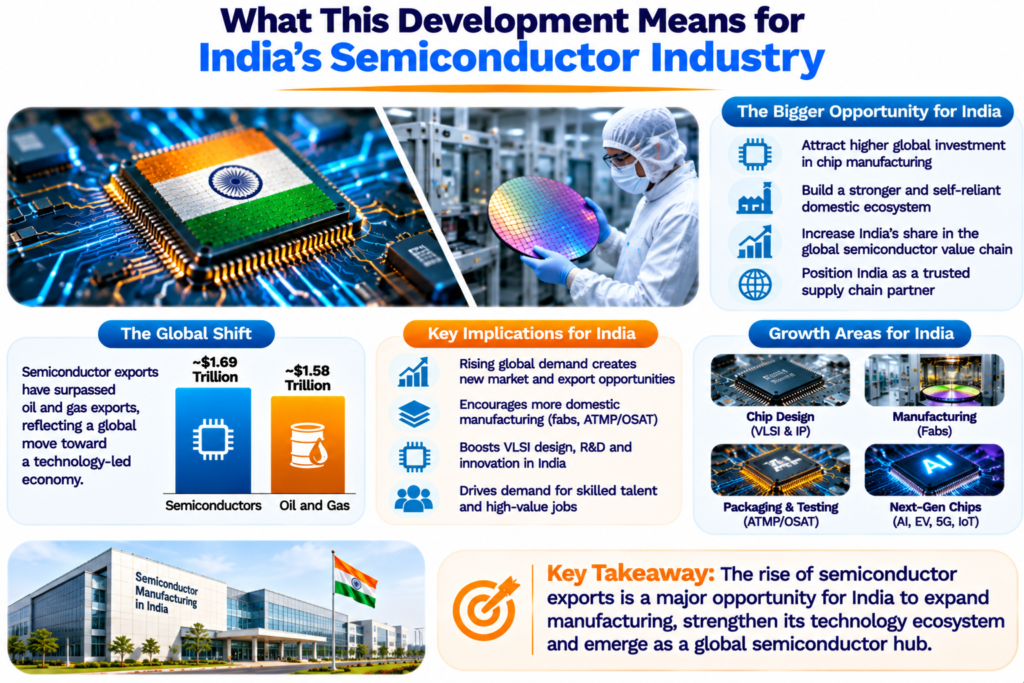
The growing value of semiconductor trade creates an important opportunity for India as it expands its domestic semiconductor ecosystem. India already has a strong base of semiconductor design professionals and engineering talent. Government initiatives and private-sector investments are also supporting the development of semiconductor fabrication, assembly, testing and packaging capabilities. Increasing global demand for chips could create opportunities for India to participate in more stages of the semiconductor supply chain.
However, becoming a major semiconductor exporter requires more than establishing fabrication facilities. India must continue developing advanced packaging, manufacturing infrastructure, semiconductor materials, equipment capabilities and specialised research expertise. Building strong connections with international suppliers and technology companies will also be important. The global shift towards semiconductor-driven trade offers India an opportunity, but long-term competitiveness will depend on consistent investment, technical capabilities and successful manufacturing execution.